Nervous about the dentist?
Dental Anxiety & Comfort in Murrieta
If dental visits make you tense, you’re far from alone. Here are practical ways to make care easier, what nitrous oxide is and isn’t, and how our team can help you take the next step.
- Ask about nitrous oxide
- Blankets, water and TVs
- Parents can stay with kids
- Caring for Murrieta since 1991
How can I deal with dental anxiety?
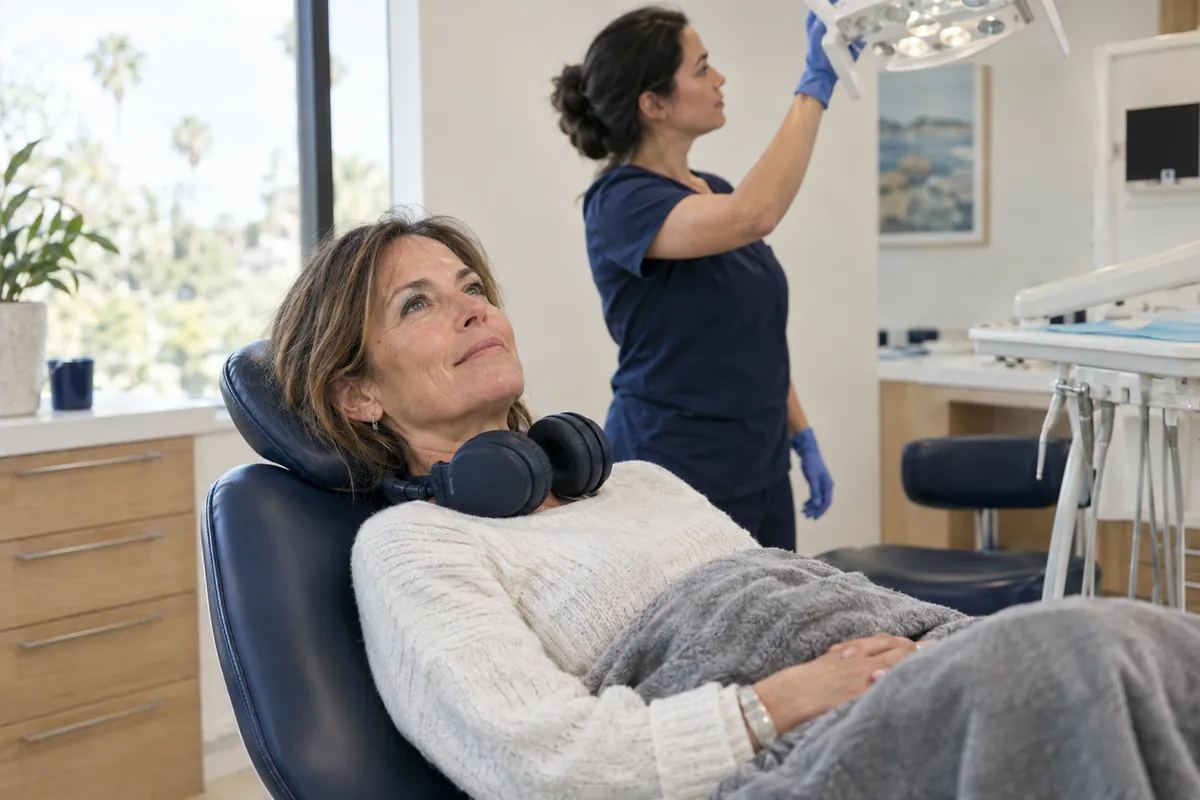
Start by telling your dental team that you feel anxious, so they can explain each step and help you through it. Agree on a stop signal, like raising your hand, bring headphones or a support person, and ask about nitrous oxide, a mild sedative you breathe through a small nose mask while staying awake.
How common is dental anxiety?
Very common. Cleveland Clinic reports that about 36% of people in the U.S. have a fear of dental treatment, and 12% have an extreme fear.
Fear can grow from a painful visit years ago, feeling helpless in the chair, embarrassment about your teeth or breath, or stories you’ve heard from others. It can show up as a racing heart, sweating, nausea or trouble sleeping the night before, according to Cleveland Clinic.
None of that means something is wrong with you. Many of our Google reviews come from people who describe themselves as nervous about the dentist and mention how gently our team cared for them. Whether you see Dr. Pourshirazi or Dr. Stanisai, tell them how you feel. You can read about our Murrieta dentists before your visit.

How do I tell my dentist I have anxiety?
Just say it, ideally when you call to book and again when you sit down in the chair. The ADA’s MouthHealthy site recommends telling your dentist about your anxiety and asking questions, because knowing what’s coming can ease fear of the unknown.
It helps to be specific. Is it needles, the sound of the drill, gagging, feeling out of control, or a past experience? The more we know, the more ways we can help.
You can ask us to explain each step before we do it, or to let you know when a part is almost done. Cleveland Clinic also suggests scheduling a consultation before a treatment visit if that would help you feel ready. Ask our team about it when you call.
At a glance
Your comfort checklist
A few simple steps before your visit can make the whole appointment feel more manageable.
- Tell us when you book Mention that you feel nervous when you call. It helps our team plan your visit and explain things the way you’d like.
- Write down your questions A short list makes it easier to ask everything you want to know, which can ease fear of the unknown.
- Pick a stop signal Agree on a signal, like raising your hand, for when you need a pause.
- Pack a comfort kit Headphones with music or an audiobook, a stress ball, or whatever helps you relax.
- Bring a support person A calm friend or family member can help you feel steadier. Let us know they’re coming.
- Ask about nitrous oxide If you’d like help relaxing, ask our team whether nitrous oxide is a good option for you.
What can help you relax during a dental visit?
Small things make a real difference. These ideas come from the ADA and Cleveland Clinic, and you can mix and match whatever works for you.
Our office has long offered small comforts like blankets, bottled water and TVs, so you can settle in and feel more at ease. Ask our team what’s available when you visit, and see more of our dental office.
- Use your stop signal. Agree on a signal, like raising your hand, for when you need a break during an exam or treatment.
- Plan breaks. For longer visits, it’s fine to ask for short pauses to rest your jaw or catch your breath.
- Bring headphones. MouthHealthy suggests listening to music or an audiobook to help block out sounds.
- Breathe slowly. Counting your breaths or doing a slow body scan can help calm racing thoughts.
- Give your hands a job. Squeezing a stress ball or picturing a relaxing place can help, according to MouthHealthy.
- Pick your time. Cleveland Clinic suggests morning appointments, so there’s less time to worry beforehand.

What is nitrous oxide, and what is it not?
Nitrous oxide, often called laughing gas, is a mild sedative mixed with oxygen that you breathe through a small mask over your nose. The ADA describes it as a safe and effective option your dentist may offer to help you relax.
It starts working within a few minutes. You may feel light-headed, tingly or pleasantly heavy, and calmer overall. MouthHealthy notes that the effects wear off soon after the mask is removed, and Cleveland Clinic says it takes about 5 to 10 minutes to leave your system.
If you think it could help you, ask our team about nitrous oxide. Here’s what it is not:
- It is not general anesthesia. It isn’t meant to put you to sleep. You can still hear and respond to your dentist.
- It is not numbing. Cleveland Clinic explains that it dulls your sensitivity to pain but doesn’t eliminate it, so it’s often paired with a local anesthetic.
- It is not right for everyone. Cleveland Clinic notes it may not suit people with COPD, nasal congestion, vitamin B12 deficiency or some psychiatric conditions, or children under 2. Your dentist will review your health history first.
- It is not long-lasting. Because it’s short-acting, Cleveland Clinic says people can usually drive shortly after their procedure. Follow your dentist’s instructions for your visit.
Can I bring someone with me to the dentist?
A support person can help a lot, and Cleveland Clinic recommends bringing one if you have dental anxiety, since their presence alone can help you stay calm. Let our team know when you book that someone is coming, and ask where they can wait or sit during your visit.
It can help to choose someone who feels relaxed about the dentist, rather than someone who shares your nerves.
If you’re the one helping a nervous parent, partner or friend, offer to drive, keep them company in the waiting room and help with forms so they can focus on staying calm. New patients can find forms and first-visit details on our new patients page.
How do I help my child with dental anxiety?
Stay calm and upbeat yourself. The ADA’s MouthHealthy site notes that kids pick up on their parents’ anxiety, so your relaxed attitude matters more than you might think.
Keep your words simple and positive. MouthHealthy suggests skipping phrases that hint at pain, like promising something will only hurt a little, and letting your child ask the dentist their own questions instead. Help your child feel proud of a good visit.
Parents are welcome to stay with their child during visits at our office. For a nervous child, ask our team about nitrous oxide. Learn more about children’s dentistry and read our guide to a child’s first dental visit.

It’s been years since I’ve seen a dentist. What now?
Call us and say so. That first call is often the hardest part, and you don’t need to explain everything on the phone.
Our letter to our patients said it simply: if it has been a while since your last checkup, or there’s treatment you’ve been putting off, now is a great time to come in and say hello.
Staying away can let small problems grow. Cleveland Clinic notes that severe dental fear often leads to poor oral health, including decayed teeth, gum disease and missing teeth. Embarrassment is one of the reasons people stay away, but dental teams see every kind of situation. What matters is the next step.
Many people start with a checkup and cleaning and a conversation about what to tackle first. Many dental benefits renew at the end of the year, and our team is happy to help you use yours before then. We work with most dental insurance plans, including most PPOs.
If it can’t wait
Call 911 or go to the nearest ER for facial swelling that affects your breathing, swallowing or vision, a high fever with swelling, bleeding that won’t stop, or a serious injury. For a toothache or broken tooth, call us.

Questions & answers
Common questions
Can I listen to music during my appointment?
Often, yes. The ADA’s MouthHealthy site suggests wearing headphones and listening to music or an audiobook to help you relax and block out sounds. Bring your own headphones and a playlist you find calming. Let your dentist know you’re wearing them, and agree on how they’ll get your attention, such as a tap on the shoulder, if they need you.
Does nitrous oxide make you laugh?
Sometimes, which is where the name laughing gas comes from. Cleveland Clinic says people may feel calm, relaxed, happy, giggly or mildly euphoric. Others mostly feel light-headed, tingly or heavy, like they’re sinking into the chair. Some people have a headache or nausea afterward, which usually fades as the gas leaves the body. Tell your dentist if you feel uncomfortable at any point.
What if I gag easily?
Tell us before we start. Knowing about a strong gag reflex helps your dental team plan, take breaks and position things more carefully. We’re also adding digital impressions, which use a small scanner instead of trays of impression material. The ADA notes scanners may be more comfortable, and a 2024 study in children and teens found less gagging with scans.
What if I’m afraid of needles?
It’s worth saying out loud. Tell your dentist before treatment so they can explain what to expect, go step by step and pause when you use your stop signal. Nitrous oxide can help you feel calmer, although it doesn’t replace numbing. Ask our team about nitrous oxide if needles are your biggest worry.
Can therapy help with dental fear?
Yes. Cleveland Clinic says exposure therapy is one of the main treatments for a fear of dentists, and cognitive behavioral therapy (CBT) helps you change how you see and respond to the situations that trigger fear. Many people combine these approaches with practical steps at the dentist, like stop signals and breaks.
Is nitrous oxide safe for kids?
The ADA’s MouthHealthy site calls nitrous oxide a safe and effective sedative, and you can talk with your child’s dentist about whether it’s a good fit. Cleveland Clinic notes it might not be right for kids under 2, and that with younger children it can be hard to tell exactly how they feel. If your child has nausea or vomiting afterward, call your dentist for instructions.
Keep reading
Related care and answers

Children’s Dentistry
Children’s dentistry in Murrieta: first visits, checkups, fluoride, sealants and habit checks. Parents are wel

Dental Cleanings & Exams
What happens at a dental checkup: cleaning, exam, X-rays when needed, oral cancer screening and gum checks. Us
Our Office & Technology
Visit our Murrieta dental office at 25460 Medical Center Dr, Suite 202: free parking, accessible entry, comfor
New Patients
New to Golden Triangle Dentistry? What to expect at a first visit, what to bring, insurance and payment, parki

Book a Visit
Call (951) 677-1054 to book a visit at Golden Triangle Dentistry, 25460 Medical Center Dr, Suite 202, Murrieta
Sources
- Dentophobia (Fear of Dentists): Causes, Symptoms & Treatments · Cleveland Clinic
- How To Deal With Dental Anxiety · Cleveland Clinic
- Anxiety · American Dental Association (MouthHealthy)
- Nitrous Oxide – Laughing Gas · American Dental Association (MouthHealthy)
- Nitrous Oxide (Laughing Gas): Uses, Side Effects & Safety · Cleveland Clinic
- 8 Secrets to a Successful Back-to-School Dental Checkup · American Dental Association (MouthHealthy)
- Digital dentistry: What to know about a few popular technologies · American Dental Association (ADA News)
- Comparative Analysis of the Comfort of Children and Adolescents in Digital and Conventional Full-Arch Impression Methods: A Crossover Randomized Trial (2024) · Children (MDPI), via PubMed Central
- Toothache: Symptoms, Causes & Remedies · Cleveland Clinic
- Tooth Abscess: Symptoms, Causes & Treatment · Cleveland Clinic
- Facial trauma · MedlinePlus (U.S. National Library of Medicine)
Golden Triangle Dentistry is not affiliated with these organizations. Links open in a new tab.
Important information: Nitrous oxide isn’t right for everyone, so your dentist will review your health history before recommending it.
Golden Triangle Dentistry
Book a visit
25460 Medical Center Dr, Suite 202, Murrieta
Take the first step
Call (951) 677-1054 and tell us you’re nervous. Our team will answer your questions and help you plan a visit that feels manageable.