Dental implants
Dental Implants in Murrieta, Placed Here From Start to Finish
A dental implant replaces a missing tooth from the root up. At Golden Triangle Dentistry, dental implants are now placed in our office, from start to finish, so you don’t need to go somewhere new for this care.
- Placed in our office, start to finish
- Works with most PPO plans
- CareCredit accepted
- Caring for families since 1991

What is a dental implant?
A dental implant is a small post, usually made of titanium, that is placed in your jawbone to act as a new tooth root. Over several months, the bone bonds to the post. Then a connector and a crown, bridge or denture are attached, giving you a replacement tooth anchored much like a natural one.
How does a dental implant replace a tooth?
An implant replaces the part of a tooth you can’t see: the root. Because it is anchored in bone, it doesn’t lean on the teeth next to it.
The FDA notes that implants can restore chewing and appearance and help keep the jawbone from shrinking where a tooth is missing.
In our letter to patients, we shared one of the changes at our office: dental implants placed in our office, from start to finish. Your implant care stays here in our Murrieta office, with the same phone number you already know.
Cleveland Clinic describes three parts that work together:
- The implant: a threaded post, most often titanium, that sits in the jawbone like a root.
- The abutment: a small connector that attaches to the post and rises just above the gum.
- The restoration: the part you see, which can be a crown, a bridge or a denture.
Who is a good candidate for dental implants?
Most adults who can have routine dental treatment can be considered for an implant, according to the American Association of Oral and Maxillofacial Surgeons (AAOMS).
Many people with conditions such as high blood pressure or diabetes can still have implants, sometimes with extra precautions. If your gums need attention first, our gum disease treatment page explains that care.
These things can affect whether an implant is a good fit for you:
- Enough healthy jawbone to hold the post. If bone has been lost, a bone graft may help build it up.
- Healthy gums. Active gum disease should be treated first.
- Well-managed health conditions. Uncontrolled diabetes can slow healing and raise the risk of infection.
- Tobacco use. Smoking or vaping can slow healing and lower long-term success.
- Good daily care. Implants need brushing and flossing, just like natural teeth.
Bring your health history
Tell us about your medicines and health conditions. Your dentist may want to check with your physician before surgery.

How it works
How a dental implant comes together
Every plan is different, but most implants follow these five stages.
- Exam and planning
Your dentist checks your teeth, gums and bone, reviews your health history and takes images. 3D scans can help plan where the implant goes.
- Preparing the site
If needed, a damaged tooth is removed or a bone graft builds up thin areas so the jaw can hold an implant.
- Placing the implant
After the area is numbed, the post is placed in the jawbone and the gum is closed with stitches. A temporary tooth may be used.
- Healing and bonding
Over about three to nine months, the bone fuses to the post. This bonding, called osseointegration, makes the implant strong.
- Abutment and new tooth
A connector is attached, then your crown, bridge or denture. Sometimes this needs a second minor procedure.
What are the steps to getting a dental implant?
Getting an implant usually happens in stages over several months. Your plan depends on your bone, your gums and how many teeth you’re replacing.
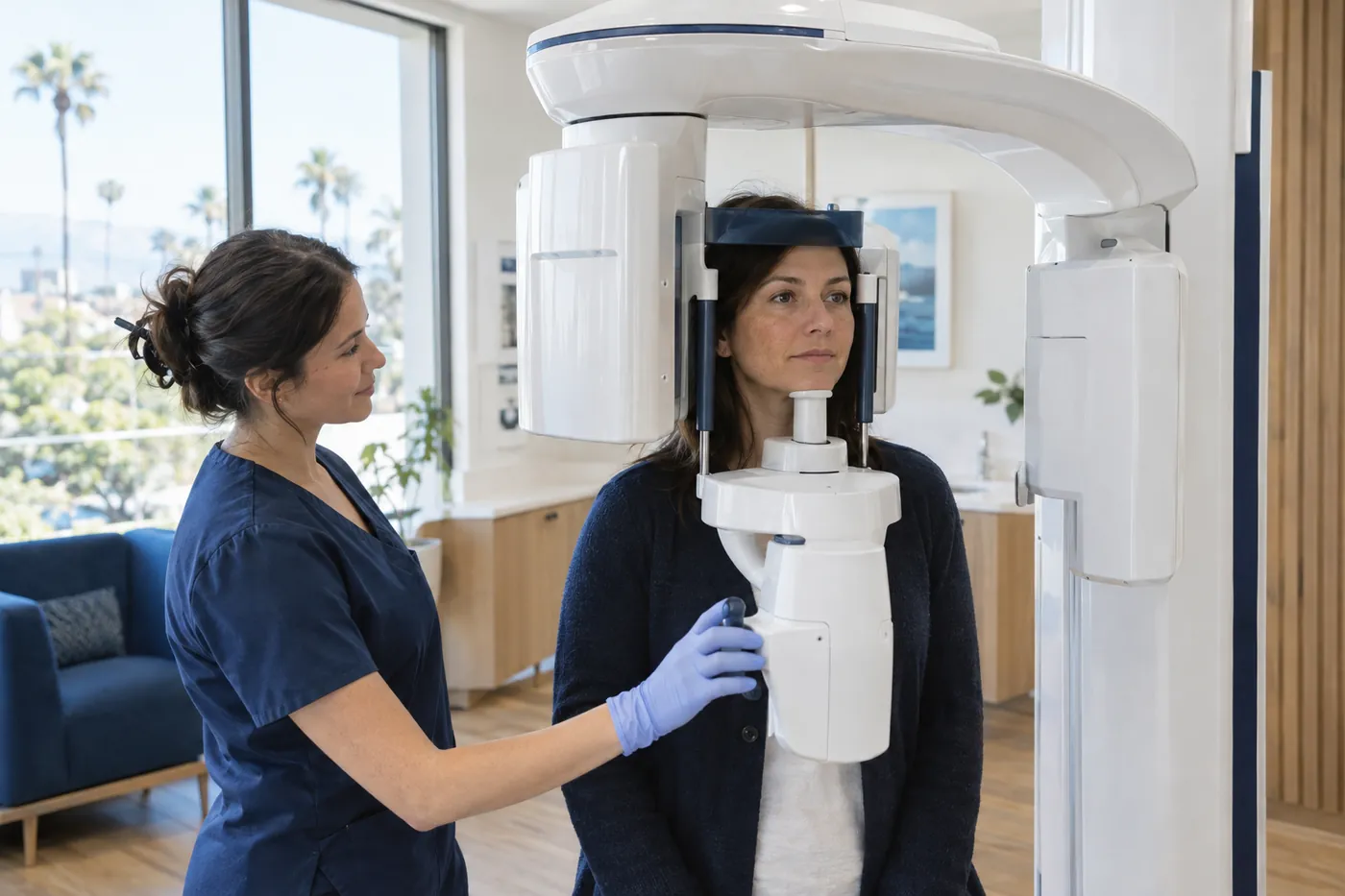
Careful planning starts with clear images. Our office is adding updated technology, including 3D imaging, digital X-rays and digital impressions. The FDA lists dental implant planning as one use of dental cone-beam CT, a type of 3D scan. Learn more about 3D imaging and digital impressions.
Can implants replace more than one tooth?
Yes. Implants can replace one tooth, several teeth in a row or a full arch of upper or lower teeth. If you’re living with gaps now, our page on missing teeth has more on your choices. Common options in dentistry include:
- Single tooth: one implant holds one crown, and the teeth on either side are left alone.
- Several teeth: two or more implants can hold a bridge that replaces three or more teeth.
- Full arch: usually four to six implants hold a full set of teeth. These implant-supported dentures can be fixed in place or snap on and off.
Which option fits you?
It depends on how many teeth are missing, how much bone you have and your goals. Your dentist will walk you through the choices.
Does getting a dental implant hurt?
Expect some soreness and swelling afterward, but the area is numbed before the implant is placed, and some people also have sedation. Over-the-counter pain relievers often help with the soreness.
Cleveland Clinic says initial healing takes about a week, and most people feel like themselves within a week or so. During healing, the ADA notes your dentist may suggest soft foods, and avoiding tobacco helps you heal.
Call your dentist if the implant feels loose or painful, or if you notice bleeding or swollen gums, pus, a fever or swollen glands in your neck.
Feeling nervous? Nitrous oxide has been offered here for anxious patients. Ask our team about comfort options for your visit.
How do you take care of a dental implant?
Care for an implant much like a natural tooth: brush twice a day, clean between your teeth daily and keep up with regular dental visits.
Regular cleanings and exams let your dental team check the gums around the implant. The FDA notes that keeping those gums clean can take extra care.
Two more tips from the FDA: ask for the brand and model of your implant and keep it with your records, and tell other health care providers about your implant before an MRI or X-ray.

Implants vs. bridges vs. dentures: what’s the difference?
All three replace missing teeth, but they’re held in place differently. AAOMS notes that, unlike fixed bridges or removable dentures, implants are unlikely to affect healthy neighboring teeth or lead to jawbone loss.
A bridge or denture can still be the right choice for some people. You can compare options on our dental bridges page. Here’s a quick look:
- Implant: anchored in the jawbone, so it doesn’t depend on neighboring teeth.
- Bridge: a replacement tooth held by crowns on the teeth beside the gap. Those neighboring teeth are reshaped to hold it.
- Denture: a removable set of teeth that rests on the gums. Implants can be added to help steady a loose denture.
How much do dental implants cost?
The cost of an implant depends on your treatment plan, so the most accurate answer comes after an exam. These are the main factors, and our dental implant cost guide explains each one in more detail:
- How many teeth you’re replacing and how many implants that takes
- Whether you need a tooth removed or a bone graft first
- The type of restoration: crown, bridge or denture
- The imaging and planning your case needs
- What your dental plan covers
Does insurance cover dental implants?
Coverage for implants varies from plan to plan, so check your benefits before treatment starts. We work with most dental insurance plans, including most PPOs, and we still accept the UFCW member dental plan. UFCW members should always verify coverage before treatment begins; see our UFCW dental plan page.
We accept cash, check, Visa, MasterCard, Discover, American Express and CareCredit, and we’re adding more payment choices with flexible financing options. Learn more about dental financing.
Many dental benefits renew at the end of the year, and our team is happy to help you use yours before then.

Questions & answers
Common questions
Is it worth getting dental implants at 70 years old?
Age alone doesn’t rule out implants. The ADA says your health is more of a factor than your age, and Cleveland Clinic notes there’s no upper age limit. What matters is whether your gums and jawbone are healthy and whether conditions like diabetes are well managed. An exam and a review of your health history will show whether an implant makes sense for you.
How long do dental implants last?
With brushing, flossing and regular dental visits, an implant can often last a lifetime, according to Cleveland Clinic. The crown, bridge or denture attached to it may wear and need replacing at some point. Cleveland Clinic says most crowns and bridges last around 15 years and most dentures last at least seven years, though this varies from person to person.
What can cause a dental implant to fail?
The FDA lists infection and delayed healing among the causes of implant failure, which can show up as a loose implant or one that comes out. Smoking may slow healing and lower long-term success, uncontrolled diabetes may raise the risk of infection, and untreated gum disease is another risk. If your implant ever feels loose or painful, tell your dentist right away.
What are the risks of dental implant surgery?
Like any surgery, implant placement has risks. The FDA lists possible damage to nearby teeth or tissue, such as the sinus, nerve injury that causes numbness, a loose abutment screw that makes the tooth feel wobbly, and trouble keeping the gums around the implant clean. AAOMS reports an overall implant success rate of 95%. Ask your dentist how these risks apply to you.
How long does the whole implant process take?
Usually several months. After the implant is placed, the jawbone needs about three to nine months to bond with it, according to Cleveland Clinic. Then the abutment and final tooth are attached. Extra steps, like removing a damaged tooth or adding bone first, can lengthen the timeline. Your dentist will explain your expected timeline after your exam.
Will I have a gap while my implant heals?
Not always. The ADA notes that temporary replacement teeth may be used while your permanent ones are made, and Cleveland Clinic says a temporary tooth may be provided for implants in the front of the mouth. The FDA suggests asking your provider what you’ll have in place during healing, so bring that question to your consultation.
Keep reading
Related care and answers

Dental Bridges
Missing a tooth? Learn what a fixed dental bridge is, the main types, the steps, how to clean under it, and ho
Dental Implant Cost Guide
What drives the cost of dental implants, how insurance and financing may help, and how to compare quotes fairl
3D Imaging, Digital X-Rays & Digital Impressions
We’re adding 3D imaging, digital X-rays and digital impressions. Learn what each one does, how radiation is ke
Missing Teeth
Why adults lose teeth, what happens when a gap is left alone, and how implants, bridges and dentures compare.
Payment Options & Financing
Pay by cash, check, Visa, MasterCard, Discover, American Express or CareCredit, with more financing choices on

Dental Crowns
When you need a crown, crown materials, the steps, digital vs. traditional impressions, crowns after a root ca
Sources
- Dental Implant Surgery · American Association of Oral and Maxillofacial Surgeons
- Are You a Candidate for Dental Implants? · American Association of Oral and Maxillofacial Surgeons
- Implants · American Dental Association (MouthHealthy)
- Dental Implants: Types, Purpose & Benefits · Cleveland Clinic
- Dental Implants: What You Should Know · U.S. Food and Drug Administration
- Dental Cone-beam Computed Tomography · U.S. Food and Drug Administration
Golden Triangle Dentistry is not affiliated with these organizations. Links open in a new tab.
Important information: This page is general information, not a diagnosis; whether an implant is right for you depends on an exam and your health history.
Golden Triangle Dentistry
Book a visit
25460 Medical Center Dr, Suite 202, Murrieta
Ask about dental implants
Call (951) 677-1054 to talk with our Murrieta team about replacing a missing tooth.