Cost guide
How Much Do Dental Implants Cost? What Shapes the Price
There’s no single price for a dental implant. Your cost depends on how many teeth you’re replacing, the health of your bone and gums, and the new tooth itself. Here’s what to know before you compare quotes.
- Implants placed in our office
- 3D imaging
- Flexible financing options
- Works with most PPO plans

How much does a dental implant cost?
Dental implant cost depends on your mouth, not a menu price. The biggest factors are how many teeth you’re replacing, whether you need extractions or a bone graft, the imaging used to plan treatment, and the crown, bridge or denture attached to the implant. An exam and a personal treatment plan are the only way to get a real number.
Why does it cost so much for dental implants?
Dental implants cost more than many other options because you’re paying for several parts and several stages, not one item. An implant includes a small threaded post placed in the jawbone, a connector called an abutment, and the tooth you see, such as a crown, bridge or implant-supported denture.
Treatment also takes time. After the post is placed, the jawbone slowly fuses to it. Cleveland Clinic says this healing takes roughly three to nine months before the final tooth is attached.
So a quote usually covers planning, surgery, healing checkups and the final restoration. At Golden Triangle Dentistry, dental implants are placed in our office, from start to finish, so every stage happens in one familiar place in Murrieta.
What affects the cost of a dental implant?
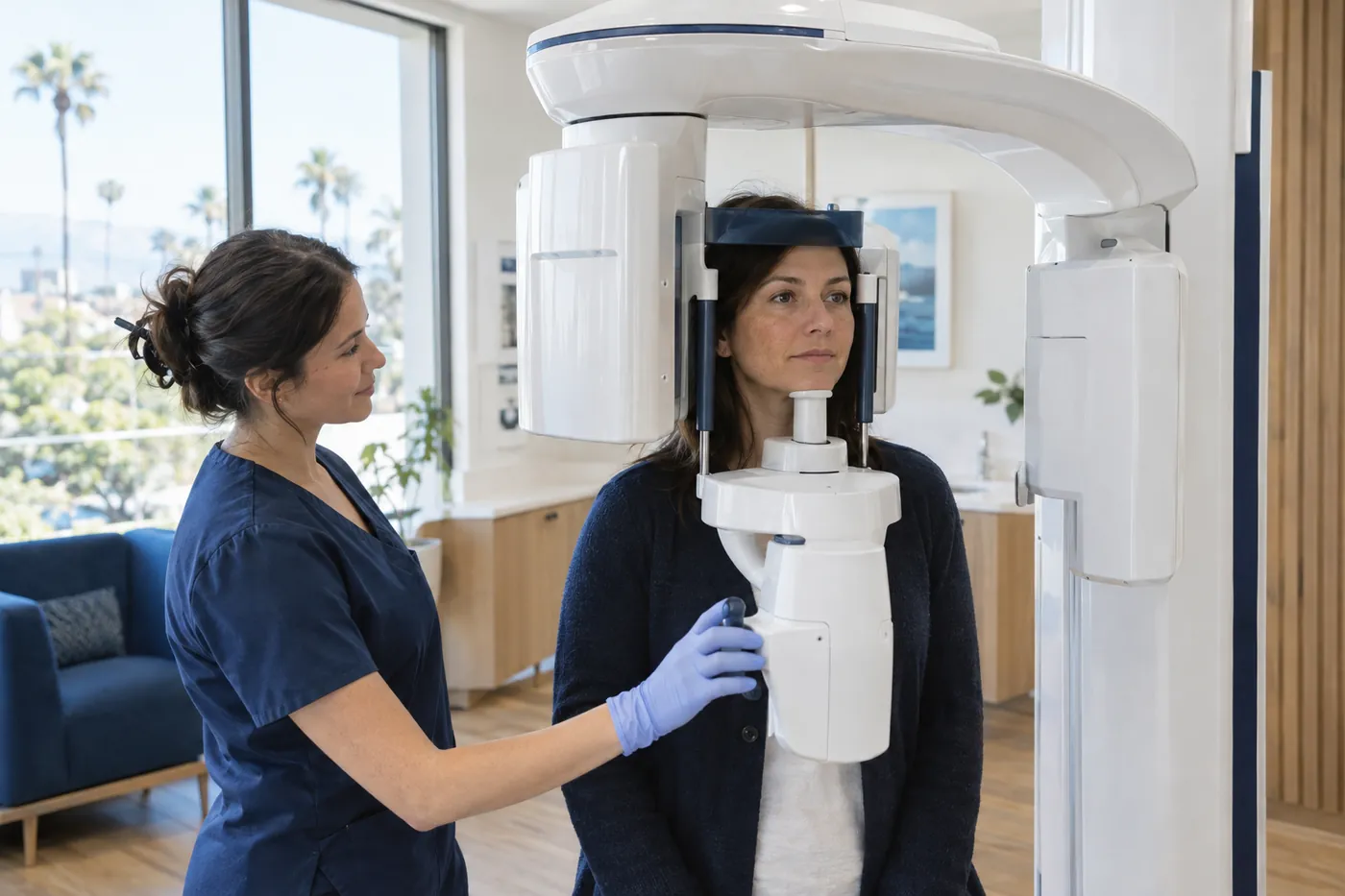
Most implant quotes rise or fall with the same handful of factors, and your exam shows which ones apply to you. Our office has added 3D imaging and digital impressions to help with planning.
- How many teeth you’re replacing. One implant can hold one crown. Cleveland Clinic explains that an implant bridge uses two or more implants to replace three or more teeth, and a full arch typically uses four to six.
- Extractions. If a damaged tooth is still in place, it has to come out first. Sometimes a graft is placed in the empty socket to help protect the bone.
- Bone grafting. An implant needs enough healthy jawbone. If the bone is too thin, a graft can rebuild it first, which adds a procedure and healing time.
- Imaging and planning. The FDA lists implant planning as a main use of dental cone-beam CT, a scan that builds a 3D image of the teeth and jaw.
- The new tooth. The crown, bridge or denture is its own cost. How many teeth it replaces and the material it’s made from both play a part.
- Your gum and overall health. Untreated gum disease, smoking and uncontrolled diabetes can affect healing, so gum disease treatment sometimes comes first.
At a glance
What to look for in an implant quote
Use this list to compare quotes side by side, so you’re matching the same steps.
- Exam and imaging. Is the 3D scan or other imaging included, or listed separately?
- Extractions. If a tooth needs to come out first, is that step in the quote?
- Bone graft. Is a graft planned? If one might be needed, how will you know?
- Implant and abutment. Are both the post and the connector included?
- Final tooth. Which restoration is planned, a crown, bridge or denture, and what material is it?
- Temporary tooth. What will fill the space while you heal?
- Follow-up visits. Are healing checks and adjustments included?
How long after a bone graft can I get an implant?
It depends on the size of the graft. Cleveland Clinic says a bone graft generally needs at least three months to heal, and a large graft may need nine to 12 months.
Timing affects your plan and your budget. Once the graft has healed, Cleveland Clinic advises getting the implant within six to 12 months, because new graft bone can start to shrink if it waits too long.
Not everyone needs a graft. Some people have plenty of bone, and others only need a graft in the socket after a tooth is removed. Your exam and 3D scan help answer that before treatment starts.
How much does insurance usually cover for dental implants?
It depends on your plan. Some dental plans pay toward part of implant treatment, while others exclude implants. The ADA’s MouthHealthy site lists dental implants among the services some plans don’t cover.
Plan limits matter, too. Many plans have an annual limit, which is the most the plan will pay in a plan year, and some won’t cover a tooth that was missing before you joined.
Original Medicare generally doesn’t help here. Medicare.gov says that in most cases Medicare doesn’t cover dental services or items like dentures and implants.
Golden Triangle Dentistry works with most dental insurance plans, including most PPOs and the UFCW member dental plan. Learn more on our dental insurance page. Because implant care happens in stages, it can cross into a new plan year, so ask our team how timing may affect your benefits. Good questions for your plan:
- Does my plan cover implants, or only certain parts of treatment?
- What is my annual limit, and how much is left this year?
- Is a tooth that was missing before I enrolled excluded?
- Do I need the plan’s approval before treatment begins?

How can I pay for dental implants over time?
Many people combine insurance, savings and a payment plan. Our office accepts cash, check, Visa, MasterCard, Discover, American Express and CareCredit, and we’re adding more payment choices, with flexible financing options. See our dental financing page for details.
Before you sign any financing agreement, the Consumer Financial Protection Bureau suggests a few checks:
- Ask whether a 0% offer is truly interest-free or uses deferred interest. With deferred interest, if the full balance isn’t paid in time, interest can be charged on the whole amount, not just what’s left.
- Read when interest starts or changes, and when fees apply.
- Find out what your insurance covers first.
- Compare other options, such as a card you already have or a loan from a bank or credit union.

How do I compare dental implant quotes fairly?
Compare what each quote includes, not just the total. Two quotes can look far apart simply because one leaves out steps the other includes, like imaging, an extraction or the final crown.
The FDA suggests asking a few questions before treatment. Am I a good candidate? What brand and model of implant system will you use? How long will healing take, and what will I have in place meanwhile? Who do I call if it feels loose or painful?
The FDA also recommends keeping a record of your implant’s brand and model. Ask for your plan in writing, and ask why each step is needed.

Can the cheapest implant cost more in the long run?
Sometimes it can, but price alone doesn’t tell you much either way. What matters most is whether the plan fits your mouth and your health.
A quote may look lower because it leaves out a needed step, like treating gum disease or rebuilding thin bone. The FDA notes that untreated gum disease raises the risk of implant failure, and that a failed implant may need another surgery to repair or replace it.
A higher price isn’t automatically better, either. Compare the same steps side by side.
Your habits count, too. The FDA lists smoking, uncontrolled diabetes and poor oral hygiene as factors that raise failure risk, and it recommends keeping regular dental checkups after treatment.
When to get help fast
After an extraction or implant surgery, call us if you notice fever, pus or swelling that’s getting worse. Call 911 or go to the ER for facial swelling that spreads toward your eye or neck, trouble breathing or swallowing, or bleeding that won’t stop with firm pressure.
Is there a cheaper alternative to dental implants?
Yes. Bridges and dentures are common alternatives, and each has trade-offs worth talking through with your dentist. If you’re weighing options for missing teeth, here’s how they compare.
- Dental bridge. A bridge is supported by the teeth next to the gap. Cleveland Clinic notes those teeth must be shaved down, which can weaken them over time. Learn more about dental bridges.
- Removable denture. Traditional dentures rest on the gums and generally don’t last as long as implants. Implant-supported dentures add stability.
- Saving the tooth. If the tooth is still there, root canal treatment and a crown may be an option. The American Association of Endodontists says keeping a natural tooth generally has a lower upfront cost than replacing it with an implant.
- Leaving the space. This costs nothing today, but gaps left by missing teeth can let nearby teeth shift.
Questions & answers
Common questions
Why won’t you quote an implant price over the phone?
Because an honest answer depends on things no one can see over the phone: how many teeth are involved, whether a tooth needs to come out, how much bone you have and which restoration suits you. After an exam and imaging, your dentist can explain your options and what each step involves. For cost questions, call us and our team will answer that.
Is it worth getting dental implants at 70 years old?
Age alone usually isn’t the deciding factor. The ADA’s MouthHealthy site says your health matters more than your age, though conditions such as diabetes, and tobacco use, can slow healing. Cleveland Clinic notes there’s no upper age limit, and that the main requirement is enough healthy jawbone. Your bone, gums and overall health are what an exam helps sort out.
How painful is getting a dental implant?
Implant surgery is done with local anesthesia to numb the area. Cleveland Clinic says slight discomfort and swelling afterward are normal, and the first stage of recovery takes about a week. If dental visits make you nervous, tell our team. We can talk about comfort options, including nitrous oxide.
How long do dental implants last?
With good care, implants can last a very long time. Cleveland Clinic says implants can often last a lifetime, while most crowns and bridges attached to them last around 15 years and most dentures at least seven. That’s worth knowing for long-term budgeting. Brushing, cleaning between teeth, not smoking and regular checkups all help.
What is the downside to dental implants?
The main downsides are time, surgery and cost. Treatment takes months because the bone needs to heal around the implant. Like any surgery, implants carry risks. The FDA lists damage to nearby teeth or tissue, nerve numbness, infection and a loose screw or implant. Your dentist should explain your specific risks before you decide.
Keep reading
Related care and answers

Dental Implants
Dental implants placed in our Murrieta office, from start to finish. Learn who is a candidate, the steps, reco
Payment Options & Financing
Pay by cash, check, Visa, MasterCard, Discover, American Express or CareCredit, with more financing choices on

Dental Insurance & UFCW Plans
We still accept the same insurance plans, including the UFCW member dental plan, and work with most PPOs. Lear

Dental Bridges
Missing a tooth? Learn what a fixed dental bridge is, the main types, the steps, how to clean under it, and ho
3D Imaging, Digital X-Rays & Digital Impressions
We’re adding 3D imaging, digital X-rays and digital impressions. Learn what each one does, how radiation is ke
Missing Teeth
Why adults lose teeth, what happens when a gap is left alone, and how implants, bridges and dentures compare.
Sources
- Dental Implants: Types, Purpose & Benefits · Cleveland Clinic
- Dental Bone Graft: Process, Purpose & Healing · Cleveland Clinic
- Dental Implants: What You Should Know · U.S. Food and Drug Administration
- Dental Cone-beam Computed Tomography · U.S. Food and Drug Administration
- Implants · American Dental Association (MouthHealthy)
- Choosing the Right Dental Plan for You · American Dental Association (MouthHealthy)
- Dental service coverage · Medicare.gov
- What should I know about medical credit cards and payment plans for medical bills? · Consumer Financial Protection Bureau
- Root Canal vs. Dental Implant · American Association of Endodontists
- Root Canal vs Extraction · American Association of Endodontists
- Periapical Abscess: Symptoms, Diagnosis & Treatment · Cleveland Clinic
- Cuts and puncture wounds · MedlinePlus (U.S. National Library of Medicine)
Golden Triangle Dentistry is not affiliated with these organizations. Links open in a new tab.
Important information: This guide is general information, not a quote or a diagnosis. Treatment options and costs depend on an exam, and coverage depends on your specific insurance plan.
Golden Triangle Dentistry
Book a visit
25460 Medical Center Dr, Suite 202, Murrieta
Missing a tooth? Let’s talk through your options.
Call Golden Triangle Dentistry in Murrieta at (951) 677-1054. Dental implants are placed in our office, from start to finish.