Gum health
Gum Disease Treatment in Murrieta
Bleeding, swollen or tender gums are often the first signs of gum disease. Caught early, gingivitis can be reversed. Later stages can’t be undone, but they can be slowed and managed with treatment and steady home care.
- Gum evaluations
- Gum disease treatment
- Maintenance plans
- Most PPO plans accepted
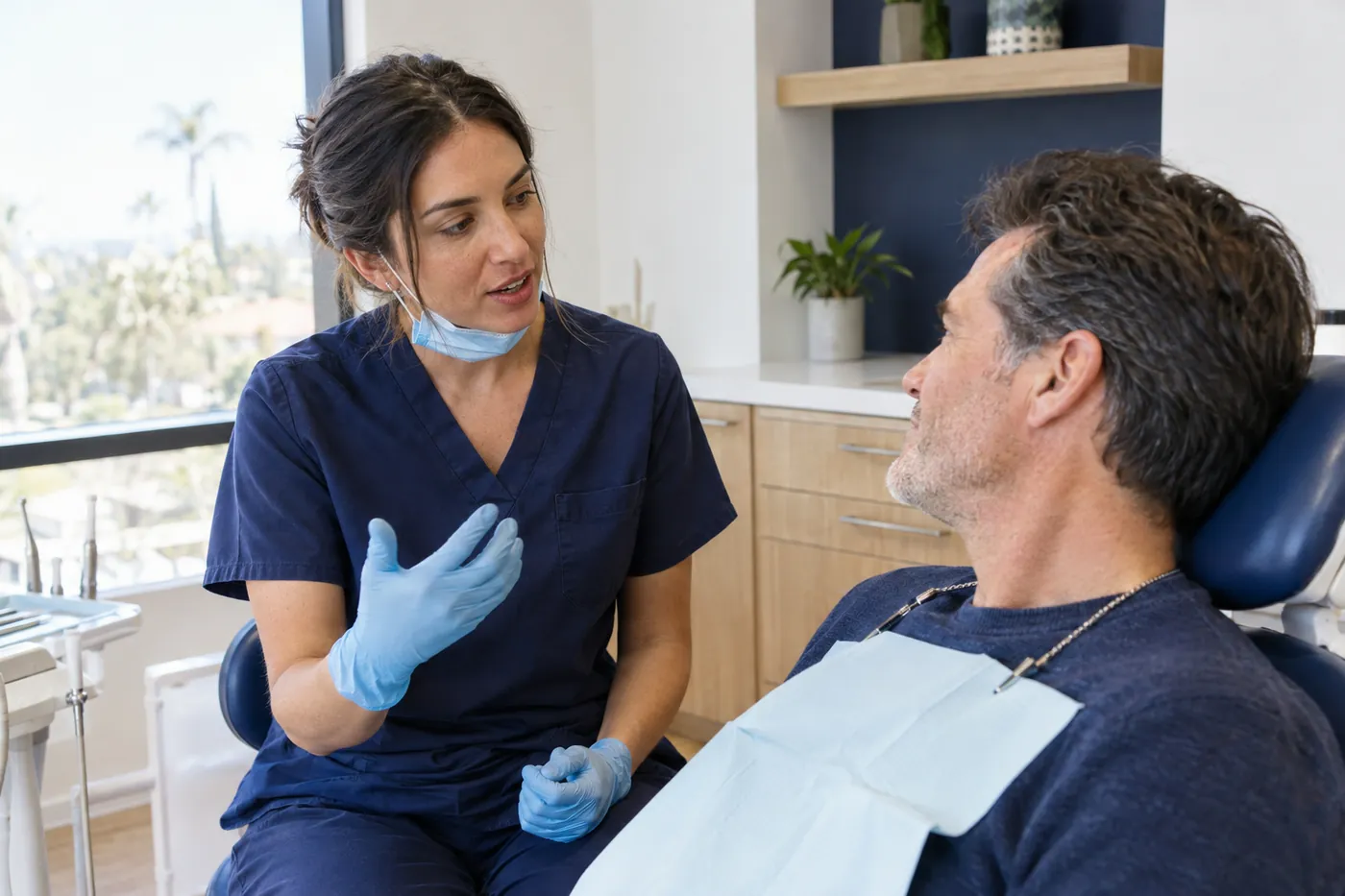
How does a dentist treat periodontal disease?
Treatment depends on how advanced it is. Gingivitis can often be reversed with a professional cleaning and better daily brushing and flossing. Periodontitis is usually treated with a deep cleaning called scaling and root planing, which removes plaque and tartar below the gumline, followed by regular maintenance visits. Advanced cases may need surgery.
What is gum disease?
Gum disease is inflammation and infection of the tissues that hold your teeth in place, and it starts with plaque, a sticky film of bacteria on your teeth.
When plaque isn’t removed, it can harden into tartar. The NIDCR says only a professional cleaning by a dentist or dental hygienist can remove tartar.
The bacteria in plaque and tartar trigger inflammation that can damage your gums and, over time, the bone that supports your teeth. Cleveland Clinic calls gum disease the leading cause of tooth loss.
It’s also very common. CDC data show about 4 in 10 U.S. adults 30 and older, and about 6 in 10 adults 65 and older, had periodontitis in 2009–2014.
What is the difference between gingivitis and periodontitis?
Gingivitis is the mild, early stage that affects only the gums and can be reversed. Periodontitis is the advanced stage that damages the bone around your teeth; it can’t be reversed, only slowed and managed.
With gingivitis, gums may look red and puffy and bleed when you brush or floss, but there’s no bone loss yet. It often doesn’t hurt, which makes it easy to miss.
The American Academy of Periodontology (AAP) says untreated gingivitis can advance to periodontitis. Bacteria spread below the gumline, pockets form between the gums and teeth, and the supporting bone breaks down.
In advanced periodontitis, teeth can loosen and may eventually need to be removed. If you’ve noticed a loose adult tooth, don’t wait to have it checked.
At a glance
Gingivitis vs. periodontitis
Both start with plaque, but they differ in what they damage and whether they can be undone.
| Gingivitis | Periodontitis | |
|---|---|---|
| What’s affected | Gums only | Gums, plus the bone and tissue that hold teeth |
| Common signs | Red, puffy gums that bleed when you brush or floss | Receding gums, bad breath, pus, loose or shifting teeth |
| Pain | Often none | Often none early on; some people feel soreness |
| Can it be reversed? | Yes, with professional care and good home care | No, but it can be slowed and managed |
| Typical treatment | Professional cleaning and better daily brushing and flossing | Deep cleaning, maintenance visits, sometimes surgery |
| If untreated | Can advance to periodontitis | Bone loss can lead to tooth loss |
What are the warning signs of gum disease?
Common signs include gums that bleed easily, look red or swollen, or feel tender. The CDC warns that gum disease can become serious before you notice any symptoms. Watch for:
- Gums that bleed when you brush or floss
- Red, swollen, tender or purplish gums
- Gums pulling away from your teeth, making teeth look longer
- Bad breath that won’t go away
- Loose or sensitive teeth, or pain when chewing
- Pus around the gumline
- Changes in how your teeth fit together, or in how a partial denture fits
When it can’t wait
Call 911 or go to the nearest emergency room if swelling makes it hard to breathe, swallow or see, if swelling spreads toward your eye or neck, or if you have a high fever with swelling, bleeding that won’t stop, or a serious injury. For pain or swelling that isn’t an emergency, call us.
What causes gum disease, and who is at risk?
Plaque buildup is the main cause, but smoking, diabetes and several other factors make gum disease more likely or more severe. Learn more about bleeding gums, swollen gums and bad breath if you’ve noticed those signs.
- Smoking or other tobacco use. The CDC says smokers have twice the risk of gum disease, and treatment may not work as well.
- Diabetes. The AAP says people with diabetes are two to four times more likely to develop gum disease.
- Hormonal changes during puberty, pregnancy and menopause
- Older age, and a family tendency toward gum disease even with careful home care
- Stress, which can make it harder for your body to fight infection
- Some medicines, such as certain heart medicines, antidepressants and oral contraceptives
- Clenching or grinding your teeth
- Poor nutrition and obesity
Tell us about your health
The NIDCR notes gum disease is more common and more severe in men. Let us know about health conditions and medicines, since they can affect your gums.

What is a deep cleaning (scaling and root planing)?
A deep cleaning, also called scaling and root planing, removes plaque and tartar from below the gumline and smooths the tooth roots so your gums can heal.
The CDC lists it as a non-surgical treatment for periodontitis. Your gums are numbed first with a local anesthetic.
According to the AAP, scaling clears plaque and bacterial toxins from the pockets around your teeth. Root planing then smooths the roots to help keep plaque from sticking again.
Your dentist may also suggest a prescription mouth rinse, or antibiotics placed around the roots. The NIDCR notes that advanced cases may need surgery, and our team will talk with you about your options if that’s the case.

What happens after gum disease treatment?
Most people need ongoing maintenance visits after a deep cleaning. The AAP says many patients need no further treatment, but most need maintenance care to keep their gums healthy.
Maintenance visits keep plaque and tartar under control and let your dentist watch your gums over time. Your dentist will recommend how often to come in.
Daily home care matters just as much. The NIDCR says good daily care at home is part of treatment, and the CDC notes that quitting tobacco helps gums heal.
Regular cleanings and exams keep you on track. If gum disease has already cost you a tooth, dental implants, placed in our office from start to finish, are one option to discuss.
Is gum disease linked to other health problems?
Yes. Gum disease is linked to several health conditions, most clearly diabetes, though for most of these links researchers haven’t proven that gum disease is the cause.
Diabetes works both ways. People with diabetes are more likely to get gum disease, and the CDC says untreated periodontitis can make diabetes worse. The AAP notes that treating gum disease has been shown to improve blood sugar levels in people with diabetes.
Gum disease has also been linked to heart disease. The AAP says inflammation may explain the connection, but a cause-and-effect link hasn’t been proven.
The AAP adds that bacteria from the gums can be breathed into the lungs and may contribute to infections like pneumonia. The NIDCR lists rheumatoid arthritis among conditions associated with gum disease.
If you have diabetes or heart disease, let us know, and talk with your doctor about your gum health too.

How can you prevent gum disease?
Brush twice a day with fluoride toothpaste, clean between your teeth every day, don’t use tobacco, and keep up regular checkups and cleanings.
- Brush gently along the gumline with a soft brush held at a 45-degree angle.
- Clean between your teeth daily with floss or another tool, like interdental brushes or a water flosser.
- Quit smoking and other tobacco products.
- Manage diabetes, which the CDC says lowers your risk of gum disease.
- Eat a balanced diet, since the AAP notes that poor nutrition can weaken your body’s ability to fight infection.
- See your dentist regularly. The CDC advises a dental checkup at least once a year.
Caring for Murrieta families since 1991
We work with most dental insurance plans, including most PPOs, and the same plans are still accepted, including the UFCW member dental plan.
Questions & answers
Common questions
Can I treat gum disease at home?
Home care is essential, but it can’t do everything. The NIDCR says early gum disease can often be reversed with daily brushing and flossing. Once plaque hardens into tartar, only a professional cleaning can remove it, and deeper pockets below the gumline need professional treatment. If your gums bleed or look swollen, schedule a gum evaluation.
Does a deep cleaning hurt?
Your gums are numbed with a local anesthetic before a deep cleaning. Afterward, Cleveland Clinic notes your gums may feel sore for a couple of days, and teeth may be sensitive to hot and cold, which usually fades within a month or two. Some bleeding is normal. If you feel anxious, ask our team about comfort options.
Can you smell if you have gingivitis?
Sometimes. The NIDCR and AAP both list bad breath that won’t go away as a warning sign of gum disease. Bad breath can have other causes too, so if it lingers even with good brushing and cleaning between your teeth, it’s worth having your gums checked.
Will I lose my teeth if I have periodontitis?
Not necessarily. Periodontitis can’t be reversed, but the CDC says it can be slowed down and managed with professional treatment. The AAP notes that advanced periodontitis can loosen teeth until they need to be removed, which is why it helps to treat gum disease early and keep up maintenance visits.
Can pregnancy affect my gums?
Yes. Cleveland Clinic lists hormonal changes during pregnancy as a risk factor for gum disease. The ADA notes that studies of pregnant patients have affirmed the safety of dental treatment, so it’s a good idea to keep up your checkups and cleanings during pregnancy and to let us know you’re expecting.
Does dental insurance cover gum disease treatment?
Coverage depends on your plan. We work with most dental insurance plans, including most PPOs. Call us with your plan information and our team will answer your questions. Dr. Neff’s letter also notes that many dental benefits renew at the end of the year, and our team is happy to help you use yours before then.
Keep reading
Related care and answers
Bleeding Gums
Why gums bleed when you brush or floss, what helps at home, when bleeding is an emergency, and how a dentist t
Swollen Gums
What causes swollen gums, safe ways to calm them at home, when swelling is an emergency, and when to see a den

Loose Adult Tooth
A loose permanent tooth is never typical. Learn the common causes, safe steps at home, emergency warning signs

Dental Cleanings & Exams
What happens at a dental checkup: cleaning, exam, X-rays when needed, oral cancer screening and gum checks. Us

Dental Implants
Dental implants placed in our Murrieta office, from start to finish. Learn who is a candidate, the steps, reco

Dental Insurance & UFCW Plans
We still accept the same insurance plans, including the UFCW member dental plan, and work with most PPOs. Lear
Sources
- Gum Disease Information · American Academy of Periodontology
- Gum Disease Risk Factors · American Academy of Periodontology
- Non-Surgical Treatments · American Academy of Periodontology
- Gum Disease and Other Diseases · American Academy of Periodontology
- Gum Health and Diabetes · American Academy of Periodontology
- Periodontal (Gum) Disease · National Institute of Dental and Craniofacial Research
- About Periodontal (Gum) Disease · Centers for Disease Control and Prevention
- Smoking, Gum Disease, and Tooth Loss · Centers for Disease Control and Prevention
- Oral Health Tips for Adults · Centers for Disease Control and Prevention
- Periodontal Disease (Gum Disease) · Cleveland Clinic
- Tooth Scaling and Root Planing · Cleveland Clinic
- Periapical Abscess · Cleveland Clinic
- Dental Emergencies: What To Do · Cleveland Clinic
- Brushing Your Teeth · American Dental Association (MouthHealthy)
- Home Oral Care · American Dental Association
- X-Rays/Radiographs · American Dental Association
Golden Triangle Dentistry is not affiliated with these organizations. Links open in a new tab.
Important information: This page is general information, not a diagnosis. Your dentist will recommend treatment based on an exam.
Golden Triangle Dentistry
Book a visit
25460 Medical Center Dr, Suite 202, Murrieta
Get your gums checked
Call (951) 677-1054 to schedule a gum evaluation with the same caring team you know.