Preventive care
Dental Cleanings and Exams in Murrieta
Regular checkups help spot problems early, when treatment is likely to be simpler and more affordable. Our team cleans away plaque and tartar, checks your gums and screens for oral cancer, with the same caring team you know.
- Cleanings for all ages
- Gum checks
- Oral cancer screening
- Most PPO plans accepted
How often should you get a dental cleaning and exam?
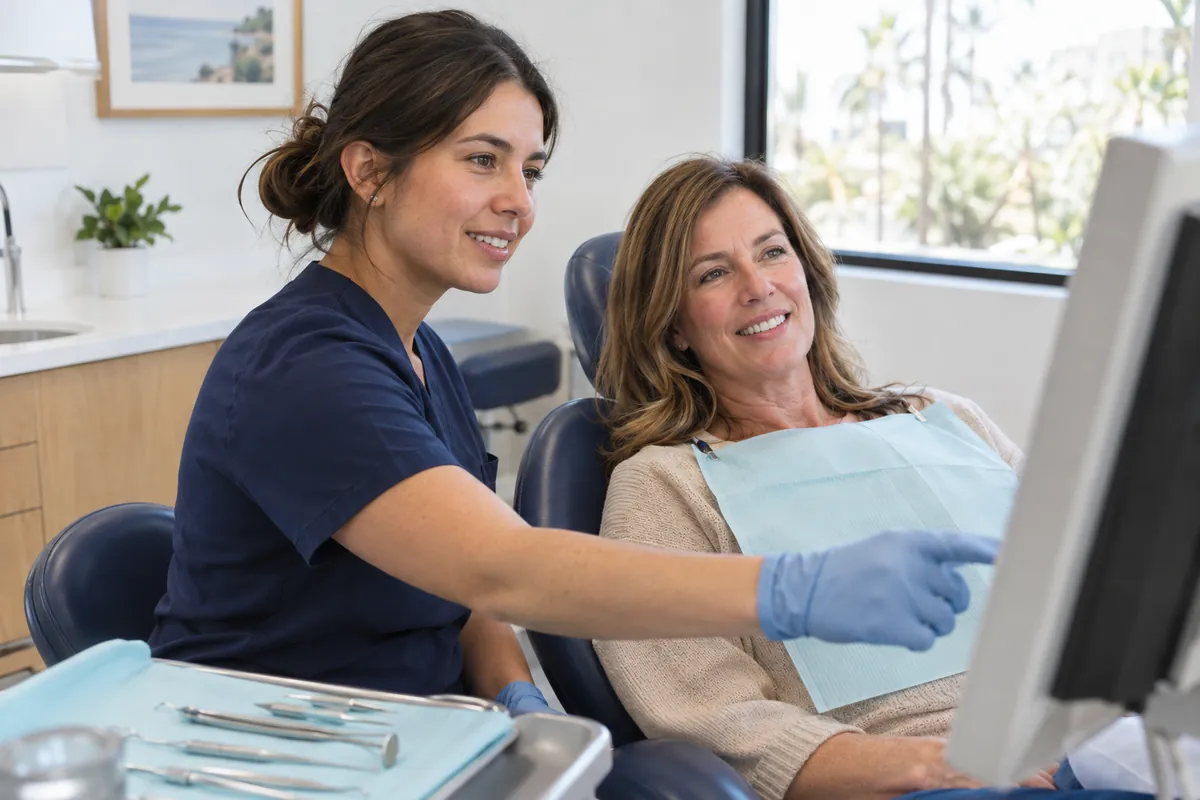
It depends on you. The ADA says there’s no one-size-fits-all schedule: some people need a checkup once or twice a year, and others need more. Your dentist will suggest how often to come in based on your gums, cavity risk and overall health. The CDC advises seeing a dentist at least once a year.
What happens at a dental checkup?
A checkup has two parts: a professional cleaning to remove plaque and tartar, and an exam to look for cavities, gum disease and other problems.
Your visit starts with questions about your health. Then your teeth are scaled and polished, and the dentist examines your teeth, gums and the rest of your mouth.
During scaling, you might hear scraping sounds. Let your hygienist know if anything feels uncomfortable, or if you have sensitive teeth.
How it works
Your checkup, step by step
Here’s what a typical cleaning and exam includes.
- Health update
Share any changes in your health, medicines or treatments since your last visit, so your care fits you.
- Gum check
Your gums are checked for signs of gum disease, like bleeding, swelling or deeper pockets around teeth.
- Scaling
Plaque and tartar are removed from your teeth with special tools, above the gumline.
- Polishing
Teeth are polished with a soft rubber cup and a special paste to remove plaque and surface stains.
- X-rays if needed
Your dentist decides whether you need X-rays based on your health, age and risk for disease.
- Exam and screening
The dentist checks your teeth, gums, tongue, cheeks and throat, feels your jaw and neck, and screens for oral cancer.
- Your plan
You’ll get home-care tips and a recommended time for your next visit.
Why do regular cleanings matter?
Regular cleanings remove buildup that brushing and flossing miss, which lowers your risk of cavities and gum disease.
Plaque is a sticky film of bacteria. Cleveland Clinic notes that plaque and tartar raise your risk for cavities and gum disease, and regular cleanings remove these harmful deposits.
Checkups also catch problems early. The ADA says regular visits help spot dental problems when treatment is likely to be simpler and more affordable.
That matters because the CDC warns that gum disease can become serious before you notice symptoms. Waiting for something to hurt can mean waiting too long.
Most people do well with a cleaning about every six months, says Cleveland Clinic. People who are prone to gum disease may need cleanings more often.
Why do dentists take X-rays, and are they safe?
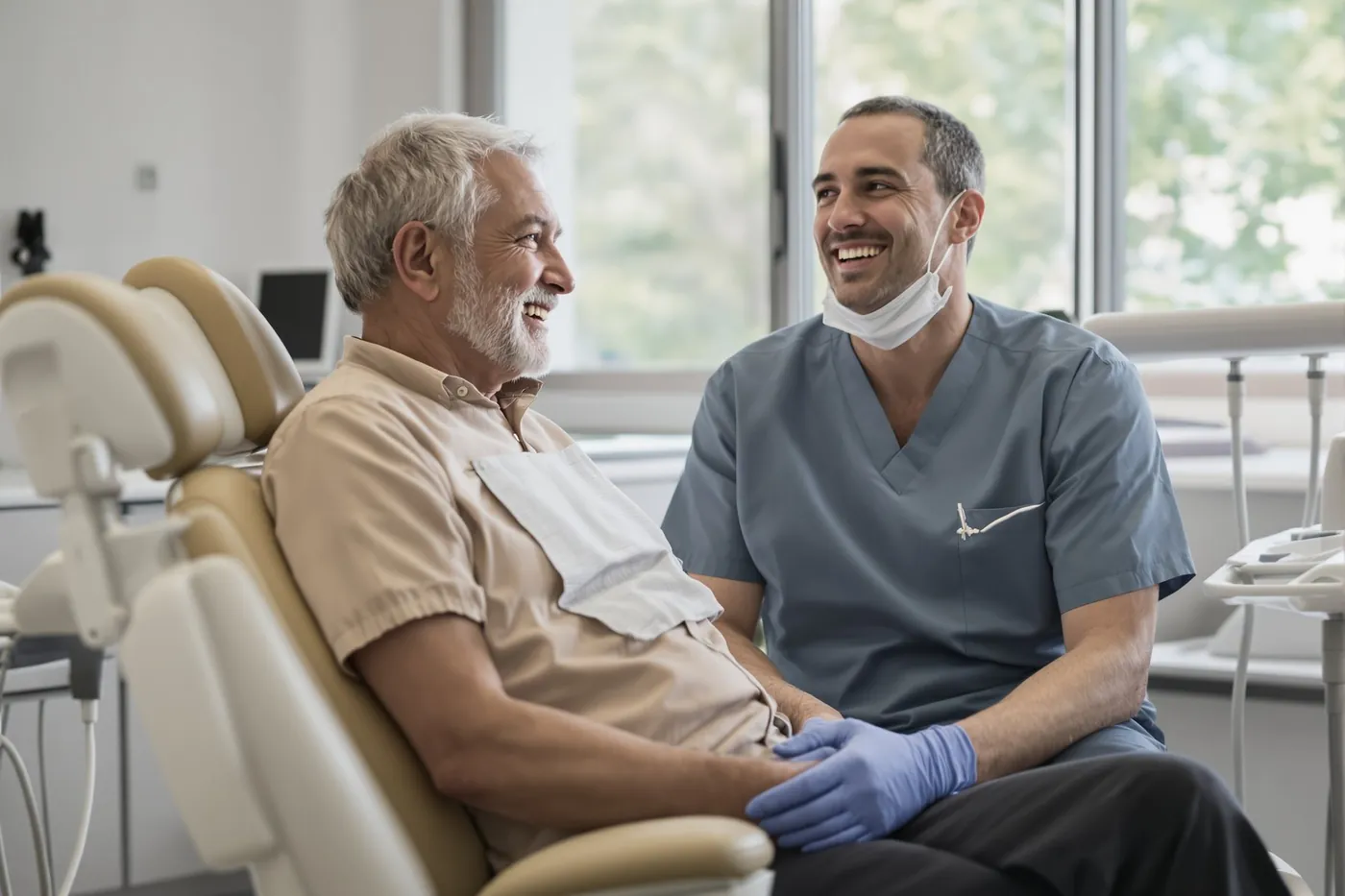
Dental X-rays show damage and disease that can’t be seen during an exam, such as new cavities or impacted teeth, and they’re taken only when your dentist decides they’re needed.
The ADA says how often you need X-rays depends on your oral health, age, risk for disease and any symptoms. The risk from dental X-rays is very small, and the ADA recommends using them in moderation.
Digital X-rays can lower radiation exposure compared with film, and the images are easy to share, according to the ADA. The ADA also now says abdominal and thyroid shielding is no longer needed for dental X-rays.
Updated technology is part of what’s new here. Dr. Neff’s letter shares that 3D imaging, digital X-rays and digital impressions are coming “for more comfortable visits and fewer appointments.”
What is an oral cancer screening?
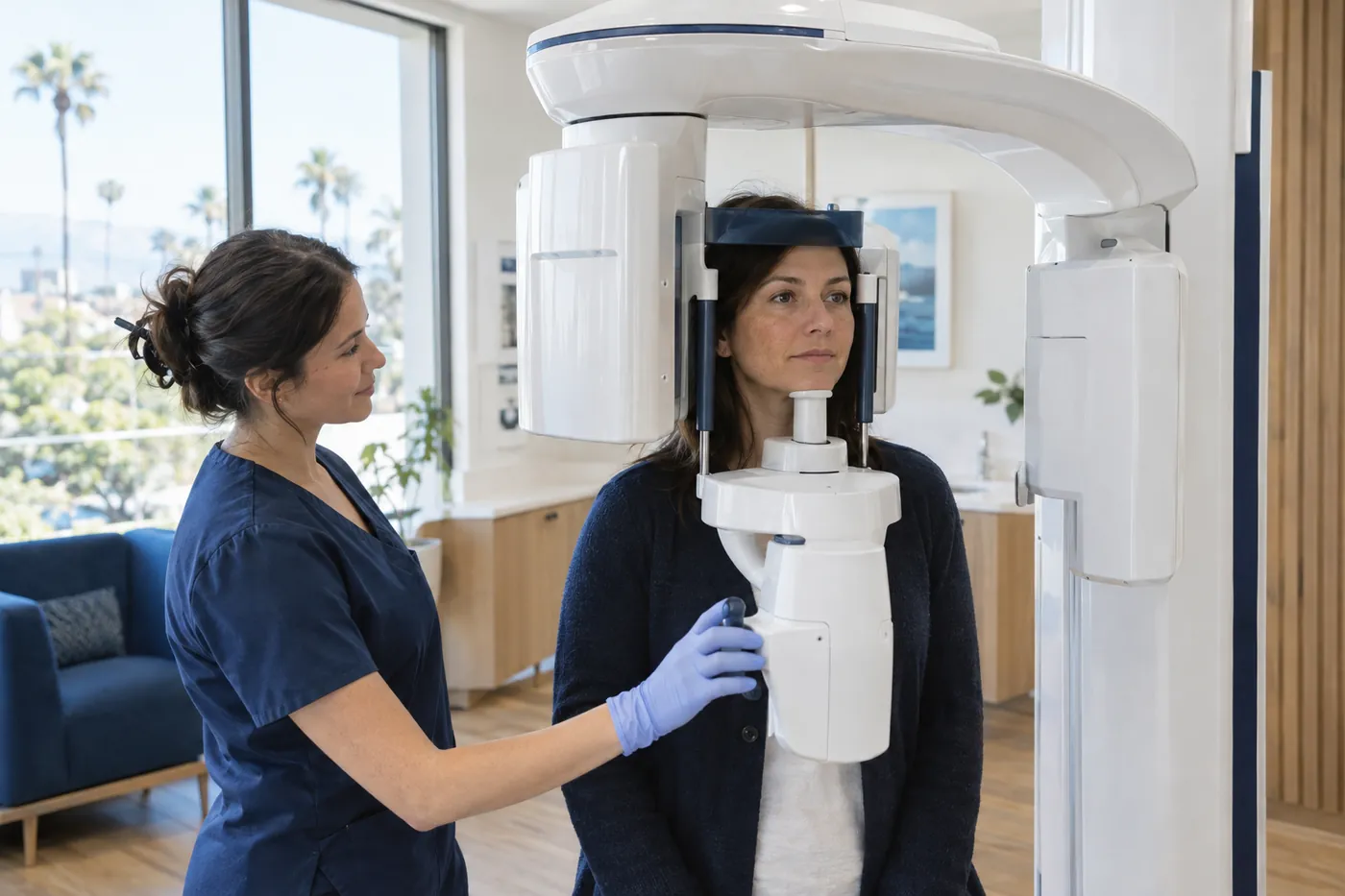
An oral cancer screening is a quick check of your lips, mouth, tongue, throat, jaw and neck for sores, patches or lumps that could be early signs of cancer.
The ADA describes how it works: the dentist may hold your tongue with gauze to see all sides, look over your cheeks, gums, the floor and roof of your mouth and your throat, and feel your jaw and neck for lumps.
A screening doesn’t diagnose cancer. If something looks unusual, Cleveland Clinic notes your dentist may recheck it in a week or so, or recommend further testing.
The NIDCR says most mouth cancers are linked to tobacco use, alcohol or both, and most throat cancers are caused by HPV. See a dentist or doctor if any of these signs last more than two weeks:
- A sore, irritation, lump or thick patch in your mouth, lip or throat
- A white or red patch in your mouth
- A lump in your neck
How do dentists check your gums?
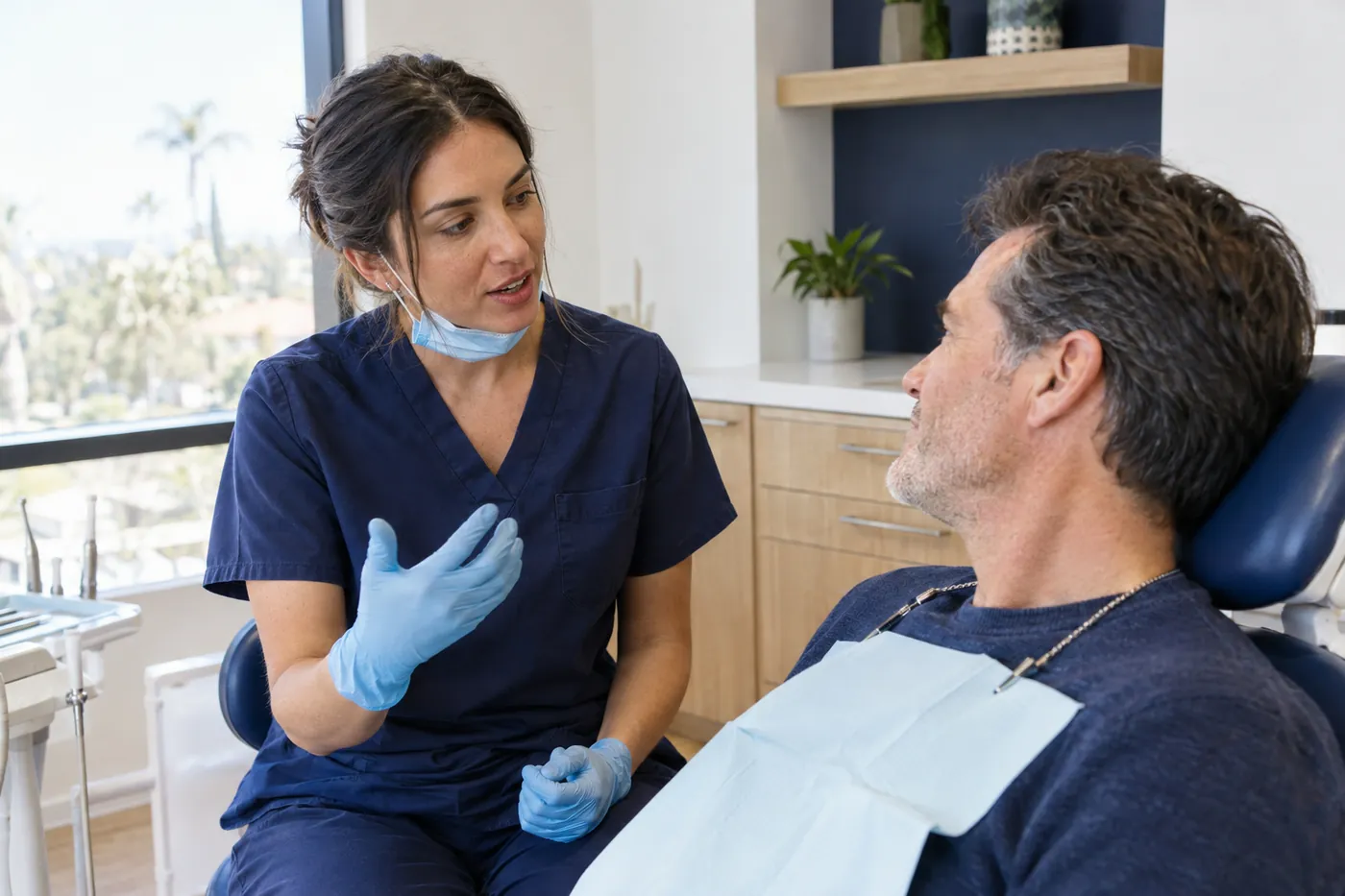
Your dentist or hygienist looks for redness, swelling and bleeding, and uses a small measuring tool called a probe to check the pockets between your gums and teeth.
Cleveland Clinic explains that deeper pockets point to more severe gum disease, and X-rays can show how much bone surrounds your teeth.
Gum checks matter for adults of every age. CDC data show about 4 in 10 U.S. adults 30 and older had some level of periodontitis, the more serious form of gum disease.
The good news is that gingivitis, the mild form, can be reversed with good care. If your gums bleed when you brush, read about bleeding gums and mention it at your visit.
How should you care for your teeth between visits?
Brush twice a day for two minutes with fluoride toothpaste, clean between your teeth once a day, and limit sugary drinks and snacks.
- Use a soft-bristled brush held at a 45-degree angle to your gums, with gentle, short strokes.
- Clean between your teeth daily with floss, interdental brushes, a water flosser or wooden picks. The ADA says the right tool is the one you’ll use every day.
- Replace your toothbrush every three or four months, or sooner if the bristles fray.
- Drink fluoridated tap water, and save sugary drinks and snacks for now and then.
- Don’t use tobacco, and if you drink alcohol, do so in moderation.
- Look for the ADA Seal of Acceptance on toothpaste and other products.
Is a medicine drying your mouth?
The CDC suggests asking your doctor about another medication if yours makes your mouth feel dry. If that doesn’t help, drink plenty of water and chew sugarless gum.

Can you use your dental benefits before the end of the year?
Yes, and now is a good time to check. As Dr. Neff’s letter says, “Many dental benefits renew at the end of the year, and our team is happy to help you use yours before then.”
We work with most dental insurance plans, including most PPOs, and the same plans are still accepted, including the UFCW member dental plan. Learn more on our dental insurance page, or call us with your plan details.
If it’s been a while since your last visit, that’s okay. Your records are still right here, and new patients are welcome too.

Do checkup needs change with age and health?
Yes. Everyone benefits from regular checkups, but what you need can change with your age and health.
Children should have a first visit by their first birthday, and fluoride and sealants add protection. Our children’s dentistry page explains each stage.
If you have diabetes, the CDC notes that managing it lowers your risk of gum disease. Tell us about health changes, new medicines, and treatments like chemotherapy or hormone therapy.
If you’re pregnant, the ADA notes that studies of pregnant patients have affirmed the safety of dental treatment, so keep up your checkups.
Pain or swelling between visits?
Don’t wait for your next checkup; call us. Call 911 or go to the nearest emergency room for swelling that makes it hard to breathe, swallow or see, swelling that spreads toward your eye or neck, a high fever with swelling, bleeding that won’t stop, or a serious injury.
Questions & answers
Common questions
Does a dental cleaning hurt?
Cleveland Clinic says scaling shouldn’t hurt, though you may hear scraping sounds. Your teeth or gums may feel a little sensitive or sore afterward, which usually goes away in a few days. If you feel nervous or have sensitive teeth, tell your hygienist before you start, and ask our team about comfort options.
What is the difference between a regular cleaning and a deep cleaning?
A regular cleaning removes plaque and tartar above the gumline and polishes your teeth. A deep cleaning, called scaling and root planing, reaches below the gumline and smooths the tooth roots so gums can heal. It’s used to treat gum disease, and your gums are numbed first. Your dentist will tell you which type you need.
What is tartar, and can I remove it at home?
Tartar is plaque that has hardened on your teeth. Once it forms, brushing and flossing can’t remove it. The NIDCR says only a professional cleaning by a dentist or dental hygienist can. Brushing twice a day and cleaning between your teeth every day help keep plaque from hardening in the first place.
Can I get a cleaning if I haven’t seen a dentist in years?
Yes. It’s never too late to get back on track. Your first visit back may include X-rays and a careful look at your gums. If tartar has built up below the gumline, your dentist may recommend a deep cleaning before you move to regular cleanings. Ask our team any questions along the way.
Can a dentist see signs of other health problems?
Sometimes. The ADA notes that regular dental visits can reveal signs of some diseases or medical conditions in your mouth. That’s one reason to keep your dentist up to date on changes in your health, including new diagnoses, medicines and treatments like radiation, chemotherapy or hormone replacement therapy.
Do I still need checkups if I wear dentures?
Yes. The CDC advises visiting your dentist at least once a year, even if you wear dentures and have lost some or all of your teeth. Your dentist still checks your gums, tongue and the rest of your mouth, including an oral cancer screening, and you can ask about how your dentures fit.
Keep reading
Related care and answers
Gum Disease Treatment
Bleeding or swollen gums? Learn the signs of gingivitis and periodontitis, how a deep cleaning works, and how

Children’s Dentistry
Children’s dentistry in Murrieta: first visits, checkups, fluoride, sealants and habit checks. Parents are wel
3D Imaging, Digital X-Rays & Digital Impressions
We’re adding 3D imaging, digital X-rays and digital impressions. Learn what each one does, how radiation is ke

Dental Insurance & UFCW Plans
We still accept the same insurance plans, including the UFCW member dental plan, and work with most PPOs. Lear

Emergency Dental Care
What counts as a dental emergency, what to do now for a knocked-out or broken tooth, toothache or swelling, an
Sources
- Your Top 9 Questions About Going to the Dentist—Answered! · American Dental Association (MouthHealthy)
- Home Oral Care · American Dental Association
- X-Rays/Radiographs · American Dental Association
- X-rays · American Dental Association (MouthHealthy)
- Brushing Your Teeth · American Dental Association (MouthHealthy)
- Oral Health Tips for Adults · Centers for Disease Control and Prevention
- About Periodontal (Gum) Disease · Centers for Disease Control and Prevention
- Oral Cancer · National Institute of Dental and Craniofacial Research
- Periodontal (Gum) Disease · National Institute of Dental and Craniofacial Research
- What Happens During a Dental Cleaning? · Cleveland Clinic
- Prophylaxis/Preventive Care · Cleveland Clinic
- Oral Cancer Screening: What To Expect · Cleveland Clinic
- Periodontal Disease (Gum Disease) · Cleveland Clinic
- Periapical Abscess · Cleveland Clinic
- Dental Emergencies: What To Do · Cleveland Clinic
Golden Triangle Dentistry is not affiliated with these organizations. Links open in a new tab.
Important information: Digital X-rays and 3D imaging are part of the updated technology described in Dr. Neff’s letter; ask our team what’s in use at your visit.
Golden Triangle Dentistry
Book a visit
25460 Medical Center Dr, Suite 202, Murrieta
Schedule your next cleaning
Call (951) 677-1054 to book a cleaning and exam at our Murrieta office, and ask our team to help you use your benefits before they renew.