Replacing missing teeth
Dental Bridges in Murrieta
A fixed bridge fills the gap left by one or more missing teeth, using the teeth or implants beside the gap for support. Here’s how bridges work, how to care for one, and how they compare with other options.
- Fixed, not removable
- Implants placed in our office
- Works with most PPO plans
- Caring for Murrieta since 1991

What is a dental bridge?
A dental bridge is a fixed replacement for one or more missing teeth. Crowns on the teeth beside the gap, or on dental implants, hold an artificial tooth in the empty space. Only a dentist can remove it. A bridge helps you chew and speak normally and keeps nearby teeth from drifting into the gap.
What is a fixed dental bridge?
A fixed dental bridge is a set of connected crowns and replacement teeth that is cemented in place to fill a gap. The ADA’s MouthHealthy site describes it as a fixed partial denture that only your dentist can take out.
The natural teeth on each side of the gap are called abutment teeth. Each one gets a crown, and the replacement tooth is joined between them, so the bridge literally spans the space. If you’d like to know more about the crowns themselves, see our dental crowns page.
Bridges can be made from porcelain, gold, metal alloys or a combination of these. Your dentist will explain which material suits the spot in your mouth, the force of your bite and how the tooth needs to look.

What are the types of dental bridges?
Dentists use four main types of bridges. Which one fits depends on how many teeth are missing, where the gap is and how healthy the teeth beside it are. Cleveland Clinic describes them this way:
- Traditional bridge: crowns on the natural teeth on both sides of the gap hold the replacement tooth. It’s used when the teeth on both sides are healthy.
- Cantilever bridge: a crown on only one side supports the replacement tooth, for gaps with a natural tooth on just one side.
- Maryland bridge: small metal wings bond to the back of the neighboring teeth instead of crowns. It’s most often used to replace front teeth.
- Implant-supported bridge: the bridge rests on dental implants instead of natural teeth. It can be used when three or more teeth in a row are missing.
Implants, right here
When implants are part of your plan, they are placed in our office, from start to finish. Your dentist will explain which bridge types make sense for your mouth after an exam.
At a glance
Bridge, implant or partial denture?
A side-by-side look at three common ways to replace missing teeth.
| Fixed bridge | Dental implant | Partial denture | |
|---|---|---|---|
| Held in place by | Crowns on the teeth beside the gap, or on implants | A post placed in the jawbone | Clasps that hook around your natural teeth |
| Removable? | No, only a dentist can remove it | No | Yes, you take it out every day |
| Effect on nearby teeth | Neighboring teeth are shaped for crowns | Neighboring teeth are left alone | Clasps rest on neighboring teeth |
| Surgery needed? | No | Yes, oral surgery to place the post | No |
| Daily cleaning | Floss threader or interdental brush under the bridge | Brush and floss much like a natural tooth | Remove, brush and soak it overnight |
| Often suited to | One to three missing teeth in a row | Adults in good general health | Several missing teeth with natural teeth remaining |
What happens if you don’t replace a missing tooth?
When a gap stays open, the teeth beside it can shift into the space, and chewing and speaking can feel different. Cleveland Clinic notes that bridges help prevent that drifting and restore chewing and speech.
The ADA’s MouthHealthy site points out that people who are missing teeth may notice a difference in how they chew and speak.
Bone is part of the picture too. Cleveland Clinic explains that the jawbone gradually shrinks after tooth loss, which is one reason your dentist weighs bone health when comparing replacement options.
Not sure what caused a gap, or worried about a tooth that feels loose? Our page on missing teeth walks through common causes and next steps.

How is a dental bridge placed?
A traditional bridge usually takes two visits a few weeks apart. Here’s what typically happens, based on Cleveland Clinic’s overview of the process.
We’re adding digital impressions, which use a small handheld scanner in place of trays of impression material. Read more on our 3D imaging and digital impressions page.
- Exam and planning. Your dentist checks the gap, the teeth beside it and your gums, takes any X-rays needed and talks through your options.
- Numbing and shaping. The area is numbed, and the abutment teeth are reshaped so the crowns can fit over them.
- Impressions. A model of your teeth is made so a dental lab can build your bridge to fit.
- Temporary bridge. You wear a temporary bridge to protect the shaped teeth while the lab works, which usually takes about two to four weeks.
- Fitting and cementing. At the second visit, your dentist checks the fit and your bite, then cements the final bridge in place.
Implant-supported bridges take longer
Implants need time to fuse with the jawbone before the bridge goes on. Cleveland Clinic puts that healing time at three to six months on average.
How do you clean under a dental bridge?
Clean under your bridge every day with a floss threader or a small interdental brush. Regular floss can’t pass between the connected teeth, so you need a tool that slips under the replacement tooth.
A floss threader is a flexible plastic loop. Pull a piece of floss through the loop, guide it under the bridge next to the gum, then slide the floss gently along the sides of each support tooth.
The bridge depends on the teeth and gums that hold it up. Cleveland Clinic notes that decay or damage to the support teeth can weaken a bridge, and poor cleaning can lead to gum inflammation. If your gums bleed when you clean, read about gum disease treatment.
- Brush twice a day with a nonabrasive fluoride toothpaste, paying extra attention where the bridge meets the gums.
- Use a floss threader or interdental brush under the bridge once a day.
- Go easy on very hard or chewy foods, which can stress the bridge.
- Keep up regular cleanings and exams so your dentist can check the support teeth and gums.

Bridge vs. implant vs. partial denture: which is better?
There’s no single right answer for everyone. Cleveland Clinic says a blanket recommendation isn’t possible, and for many people more than one option would work well.
A bridge is fixed and usually finished in a couple of visits, but it relies on crowning the neighboring teeth. An implant replaces the tooth root and leaves neighboring teeth alone, but it involves oral surgery and more time. A removable partial denture clips onto your remaining teeth and comes out every night.
Things to weigh include your overall health, the condition of the teeth beside the gap, the bone in the area, how long treatment takes, how you feel about surgery and how much daily cleaning you’re comfortable with. To explore implants in more depth, visit our dental implants page.

Does insurance cover a dental bridge?
Many dental plans help with the cost of a bridge, but coverage depends on your plan. Call us with your plan details and our team will answer your questions.
Our Murrieta office works with most dental insurance plans, including most PPOs, and accepts the UFCW member dental plan. Learn more about dental insurance at our office.
We accept cash, check, Visa, MasterCard, Discover, American Express and CareCredit, and we’re adding more payment choices with flexible financing. See dental financing for details. Many dental benefits renew at the end of the year, and our team is happy to help you use yours before then.
Questions & answers
Common questions
How long does a dental bridge last?
Cleveland Clinic says the average lifespan of a dental bridge is five to 15 years, and some last longer with good care. How long yours lasts depends mostly on the health of the support teeth and gums and how well you clean under the bridge each day. Regular checkups let your dentist spot wear or decay at the edges early.
Can a bridge replace more than one tooth?
Yes. Cleveland Clinic notes that bridges work well for people missing one to three teeth in a row. For three or more missing teeth in a row, an implant-supported bridge may be an option, because implants can carry the load instead of natural teeth. Your dentist will look at the length of the gap and the strength of the teeth around it.
Is a bridge cheaper than an implant?
A bridge usually costs less up front, and Cleveland Clinic notes bridges are more likely to be covered by insurance. Implants cost more at the start but leave neighboring teeth untouched and can last a lifetime, though the crown attached to the implant may need replacing. Your estimate depends on your mouth and your plan, so ask our team after your exam.
Can I eat normally with a dental bridge?
For most foods, yes. Restoring chewing is one of the main reasons people get a bridge, according to Cleveland Clinic. The same source recommends avoiding very hard or chewy foods, which can put extra stress on the bridge. Tell us if your bite ever feels uneven, the bridge feels loose or chewing on that side starts to hurt.
Can a tooth under a bridge get a cavity?
The replacement tooth can’t decay, but the natural teeth holding the bridge can. Cleveland Clinic reports that some people have more cavities after getting bridges, and decay in a support tooth can weaken the whole bridge. Daily cleaning under the bridge, fluoride toothpaste and regular checkups are the main protection for the teeth that keep it in place.
What is the difference between a crown and a bridge?
A crown is a cap that covers one damaged tooth to protect and strengthen it. A bridge replaces a missing tooth, and it uses crowns on the teeth beside the gap to hold the replacement tooth in place. The ADA’s MouthHealthy site notes that crowns are also used to attach bridges and to cover dental implants.
Keep reading
Related care and answers

Dental Implants
Dental implants placed in our Murrieta office, from start to finish. Learn who is a candidate, the steps, reco

Dental Crowns
When you need a crown, crown materials, the steps, digital vs. traditional impressions, crowns after a root ca
Missing Teeth
Why adults lose teeth, what happens when a gap is left alone, and how implants, bridges and dentures compare.
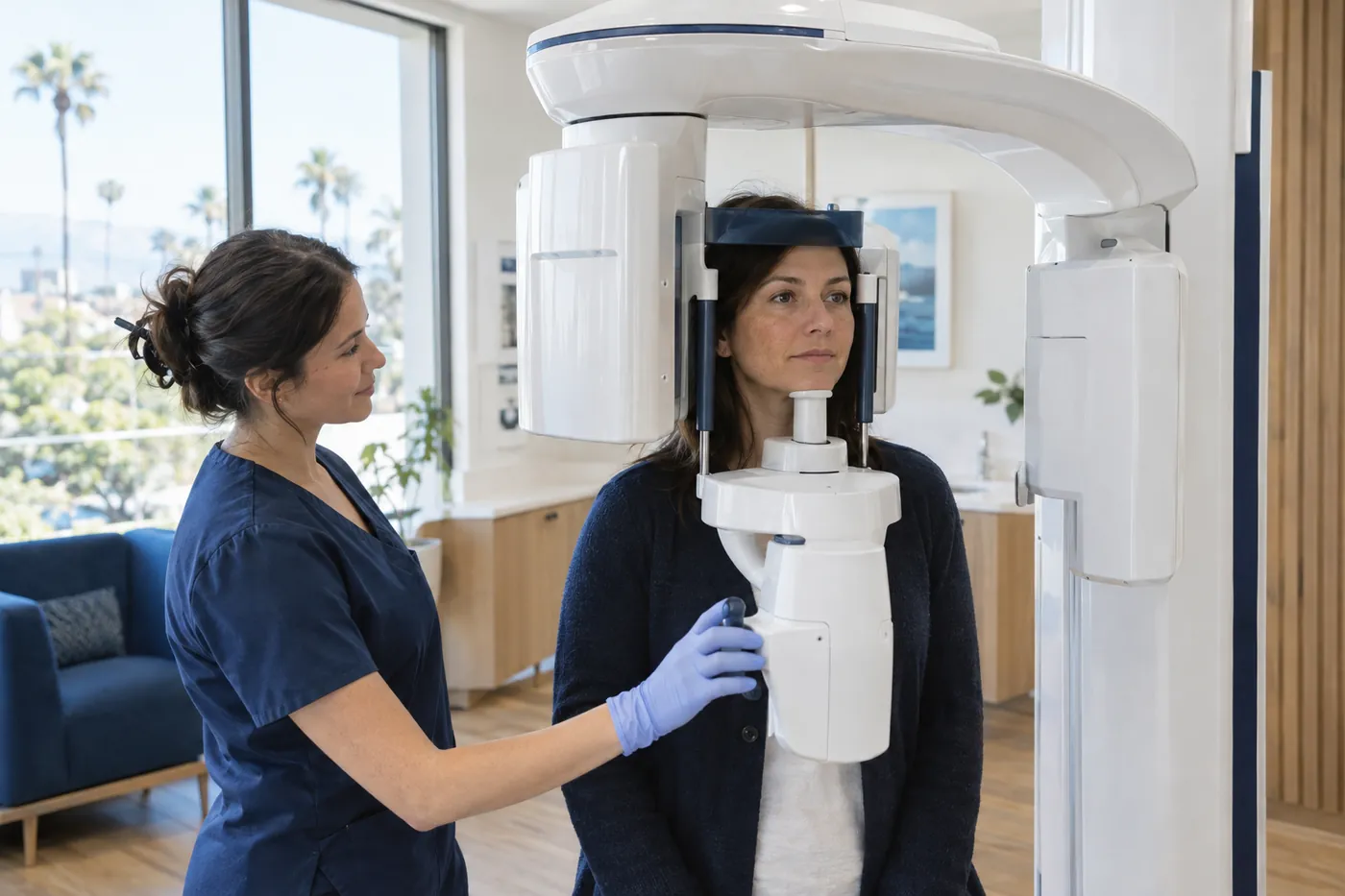
3D Imaging, Digital X-Rays & Digital Impressions
We’re adding 3D imaging, digital X-rays and digital impressions. Learn what each one does, how radiation is ke

Payment Options & Financing
Pay by cash, check, Visa, MasterCard, Discover, American Express or CareCredit, with more financing choices on
Sources
- Dental Bridges: Types & Who Needs Them · Cleveland Clinic
- Bridges · American Dental Association (MouthHealthy)
- Dental Bridges vs. Implants: What’s the Difference? · Cleveland Clinic
- What Are Dentures? Types, Care & Benefits · Cleveland Clinic
- Implants · American Dental Association (MouthHealthy)
- Crowns · American Dental Association (MouthHealthy)
- Toothache: Symptoms, Causes & Remedies · Cleveland Clinic
- Tooth Abscess: Symptoms, Causes & Treatment · Cleveland Clinic
- Facial trauma · MedlinePlus (U.S. National Library of Medicine)
Golden Triangle Dentistry is not affiliated with these organizations. Links open in a new tab.
Important information: This page is general information, not a diagnosis; for facial swelling that affects your breathing, swallowing or vision, a high fever with swelling, bleeding that won’t stop or a serious injury, call 911 or go to the nearest emergency room.
Golden Triangle Dentistry
Book a visit
25460 Medical Center Dr, Suite 202, Murrieta
Talk through your options
Call (951) 677-1054 and our team will help you compare a bridge, an implant and a partial denture for the gap in your smile.