Symptom guide
Jaw Pain and TMJ: What It Is and What Helps
Jaw pain, clicking and stiffness are common, and many cases settle with simple self-care. Learn what TMD is, what eases a flare-up, which signs need urgent care, and when to have your jaw checked.
- Often improves with self-care
- Start with simple, reversible steps
- Jaw pain can mimic tooth pain
- Plain-language guide
What is TMJ jaw pain?
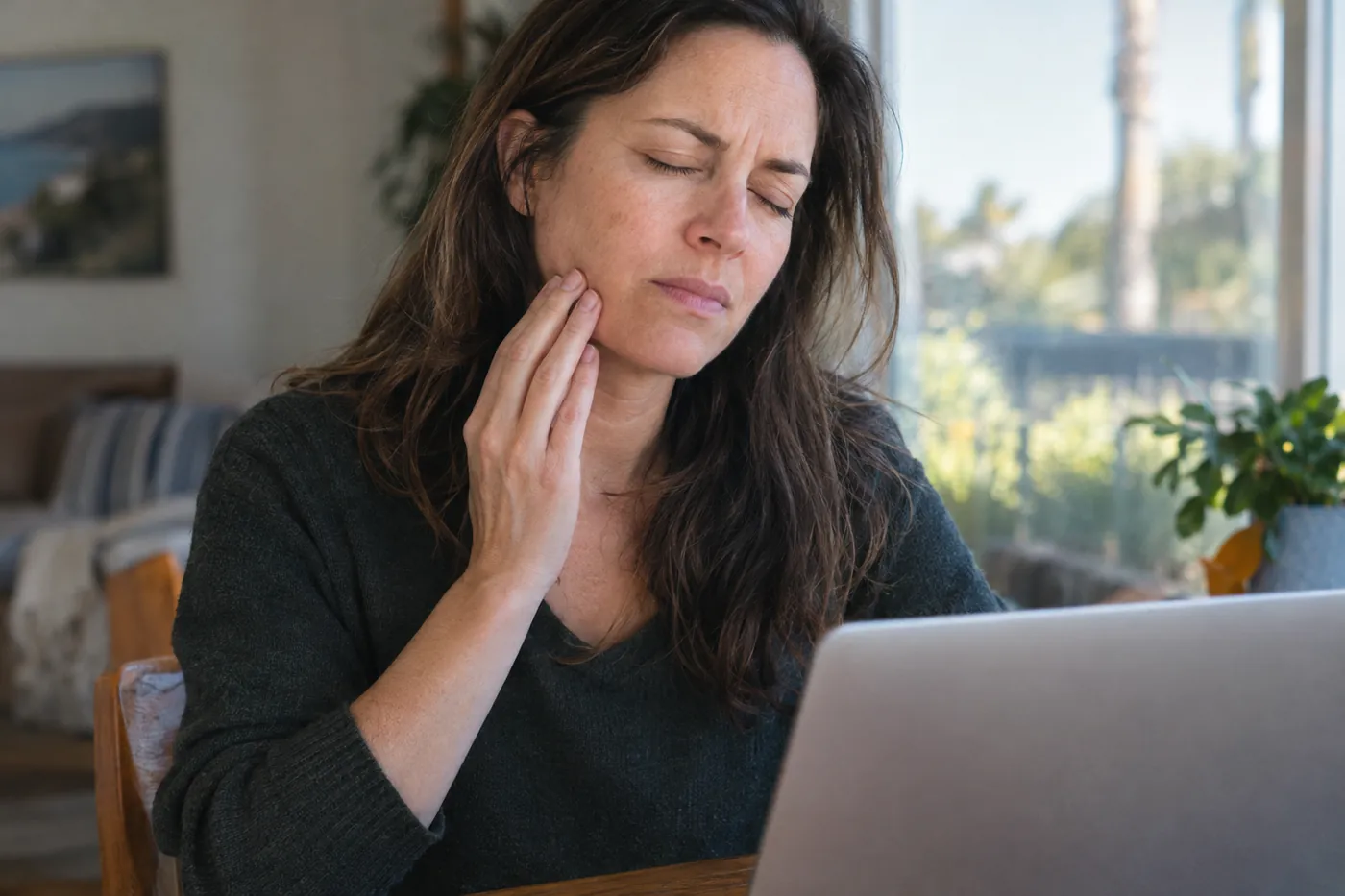
TMJ is the jaw joint in front of each ear. Pain there and in the chewing muscles is called a temporomandibular disorder, or TMD. It can cause jaw aching, clicking, stiffness, headaches and earaches. Many cases improve with soft foods, warm or cold packs, gentle stretches and less clenching. See a dentist or doctor if it persists.
What is TMJ, and what is TMD?
TMJ stands for temporomandibular joint, the hinge that connects your lower jaw to your skull. You have one on each side of your face, just in front of your ears, and they let you chew, talk and move your jaw.
TMD, or temporomandibular disorder, is the name for problems with those joints and the chewing muscles around them. Many people simply say TMJ when they mean TMD. NIDCR describes TMD as a group of more than 30 conditions that cause pain and trouble moving the jaw.
TMD is common, and NIDCR notes it affects women about twice as often as men. Cleveland Clinic says it is most common between ages 20 and 40.
What does TMJ pain feel like?
TMJ pain often feels like a dull ache in the jaw, the face or in front of the ear. It often gets worse when you open wide, chew or move your jaw. The American Academy of Family Physicians notes that pain tied to jaw movement points toward TMD, while pain that does not change with movement suggests another cause.
Other common signs include:
- Jaw stiffness, or a jaw that locks open or closed
- Trouble opening your mouth fully
- Clicking, popping or grating sounds with pain
- Headaches, earaches, or ringing in the ears
- Pain that spreads to the face, neck or shoulders
- Tooth pain
Clicking alone is usually fine
NIDCR says clicking or popping in the jaw without pain is common, is considered normal, and does not need treatment.
At a glance
Things linked to jaw joint and muscle pain
TMD often has more than one cause, and some of these are easier to change than others.
- Clenching and grinding
Tight jaw muscles from clenching during the day or grinding at night can lead to soreness and stiffness.
- Stress
Stress can tighten the jaw muscles, and NIDCR notes that stress and life events are part of the picture.
- Jaw injury
A blow to the jaw, a fracture or a dislocation can damage the joint or the muscles around it.
- Arthritis
Arthritis can affect the jaw joint, much like other joints in the body.
- Posture and sleep
Holding your head forward at a screen strains the neck and face, and poor sleep can make symptoms worse.
- Genes and pain sensitivity
Research suggests some people are more prone to TMD because of inherited factors and how their body processes pain.
What causes TMD?
In many people, there is no single clear cause. NIDCR explains that research points to a mix of genetic factors, stress and life events, and how a person’s body handles pain.
Cleveland Clinic lists several things linked to jaw pain, including a jaw injury, grinding or clenching your teeth, arthritis in the joint, and stress that tightens the jaw muscles. MedlinePlus adds that poor posture, such as holding your head forward at a computer, can strain the face and neck muscles.
One common belief does not hold up. NIDCR notes that research does not support the idea that a bad bite or orthodontic treatment causes TMD.
How to get relief from TMJ jaw pain
NIDCR recommends starting with simple self-care that does not permanently change your teeth or jaw. NIDCR, MedlinePlus and the American Academy of Family Physicians suggest steps like these:
- Eat soft foods and cut food into small pieces for a while.
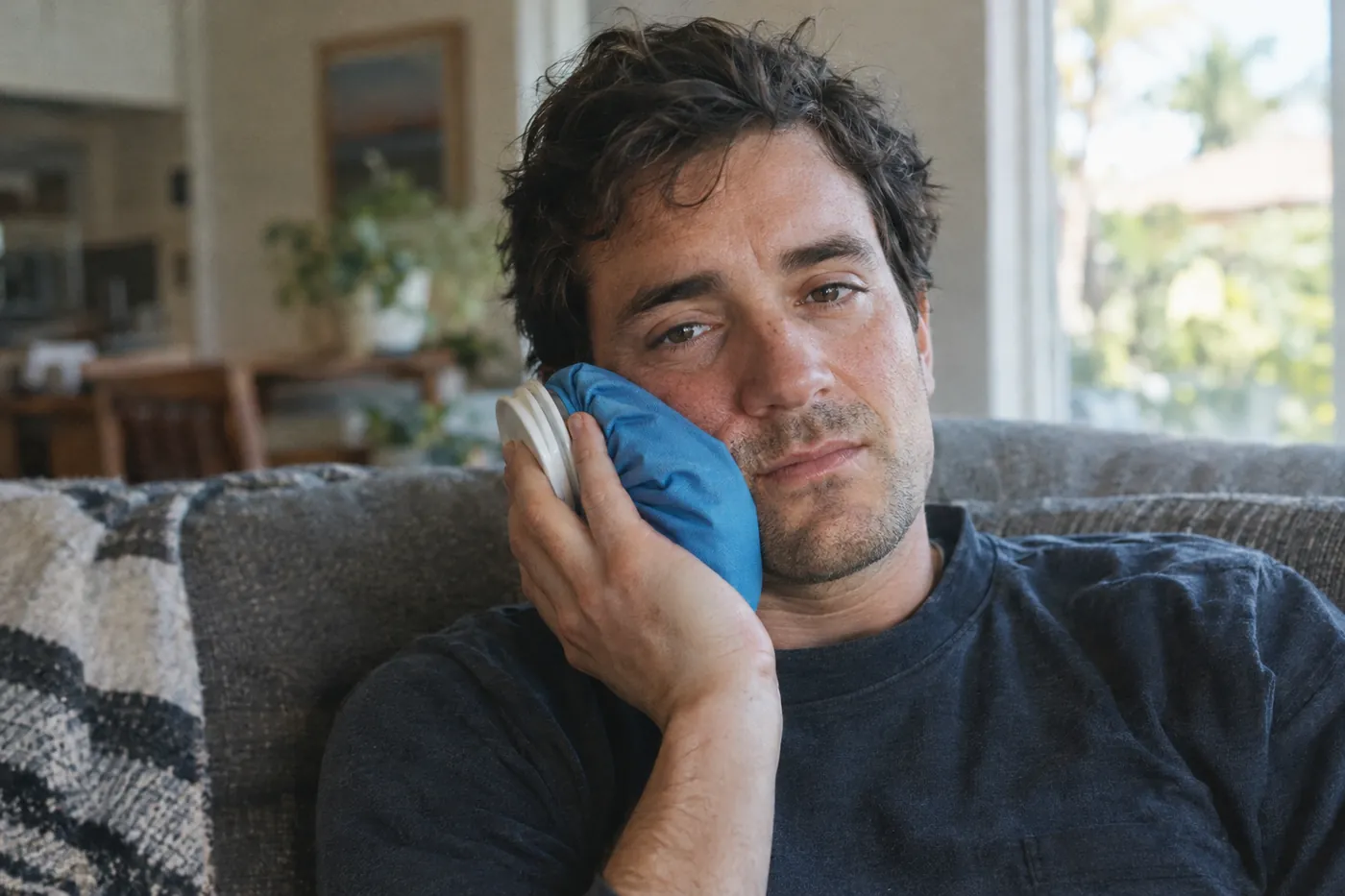
- Apply moist heat or a cold pack to the side of your face.
- Do gentle jaw stretches and massage. A dentist, doctor or physical therapist can show you how.
- Notice when you clench during the day, and relax your jaw.
- Practice relaxation, keep regular sleep habits, and stay active a few times a week.
- Sit with good posture, and take breaks from the computer.
- Ask your doctor, dentist or pharmacist whether a short course of an over-the-counter pain reliever, such as ibuprofen, naproxen or acetaminophen, is right for you.

What not to do during a TMJ flare-up
Give your jaw a break from anything that strains it. Cleveland Clinic and MedlinePlus advise avoiding these habits:
- Chewing gum, ice, pens or fingernails
- Taking very large bites or eating hard, chewy foods
- Yawning or singing with your mouth wide open, when you can avoid it
- Clenching your teeth during the day
- Using your teeth as tools, such as to open packages
- Sleeping on your stomach
Be careful with permanent fixes
NIDCR warns that treatments that permanently change the bite, such as grinding down teeth, have little evidence for TMD and may make it worse.

How do I know if my jaw pain is serious?
Most jaw pain is not an emergency, but some signs need care right away. Call 911 if jaw pain comes with chest pain or discomfort, shortness of breath, pain in the arms or shoulders, or feeling weak, light-headed or faint. The CDC lists jaw pain among the symptoms of a heart attack.
Also call 911 or go to the nearest emergency room if you have:
- Swelling in your face, jaw or neck that makes it hard to breathe or swallow
- Swelling that spreads toward your eye or changes your vision
- A fever of 100.4°F or higher with facial swelling
- Bleeding that will not stop with steady pressure
- A serious injury to the face or jaw, such as a possible broken jaw
Get prompt care too
MedlinePlus advises contacting a provider right away if you have trouble eating or opening your mouth. Sudden face pain with vision changes or scalp tenderness also needs a prompt medical check.
What gets mistaken for TMJ?
Several other problems can feel like TMJ pain. The American Academy of Family Physicians lists dental causes first, such as a cavity, a tooth abscess, a cracked tooth or a dry socket after an extraction.
Sinus infections, salivary gland stones, nerve pain, migraines and some autoimmune conditions can also cause face and jaw pain. Another is giant cell arteritis, which doctors check for promptly when face pain comes with vision changes or scalp tenderness.
That is one reason a dental check helps. If your pain could be from a tooth, our guides to toothache, tooth abscess and wisdom tooth pain explain the signs.

When should I see a dentist or doctor about jaw pain?
See a dentist or doctor if your jaw pain does not go away, keeps coming back, or gets in the way of eating, talking or sleeping. NIDCR recommends talking with a dentist or doctor if you think you have TMD.
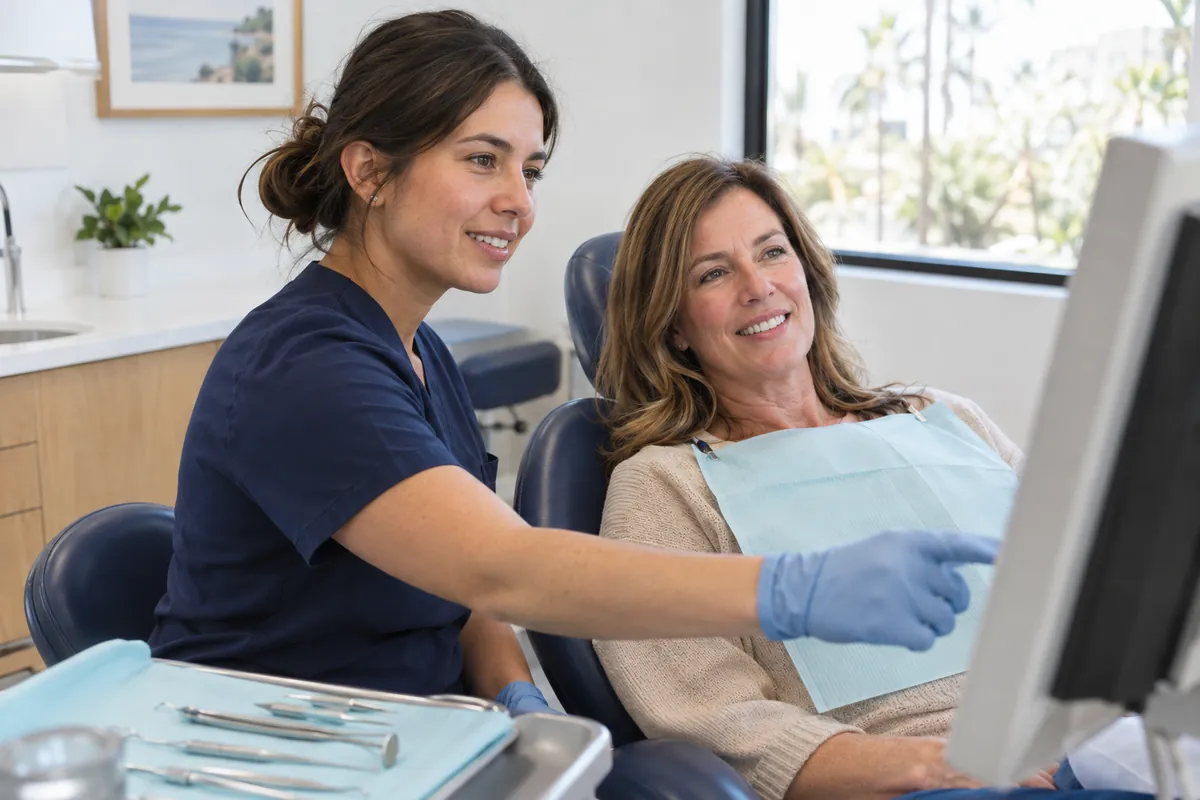
A visit usually starts with your symptoms and history and an exam of your head, neck, face and jaw. NIDCR notes there is no single standard test for TMD, so a provider may order imaging and rule out other causes.
If you are not sure where to start, call our Murrieta office to talk through your symptoms. A dentist can check your bite, look for signs of teeth grinding and examine your jaw, and can look for tooth problems that feel like TMJ pain. Our cleanings and exams page explains what a dental exam covers.
Before any treatment that cannot be undone, NIDCR suggests asking about the benefits, risks and other choices, and getting a second opinion. To reach us, call (951) 677-1054 or visit our contact page.

Questions & answers
Common questions
Can I live with TMJ?
Yes, most people do well. Cleveland Clinic says TMD is treatable and rarely causes lasting problems, and NIDCR notes that many symptoms improve without treatment. An American Academy of Family Physicians review reports that 50% to 90% of patients had pain relief with conservative care in long-term follow-up. If yours lingers, a dentist or doctor can help you find a plan that fits.
How long can a TMJ flare-up last?
It varies. Cleveland Clinic says some people feel better in a week or two, while others need longer-term care. The American Academy of Family Physicians suggests further evaluation when pain without a clear cause lasts more than three to six months. If a flare-up is not easing with self-care, or keeps coming back, have it checked.
Is jaw clicking a sign of TMJ?
Not by itself. NIDCR says clicking or popping in the jaw joint without pain is common, is considered normal, and does not need treatment. Clicking matters more when it comes with pain, stiffness, a jaw that locks, or trouble opening your mouth. In that case, talk with a dentist or doctor.
Does teeth grinding cause TMJ?
It can play a part. Cleveland Clinic lists grinding and clenching among the causes of jaw pain. MedlinePlus notes that the role of grinding, a bad bite and braces is not well proven, and NIDCR says research does not support a bad bite or orthodontic treatment as a cause. Cutting back on clenching is still a common self-care step.
Will a night guard help TMJ?
It may help some people, but the evidence is limited. NIDCR says to use a mouth guard or splint only if it does not permanently change your bite, and to stop if it makes your pain worse. Cleveland Clinic suggests a protective mouthpiece if you grind your teeth at night. A dentist can talk through whether one makes sense for you.
Do I need surgery for TMJ?
Very rarely. NIDCR says surgery should be considered only for joint damage or severe symptoms that continue despite other treatment, and notes there are no long-term studies on the safety of open surgery for TMD. An American Academy of Family Physicians review notes that only 5% to 10% of people with TMD symptoms need treatment, and many improve on their own.
Keep reading
Related care and answers

Toothache
What a toothache can mean, safe ways to ease it at home, and when to call a dentist or go to the ER. A plain g
Tooth Abscess
Signs of a tooth abscess, which symptoms mean call 911 or go to the ER, what helps while you wait, and how a d

Wisdom Tooth Pain
Why wisdom teeth hurt, how to ease the pain safely at home, which signs mean emergency care, and what a dentis
Dental Cleanings & Exams
What happens at a dental checkup: cleaning, exam, X-rays when needed, oral cancer screening and gum checks. Us

Crooked Teeth
Why teeth grow in crooked, when it matters for your health, how braces and clear aligners help, and what age t
Dental Symptoms Guide
Find your dental symptom, learn what it may mean and what helps at home, and know when to call 911, go to the
Sources
- TMD (Temporomandibular Disorders) · National Institute of Dental and Craniofacial Research
- TMJ Disorders: Symptoms & Treatment · Cleveland Clinic
- TMJ Disorders · MedlinePlus (National Library of Medicine)
- Diagnosis and Treatment of Temporomandibular Disorders (American Family Physician, 2015) · American Academy of Family Physicians
- About Heart Attack Symptoms, Risk, and Recovery · Centers for Disease Control and Prevention
- Dental Emergencies · American Dental Association, MouthHealthy
- What Is a Dental Emergency and Where To Go for Care · Cleveland Clinic
- Tooth Abscess: Symptoms, Causes & Treatment · Cleveland Clinic
- Ludwig’s Angina: Symptoms, Signs & Treatment · Cleveland Clinic
- Orbital Cellulitis: Causes, Symptoms & Treatment · Cleveland Clinic
Golden Triangle Dentistry is not affiliated with these organizations. Links open in a new tab.
Important information: This page is general information, not a diagnosis. Jaw pain has many possible causes, so please see a dentist or doctor about your symptoms.
Golden Triangle Dentistry
Book a visit
25460 Medical Center Dr, Suite 202, Murrieta
Not sure what is behind your jaw pain?
Call (951) 677-1054 to talk through your symptoms with our Murrieta team.