Children’s dentistry
Children’s Dentistry for Murrieta Families
Healthy baby teeth help kids chew, speak and smile with confidence. From the first tooth through the teen years, our team helps your child build healthy habits, and parents are welcome to stay with their child during visits.
- Parents welcome to stay
- Toddlers through teens
- Fluoride and sealants
- Habit and diet guidance
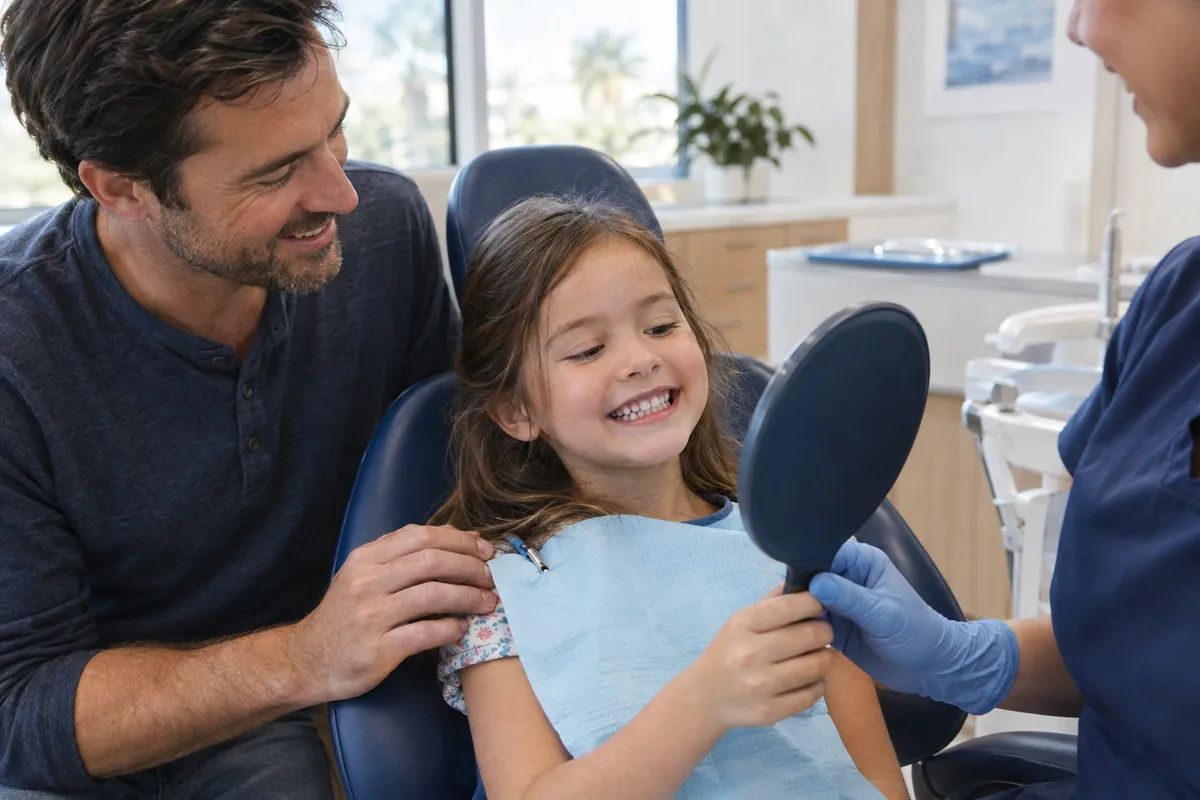
When should my child first see a dentist?
Your child should see a dentist when the first tooth comes in, and no later than the first birthday, according to the American Academy of Pediatric Dentistry (AAPD) and the ADA. An early visit helps spot problems while they’re small. After that, the AAPD recommends a checkup about every six months, or as your dentist suggests.
Does Golden Triangle Dentistry see children?
Yes. Our dentists care for toddlers, children and teens, and parents are welcome to stay with their child during visits.
For kids, our team offers fluoride treatments, sealants, dietary counseling and checks for habits like thumb and pacifier sucking.
There’s more on the way. Dr. Neff’s letter to our patients shares that specialist care for children’s dentistry will be available right here, so you will not need to travel to another office.
That’s part of the letter’s “specialists under one roof” plan, with Dr. H. Pourshirazi, DMD, now caring for patients and Dr. Meerweis Stanisai, DDS, continuing to see patients. The same caring team that has served Murrieta families since 1991 is still here.
Why do baby teeth matter if they fall out anyway?
Baby teeth help your child chew, speak clearly and smile, and they hold space for the adult teeth that come in later.
Babies are born with all 20 baby teeth already in their jaws. The first ones usually break through around 6 months, and most are in by age 3.
According to the ADA, baby teeth lost to cavities can threaten the health of the adult teeth, and decay can mean discomfort for your child.
Cavities are the most common chronic disease of childhood in the U.S., says the CDC, and more than half of children ages 6 to 8 have had a cavity in a baby tooth. If a cavity does form, tooth-colored fillings can repair it.
What happens at a child’s first dental visit?
At a first visit, the dentist checks your child’s teeth, jaw, bite and gums, looks for cavities or injuries, and shares tips for caring for those new teeth at home.
Very young children often sit on a parent’s lap. Depending on your child’s age and number of teeth, there may be a gentle cleaning to remove plaque and stains.
To help the visit go smoothly, the ADA suggests choosing a time when your child is usually rested, not nap time. Offer a light meal before, and save snacks for after.
Our guide to your child’s first dental visit has more tips for parents. Ask about new patient forms so you can fill them out at home.

What do dental visits look like as kids grow?
Checkups grow with your child. Early visits focus on habits and healthy development, school-age visits add sealants and bite checks, and teen visits add sports safety.
The AAPD recommends a checkup about every six months, though your dentist may suggest a different schedule based on your child’s needs. The chart below shows what to expect at each stage.
How it works
Dental care by age
What to expect at each stage, based on guidance from the AAPD, ADA, CDC and AAO.
- First tooth to age 1
First dental visit by the first birthday. Brush new teeth with a tiny smear of fluoride toothpaste, and ask about fluoride varnish.
- Ages 1 to 3
Checkups about every six months. Only water in bedtime bottles, and start drinking from a cup around the first birthday.
- Ages 3 to 6
Switch to a pea-size amount of fluoride toothpaste. Help your child brush, and watch them brush until about age 6.
- Ages 6 to 12
Adult teeth start coming in. Sealants can protect the back teeth, and a first orthodontic check by age 7 looks at the growing bite.
- Teens
Mouthguards for sports, braces or aligners if needed, and regular cleanings to keep teeth and gums healthy.
How can I prevent cavities in my child’s teeth?
Brush twice a day with fluoride toothpaste, limit sugary drinks and snacks, and keep up regular checkups. These habits help:
- Wipe your baby’s gums with a soft, damp cloth, then brush once teeth appear.
- Use a tiny smear of fluoride toothpaste for babies and toddlers, and a pea-size amount from ages 3 to 6.
- Help your child brush until they have good skills, and watch children under 6 while they brush.
- If your child has a bedtime bottle, the AAPD advises water only.
- Cut down on sipping and snacking on sugary foods and drinks. The ADA says frequent, long exposure to sugary drinks is a common cause of decay in young children.
- Drink fluoridated tap water. The CDC says children in communities with fluoridated water have fewer cavities.
Diet counseling for families
Our team offers dietary counseling for kids and parents, with simple ideas for snacks and drinks that are easier on teeth.
Do sealants and fluoride really help prevent cavities?
Yes. Sealants and fluoride are two of the simplest ways to protect children’s teeth from cavities.
Sealants are thin coatings painted onto the chewing surfaces of the back teeth. They fill the grooves where food and germs get trapped. The CDC reports that sealants on the back teeth prevent 80% of cavities.
Fluoride varnish is painted onto teeth and helps protect them from decay. The CDC says it can prevent about one-third of cavities in baby teeth and suggests asking about it as soon as the first tooth appears.
Our team offers fluoride treatments and sealants for kids and will let you know which teeth could benefit.

Are thumb sucking and pacifiers bad for teeth?
Usually not at first. The ADA says most children stop on their own between ages 2 and 4, but sucking that continues after the adult teeth come in can affect how the mouth grows and how teeth line up.
Pacifiers affect teeth much like thumbs, though the habit is often easier to break. The AAPD adds that if thumb sucking continues past age 3, a mouth appliance may be recommended.
At each visit, our team checks for habits like thumb and pacifier sucking, encourages your child, and suggests next steps if needed. If a habit has started to affect the bite, an early look at braces and aligner care can help you plan.
Does my child need a mouthguard for sports?
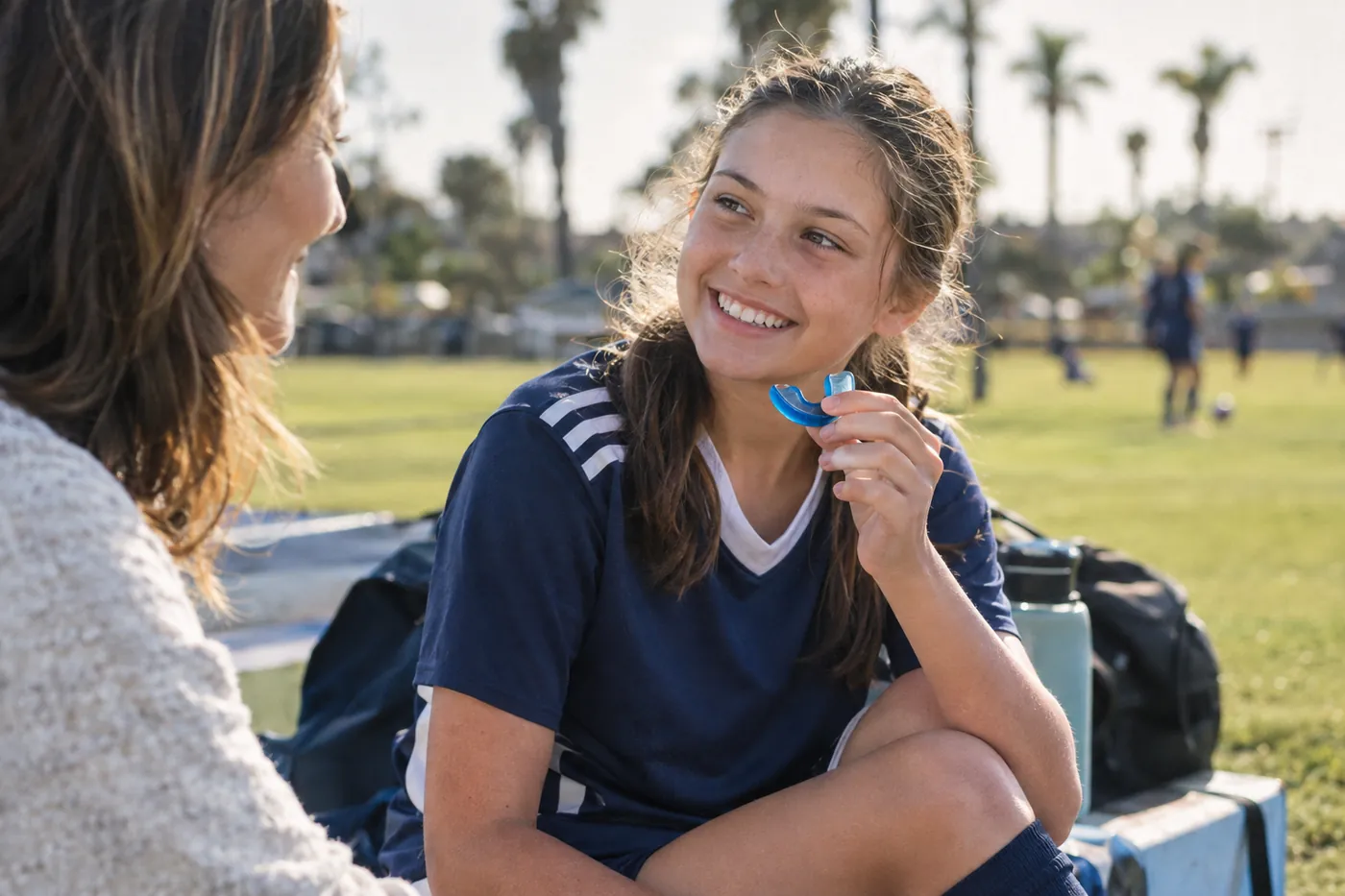
If your child plays sports, yes. The ADA calls a mouthguard an essential piece of athletic gear, starting at an early age.
Mouthguards help protect teeth, lips, cheeks and gums from injuries, and the ADA notes that injuries can happen in non-contact activities too.
Custom mouthguards are made by a dentist to fit your child. Boil-and-bite guards are shaped at home, and ready-made stock guards often fit poorly.
If an injury does happen, our emergency dental care page and our guide to a broken or chipped tooth explain what to do next.
If an adult tooth is knocked out
Keep the tooth moist and don’t touch the root. Try to place it back in the socket, or keep it in milk, then call us right away. Call 911 or go to the nearest emergency room for a serious injury such as broken facial bones, bleeding that won’t stop, swelling that makes it hard to breathe, swallow or see, or a high fever with swelling.
How can I make dental visits easier for a nervous child?
Keep things calm and positive, start visits early, and let your child know you’ll be right there with them. Our dental anxiety and comfort page has more ideas, and these small steps help:
- Talk about the visit in simple, upbeat words, and avoid words that might sound scary.
- Practice opening wide and counting teeth together at home.
- Stay with your child. Parents are welcome to stay during visits at our office.
- Come in for regular checkups before any problem starts, so the dental chair feels familiar.
- Ask about comfort options. Our office has offered nitrous oxide (laughing gas) for anxious patients, and our team can tell you what fits your child.
Questions & answers
Common questions
Do I need a pediatric dentist, or can a family dentist see my child?
Either can be a good choice. The ADA notes you can choose a family dentist who cares for patients of all ages, or a pediatric dentist who focuses on the oral health of infants, children and teens. Our dentists see children, and Dr. Neff’s letter shares that specialist care for children’s dentistry will be available right here. Ask our team who will see your child.
Is it normal for a 3-year-old to have cavities?
Cavities are common in young children, but they’re not something to wait on. A cavity in a baby tooth can cause discomfort and may need treatment, and it can affect the adult tooth underneath. Call us if you notice dark spots on your child’s teeth, or if your child says a tooth hurts.
Can my child see a dentist without insurance?
Yes. Golden Triangle Dentistry accepts cash, check, Visa, MasterCard, Discover, American Express and CareCredit, and Dr. Neff’s letter shares that more payment choices, with flexible financing options, are coming. If you do have coverage, we work with most dental insurance plans, including most PPOs. Call us and our team will answer your questions.
At what age do kids stop seeing a children’s dentist?
There’s no set age. Many families stay with one dental office for everyone, so kids can move from children’s visits to adult care without changing offices. Our dentists care for patients of all ages, from toddlers to grandparents, which keeps your family’s records in one place.
What is the 2-2-2 rule for teeth?
It’s an easy way to remember the basics: brush two times a day, for two minutes each time, and see the dentist about two times a year. That matches ADA advice to brush twice a day for two minutes with fluoride toothpaste, and AAPD advice for a checkup about every six months. Your dentist may suggest a different schedule.
Are dental X-rays safe for kids?
Dental X-rays use a very small amount of radiation, and the ADA recommends taking them only when your dentist believes they will provide needed information. How often a child needs X-rays depends on age, risk for cavities and any signs of problems. Digital X-rays are part of the updated technology our office is adding.
Keep reading
Related care and answers
Your Child’s First Dental Visit
When your child should first see a dentist, what happens at the visit, how to prepare a toddler and how to pro
Dental Cleanings & Exams
What happens at a dental checkup: cleaning, exam, X-rays when needed, oral cancer screening and gum checks. Us

Braces & Clear Aligners
Orthodontics, including braces and clear aligners, is coming to Golden Triangle Dentistry in Murrieta. Options

Dental Anxiety & Comfort
Nervous about the dentist? Practical tips, stop signals, what nitrous oxide is and isn’t, help for anxious kid

Emergency Dental Care
What counts as a dental emergency, what to do now for a knocked-out or broken tooth, toothache or swelling, an
Sources
- Frequently Asked Questions (FAQ) · American Academy of Pediatric Dentistry
- Oral Health Tips for Children · Centers for Disease Control and Prevention
- Your baby’s first dental visit · American Dental Association (MouthHealthy)
- Baby Teeth · American Dental Association (MouthHealthy)
- Tooth Decay with Baby Bottles · American Dental Association (MouthHealthy)
- Thumbsucking · American Dental Association (MouthHealthy)
- Mouthguards · American Dental Association (MouthHealthy)
- Dental Emergencies · American Dental Association (MouthHealthy)
- X-rays · American Dental Association (MouthHealthy)
- Home Oral Care · American Dental Association
- Orthodontics for Children: Developing a Healthy Smile · American Association of Orthodontists
- Dental Emergencies: What To Do · Cleveland Clinic
- Periapical Abscess · Cleveland Clinic
Golden Triangle Dentistry is not affiliated with these organizations. Links open in a new tab.
Important information: Specialist care for children’s dentistry is being added at our office as described in Dr. Neff’s letter; call us for current availability.
Golden Triangle Dentistry
Book a visit
25460 Medical Center Dr, Suite 202, Murrieta
Book your child’s checkup
Call (951) 677-1054 to schedule a visit, and bring your questions about brushing, diet or habits.