Parent guide
Your Child’s First Dental Visit: When to Go and What to Expect
Dental groups agree the first visit should happen early, around the first tooth or the first birthday. Here’s what happens at that visit, how to help a toddler feel at ease, and what you can do at home.
- Parents welcome to stay
- Children’s dentistry
- Fluoride and sealants
- Caring for families since 1991

What age should a child first see a dentist?
The American Academy of Pediatric Dentistry recommends a child’s first dental visit within six months of the first tooth coming in, and no later than the first birthday. The ADA and CDC give similar advice. The visit is a gentle check of your child’s teeth, gums and growth, plus practical tips for caring for baby teeth at home.
Why do dentists recommend such an early first visit?
An early visit is about prevention, not treatment. The American Academy of Pediatric Dentistry (AAPD) recommends setting up a dental home within six months of the first tooth so a dentist can check your child’s risk for cavities and give you guidance early.
The major health groups are on the same page. The ADA’s MouthHealthy site says the first visit should come after the first tooth appears and no later than the first birthday, and CDC advises a visit by your baby’s first birthday to spot signs of problems early.
If your child is older and hasn’t been yet, don’t worry. The AAPD’s message to parents is that it’s never too late. Golden Triangle Dentistry has cared for Murrieta families since 1991, and our children’s dentistry page explains how we care for kids.
What happens at a baby’s first dental visit?
The dentist checks that your child’s teeth, jaw, bite and gums are developing the way they should, and looks for early signs of decay. According to the ADA, you’ll likely sit in the dental chair with your child on your lap.
Much of the visit is for you. The AAPD says parents learn how to clean their baby’s teeth and talk about tooth development, teething, fluoride, diet, and how thumb-sucking or pacifiers can affect the mouth.
Parents are welcome to stay with their child during visits at our office. Our team can also talk with you about dietary habits and fluoride, and check habits like thumb or pacifier sucking as your child grows. Visiting with a list of questions helps you get the most from the time.

At a glance
First-visit checklist for parents
A little planning makes the first visit easier for everyone.
- Pick a rested time. Choose a time when your child is usually alert and cooperative, and avoid naptime.
- Practice at home. Help your child practice opening wide, like they will for the exam.
- Plan snacks. Offer a light meal before, and save snacks for after so nothing is stuck on teeth.
- Bring your questions. Write down questions about teething, pacifiers, thumb-sucking or brushing.
- Stay positive. Use calm, happy words, and skip the scary ones.
How do I prepare my toddler for the dentist?
Keep it simple and positive. The AAPD suggests answering your child’s questions in an upbeat way and being careful about using scary words.
A few ideas from the AAPD can help a toddler feel more in control:
- Read a story together about a character who has a good dental visit.
- Offer small choices, like which color toothbrush to pick.
- Let the dentist do most of the talking during the exam, and save your questions for afterward.
- Want your child to see the office before the visit? Call us and ask our team.
For nervous kids and parents
Tell our team ahead of time if your child is anxious or has special needs. Our dental anxiety and comfort page explains the comfort options we offer.
What happens at dental visits as my child grows?
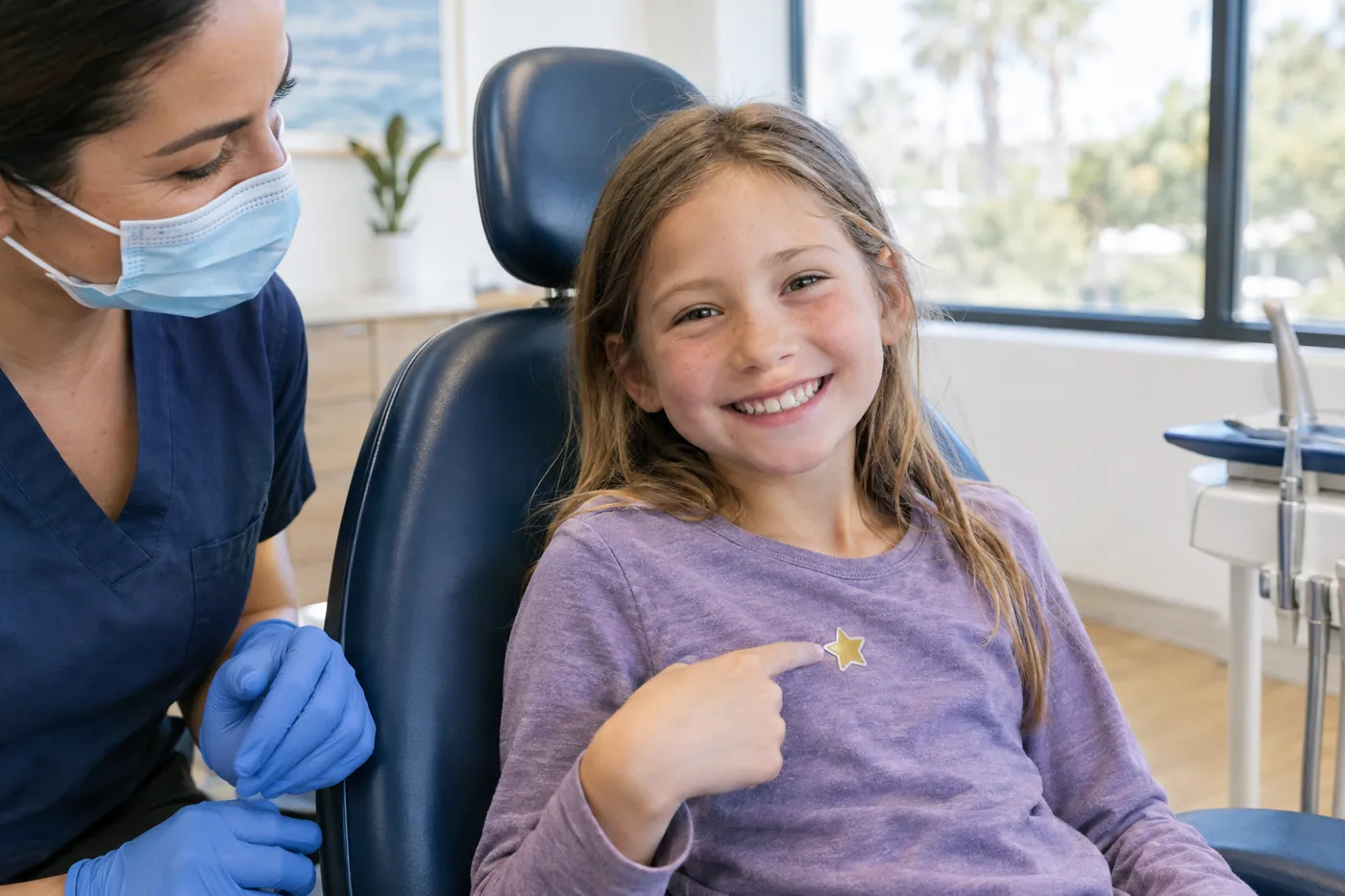
Visits change as teeth come in. The AAPD recommends a checkup every six months, though your child’s dentist may suggest a different schedule based on their needs. Here’s what parents can expect at each stage:
- First tooth to age 1. A first exam, tips on cleaning gums and new teeth, and a talk about bottles and feeding. CDC suggests asking about fluoride varnish as soon as the first tooth appears.
- Ages 1 to 3. Regular checkups as more teeth arrive. This is the stage to use a rice-grain smear of fluoride toothpaste and to start cleaning between teeth once two teeth touch.
- Ages 3 to 6. Toothpaste moves up to a pea-sized amount. The AAPD says a child still sucking a thumb or fingers past age three may benefit from a dentist’s help.
- School age. CDC recommends asking your child’s dentist about sealants when appropriate. The AAPD explains that sealants fill in the grooves on the chewing surfaces of teeth.
- Age 7. The American Association of Orthodontists recommends an orthodontic screening at age 7, when enough permanent teeth are in to spot bite problems early. Learn more about braces and clear aligners.
How can parents protect baby teeth at home?
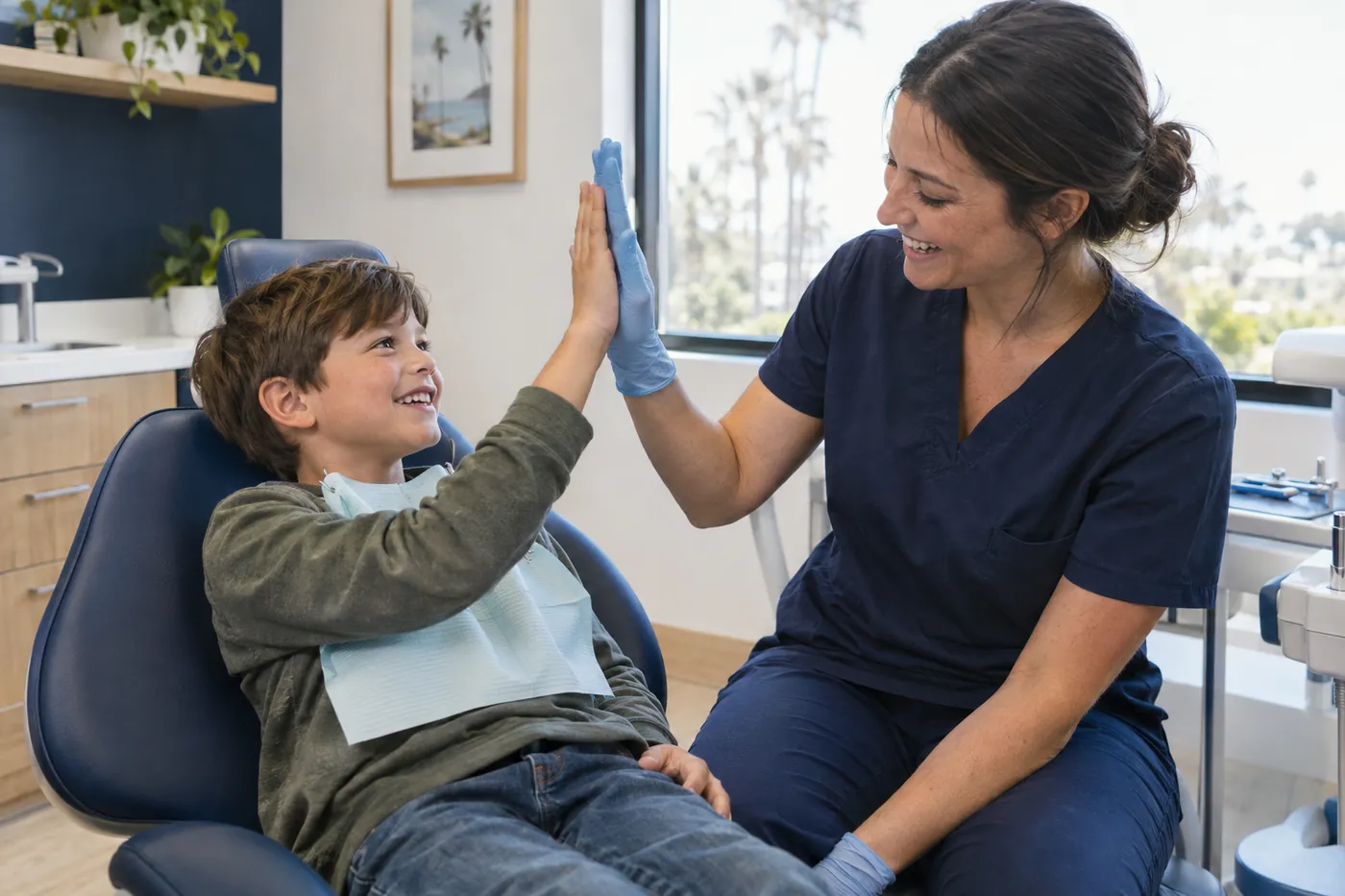
Start before the first tooth. CDC suggests wiping your baby’s gums twice a day with a soft, clean cloth, in the morning after the first feeding and right before bed. Once teeth come in, brush twice a day with a soft, small toothbrush.
Use the right amount of toothpaste. The ADA recommends a smear of fluoride toothpaste no bigger than a grain of rice for children under 3, and a pea-sized amount for ages 3 to 6. CDC suggests talking with your child’s doctor or dentist about fluoride toothpaste before age 2.
- Watch your child brush until about age 6, so they use the right amount and spit it out, as CDC advises.
- Don’t put your baby to bed with a bottle. The AAPD says the bedtime bottle should hold nothing but water.
- Skip juice for babies under 12 months, and for ages 1 to 3, the AAPD suggests no more than 4 ounces of 100% juice a day.
- Never dip a pacifier in sugar, honey or juice. The ADA warns this can lead to tooth decay.
- Offer fluoridated tap water, which CDC recommends for children.

Do baby teeth really matter if they fall out anyway?
Yes. The AAPD explains that baby teeth help children speak clearly and chew naturally, and they help guide permanent teeth into their proper places.
Baby teeth can get cavities, too. The ADA notes that baby bottle tooth decay most often affects the upper front teeth, and that decay can start when cavity-causing bacteria pass from a parent’s or caregiver’s saliva to the baby.
That’s why early checkups, good brushing habits and smart drinks add up. Your child’s dentist may also recommend fluoride treatments or sealants to help protect their teeth.
What should I do if my child hurts a tooth?
Stay calm, control any bleeding and call a dentist right away. MedlinePlus advises applying direct pressure with gauze to control bleeding.
If a permanent tooth is knocked out, hold it by the crown, not the root, and bring it to a dentist as soon as possible. Keep it moist in cow’s milk or saliva. Baby teeth are not put back in, according to MedlinePlus. Call us so a dentist can check the area.
Our emergency dental care page and our guide to a broken or chipped tooth explain more.
When to get emergency care
Call 911 or go to the ER for bleeding that won’t stop after 10 minutes of firm pressure, swelling that spreads toward the eye or neck or makes it hard to breathe or swallow, or a serious injury to the face or jaw. If your child can’t close their teeth together, the jaw may be broken and needs care right away at a dentist’s office or hospital.
Questions & answers
Common questions
Can I stay with my child during the visit?
Yes. Parents are welcome to stay with their child during visits at Golden Triangle Dentistry. For babies and young toddlers, the ADA says you’ll likely sit in the dental chair with your child on your lap. With older children, the AAPD suggests letting the dentist lead the conversation, which helps your child build trust.
How often should my child see the dentist?
The AAPD recommends a checkup every six months to help prevent cavities and other dental problems. Some children may need visits more or less often, depending on their risk for cavities and how their teeth are developing. Your child’s dentist will suggest the schedule that fits your child.
Does my baby need fluoride?
Fluoride helps make tooth enamel more resistant to decay, according to the ADA. CDC suggests asking your dentist or doctor about fluoride varnish as soon as the first tooth appears. The AAPD also recommends having your dentist check the fluoride level of your child’s main drinking water. Using the right amount of toothpaste for your child’s age matters, too.
When should my child stop sucking a thumb or using a pacifier?
The AAPD says most children stop on their own. If your child is still sucking a thumb or fingers past age three, the dentist may suggest ways to help, including a mouth appliance in some cases. Our team checks thumb and pacifier habits at kids’ visits, so bring up any concerns.
Can my child see a dentist without insurance?
Yes. Our office accepts cash, check, Visa, MasterCard, Discover, American Express and CareCredit, and we’re adding flexible financing options. If you do have dental insurance, we work with most plans, including most PPOs. For questions about the cost of your child’s visit, call us and our team will answer that.
Keep reading
Related care and answers
Children’s Dentistry
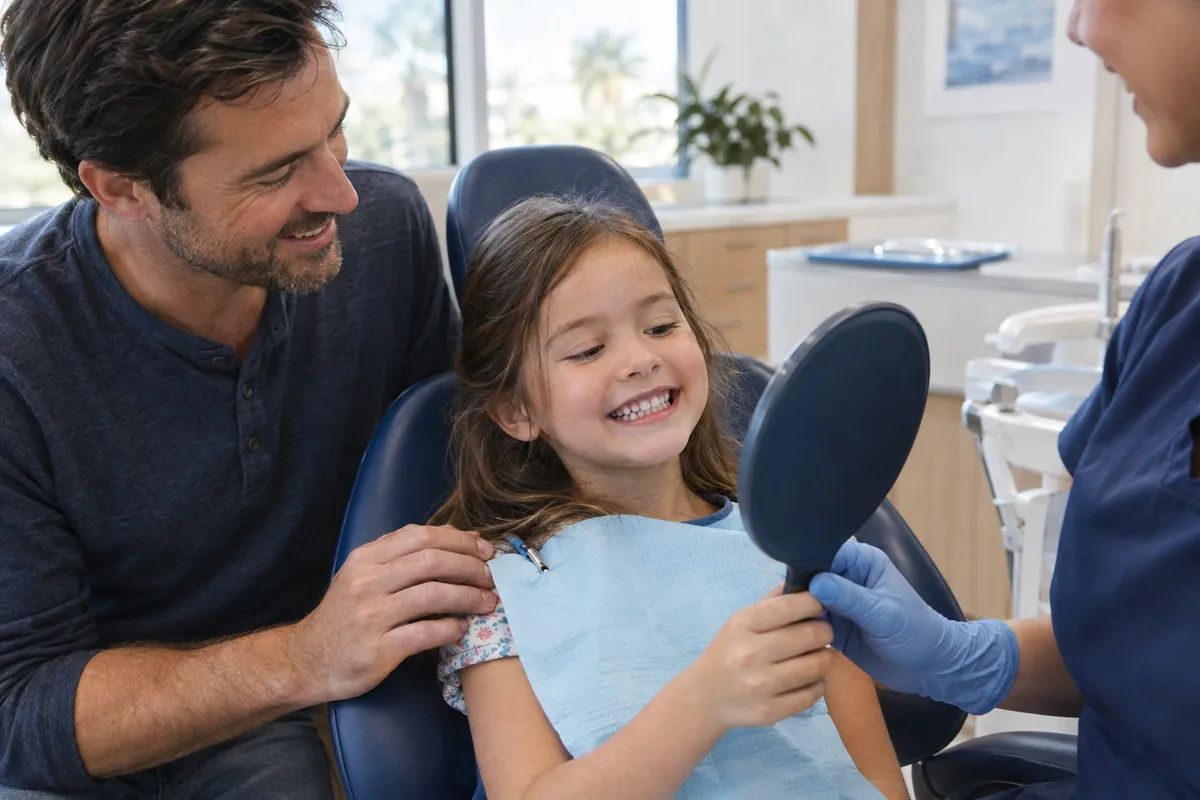
Children’s dentistry in Murrieta: first visits, checkups, fluoride, sealants and habit checks. Parents are wel
Dental Cleanings & Exams
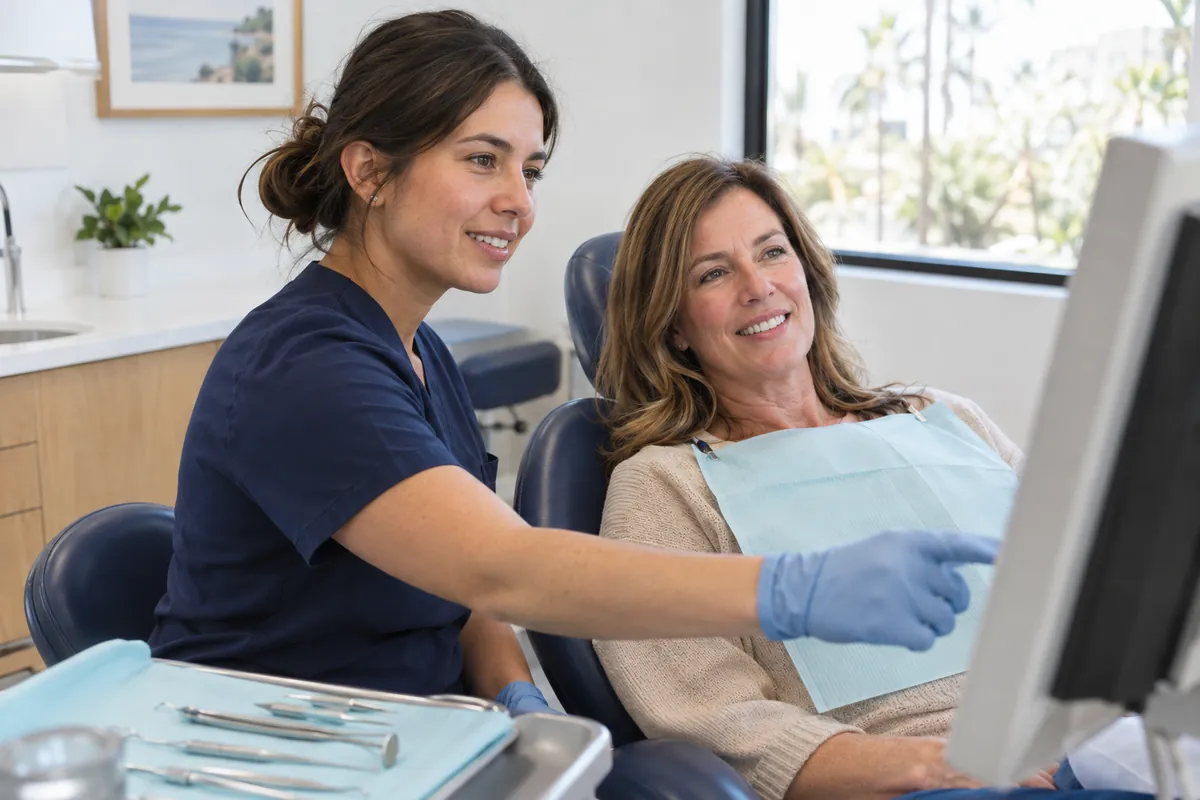
What happens at a dental checkup: cleaning, exam, X-rays when needed, oral cancer screening and gum checks. Us

Dental Anxiety & Comfort
Nervous about the dentist? Practical tips, stop signals, what nitrous oxide is and isn’t, help for anxious kid

Emergency Dental Care
What counts as a dental emergency, what to do now for a knocked-out or broken tooth, toothache or swelling, an

New Patients
New to Golden Triangle Dentistry? What to expect at a first visit, what to bring, insurance and payment, parki
Sources
- First Dental Visit · American Academy of Pediatric Dentistry (MyChildrensTeeth.org)
- Healthy New Year’s Resolutions: Check Off Your First Visit to the Pediatric Dentist · American Academy of Pediatric Dentistry (MyChildrensTeeth.org)
- Parent FAQ · American Academy of Pediatric Dentistry
- Policy on Early Childhood Caries (ECC): Consequences and Preventive Strategies · American Academy of Pediatric Dentistry
- Your baby’s first dental visit · American Dental Association (MouthHealthy)
- Healthy Habits – Babies and Kids · American Dental Association (MouthHealthy)
- Oral Health Tips for Children · Centers for Disease Control and Prevention
- Baby’s First Tooth: 7 Facts Parents Should Know · American Academy of Pediatrics (HealthyChildren.org)
- When Should a Child See an Orthodontist? The Age 7 Visit · American Association of Orthodontists
- Broken or knocked out tooth · MedlinePlus (U.S. National Library of Medicine)
- Dental Emergencies · American Dental Association (MouthHealthy)
- Cuts and puncture wounds · MedlinePlus (U.S. National Library of Medicine)
- Periapical Abscess: Symptoms, Diagnosis & Treatment · Cleveland Clinic
Golden Triangle Dentistry is not affiliated with these organizations. Links open in a new tab.
Important information: This guide is general information for parents, not medical advice for your child. Ask your child’s dentist or doctor about their specific needs.
Golden Triangle Dentistry
Book a visit
25460 Medical Center Dr, Suite 202, Murrieta
Ready to book your child’s first visit?
Call Golden Triangle Dentistry in Murrieta at (951) 677-1054. Parents are welcome to stay with their child during visits.