Symptom guide
Crooked Teeth: Causes, Health Effects and Ways to Fix Them
Crowded, gapped or crooked teeth are common, and most come down to family traits. Learn when they affect your health, how they are corrected at any age, and how our Murrieta team can help.
- Often inherited
- Can make teeth harder to clean
- Treatable at any age
- Plain-language guide

What causes crooked teeth, and can they be fixed?
Crooked teeth most often run in families, usually because the jaws and teeth are different sizes. Thumb sucking, lost teeth and injuries can add to it. Mild cases may need no treatment, but crooked teeth are harder to clean. Healthy teeth can be straightened with braces or clear aligners at any age, followed by a retainer.
What are crooked teeth?
Crooked teeth are teeth that are crowded, turned, tipped, spaced apart, or that do not meet the way they should when you bite. Dentists call a poor bite a malocclusion.
Cleveland Clinic describes several common bite types:
- Overbite: the upper front teeth overlap the lower teeth too much.
- Underbite: the lower front teeth sit in front of the upper teeth.
- Crossbite: some upper teeth fit inside the lower teeth.
- Open bite: the upper and lower front teeth do not touch when you close.
- Overjet: the upper front teeth stick out further than they should.
What is the main cause of crooked teeth?
Family traits are the main cause. MedlinePlus explains that crooked teeth usually come from a size difference between the upper and lower jaws, or between the jaw and the teeth. The AAO, a national association for orthodontic care, also says most bite problems are inherited.
Habits and events can add to it. Long-term thumb sucking, tongue thrusting and pacifier use past about age 3 can shape a child’s bite. Extra, missing or impacted teeth, injuries to the jaw, and dental work that does not fit well can also play a part.
In adults, a lost tooth can let nearby teeth drift. Cleveland Clinic notes that untreated gaps can lead to teeth moving out of position and a bite that no longer lines up.
At a glance
Common reasons teeth grow in crooked
Most people have more than one of these, and an exam can show which ones apply to you.
- Inherited jaw and tooth size The most common cause. When the jaws and teeth are different sizes, teeth can end up crowded or spaced apart.
- Childhood habits Thumb sucking, tongue thrusting and pacifier use that go on past the toddler years can push teeth out of line.
- Extra, missing or impacted teeth Teeth that are missing, stuck under the gum or extra can crowd or shift their neighbors.
- Tooth loss in adults When a tooth is lost and not replaced, nearby teeth can drift into the space and change your bite.
- Injury A fall, sports hit or jaw fracture can move teeth or change how the jaws meet.
- Dental work that does not fit Fillings, crowns, bridges or appliances that do not fit well can affect how teeth line up.
Is it okay if I have crooked teeth?
Many mild cases need no treatment. MedlinePlus notes that many bite problems are minor.
Crooked teeth can still affect your health. The AAO explains that crowded teeth give plaque more places to hide, which can lead to cavities, gum inflammation and gum disease. A poor bite can also cause extra wear, chipped teeth and grinding.
The American Dental Association adds that an untreated bad bite can contribute to speech or chewing problems, abnormal enamel wear and jaw problems. If you have trouble biting, chewing or keeping certain teeth clean, it is worth having your bite checked.
How can you fix crooked teeth?
Braces and clear aligners are the main ways to straighten teeth. Both gradually move teeth into better positions over time.
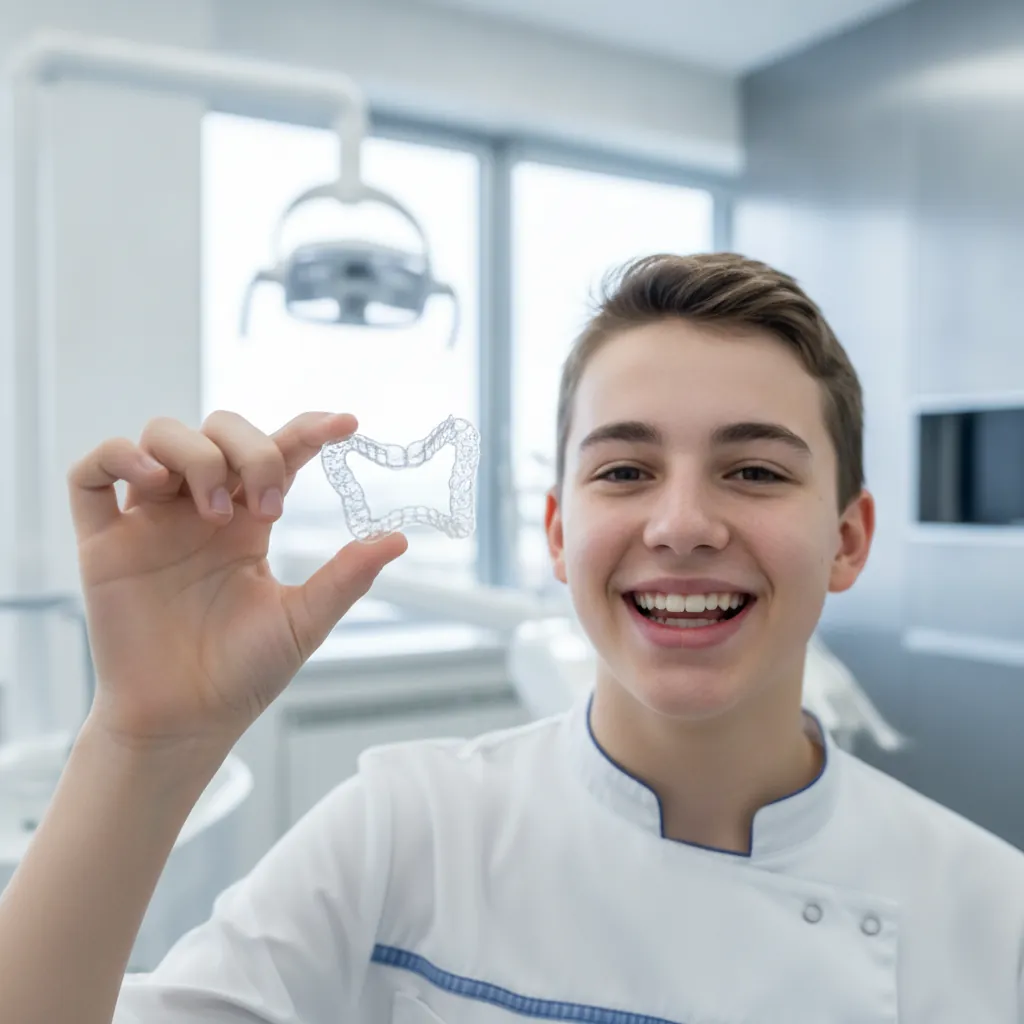
Traditional braces use brackets and a wire that is adjusted during treatment. Clear aligners, such as the Invisalign system, are a series of removable trays. The American Dental Association stresses that aligners should be used only under the direct supervision of a dental professional.
Some cases also need teeth removed to ease crowding, small reshaping of uneven teeth, or, rarely, jaw surgery. After treatment, a retainer holds the teeth in their new places.
Treatment time varies. Cleveland Clinic gives about two years as an average, while some people need only a few months and others longer. Our braces and clear aligners page explains each option, and our guide to braces vs. clear aligners cost covers what affects the price.
What age should a child have an orthodontic check-up?
The AAO recommends a first orthodontic check-up no later than age 7. A check-up around that age can reveal a lot about how a child’s bite is developing.
A check-up at 7 does not mean braces at 7. The AAO says only a few problems need correcting that early. The American Dental Association notes treatment usually begins between ages 8 and 14.
If your child is older than 7, it is not too late. And if you notice something that seems off sooner, you do not need to wait. Our children’s dentistry page covers checkups for kids, including habit checks for thumb sucking and pacifiers.

Can crooked teeth be a dental emergency?
Crooked teeth on their own are not an emergency. A tooth that is suddenly pushed out of place by a fall or a hit is different. Cleveland Clinic advises seeing a dentist right away for a partly dislodged tooth.
If you wear braces or aligners and develop a toothache, mouth pain or other new symptoms, MedlinePlus advises contacting your dentist.
Call 911 or go to the nearest emergency room if you have any of the following:
- Swelling in your face, jaw or neck that makes it hard to breathe or swallow
- Swelling that spreads toward your eye or changes your vision
- A fever of 100.4°F or higher with facial swelling
- Bleeding that will not stop with steady pressure
- A serious injury to the face or jaw, such as a possible broken jaw
What happens when you see us about crooked teeth?
Your dentist will look at how your teeth line up, how your upper and lower teeth meet, and the health of your teeth and gums. Healthy teeth can be straightened at any age, according to the American Dental Association, so your dentist will also check for cavities and gum problems.
Our Murrieta office has updated technology, including 3D imaging, digital X-rays and digital impressions, for more comfortable visits and fewer appointments. You can read more on our 3D imaging and digital impressions page.
Orthodontics with braces and clear aligners will be available right here at our office, so you will not need to travel to another office. Ask our team about timing and next steps.
We work with most dental insurance plans, and we offer flexible financing options. See our dental financing page, or call (951) 677-1054 to book a visit.
How can I keep my teeth straight and healthy?
You cannot change the jaw size you inherited, but you can lower the risk of bite problems getting worse. Cleveland Clinic and MedlinePlus suggest these steps:
- Gently help children stop thumb sucking and pacifier use by about age 3 to 4.
- Replace missing teeth so nearby teeth do not drift into the gap. Our guide to missing teeth explains the options.
- Brush, clean between your teeth, and keep up with regular cleanings and exams.
- After braces or aligners, wear your retainer exactly as your dentist directs.

Questions & answers
Common questions
Am I too old to straighten my teeth?
Usually not. The American Dental Association says healthy teeth can be orthodontically treated at any age, and the AAO notes that patients can achieve a healthy smile at any age. Your dentist will check your teeth and gums first, then talk through whether braces or clear aligners fit your goals.
Will crooked teeth straighten on their own as a child grows?
No. The AAO, a national association for orthodontic care, says a child’s teeth will not straighten out as he or she grows. The AAO adds that untreated bite problems can get worse and become harder to treat with age. That is why it recommends a first orthodontic check-up no later than age 7, even if treatment comes later.
Do braces make teeth 100% straight?
Braces and aligners can move teeth a long way, but every mouth is different. The goal is a healthy bite that is easy to clean as well as a straighter smile. Results also depend on wearing your appliances as directed and wearing a retainer afterward, since the retainer holds teeth in their new positions.
Do you have to wear a retainer after braces or aligners?
Yes. The American Dental Association explains that most people wear a retainer after treatment to hold their teeth in their new positions, and MedlinePlus notes a retainer keeps the teeth stable. How long and how often you wear it depends on your case, so follow the plan your dentist gives you.
Are at-home aligner kits a good idea?
Be cautious. The American Dental Association says clear aligners should be used only under the direct supervision of a dentist. A dentist can check your teeth, gums and bite before treatment starts and follow your progress as the teeth move. Talk with a dentist before ordering any aligner kit online.
Can crooked teeth cause jaw pain?
The link is less clear than many people think. Some groups connect a poor bite with jaw pain and headaches, but NIDCR notes that research does not support the belief that a bad bite causes TMD, the most common type of jaw joint pain. Our guide to jaw pain and TMJ explains other causes and self-care.
Keep reading
Related care and answers

Braces & Clear Aligners
Orthodontics, including braces and clear aligners, is coming to Golden Triangle Dentistry in Murrieta. Options
Braces vs. Clear Aligners Cost Guide
How braces and clear aligners compare on cost factors, insurance, timing and retainers. A plain guide from Gol
Children’s Dentistry
Children’s dentistry in Murrieta: first visits, checkups, fluoride, sealants and habit checks. Parents are wel
Missing Teeth
Why adults lose teeth, what happens when a gap is left alone, and how implants, bridges and dentures compare.

Jaw Pain and TMJ
What TMD (often called TMJ) is, what jaw joint pain feels like, safe self-care, warning signs that need urgent

Dental Symptoms Guide
Find your dental symptom, learn what it may mean and what helps at home, and know when to call 911, go to the
Sources
- Malocclusion of Teeth · MedlinePlus (National Library of Medicine)
- Malocclusion (Misaligned Bite): Types & Treatment · Cleveland Clinic
- Child Orthodontics FAQ · American Association of Orthodontists
- What Makes Me Smile? · American Association of Orthodontists
- Braces · American Dental Association, MouthHealthy
- Tooth Loss: Signs, Causes & What To Do · Cleveland Clinic
- TMD (Temporomandibular Disorders) · National Institute of Dental and Craniofacial Research
- What Is a Dental Emergency and Where To Go for Care · Cleveland Clinic
- Tooth Abscess: Symptoms, Causes & Treatment · Cleveland Clinic
- Ludwig’s Angina: Symptoms, Signs & Treatment · Cleveland Clinic
- Orbital Cellulitis: Causes, Symptoms & Treatment · Cleveland Clinic
Golden Triangle Dentistry is not affiliated with these organizations. Links open in a new tab.
Important information: This page is general information, not a diagnosis. Only an exam can show whether treatment would help your teeth and bite.
Golden Triangle Dentistry
Book a visit
25460 Medical Center Dr, Suite 202, Murrieta
Thinking about straighter teeth?
Call (951) 677-1054 to ask our Murrieta team about braces, clear aligners and a bite check.