Emergency dental care
Emergency Dental Care in Murrieta: What to Do Right Now
A knocked-out tooth, a cracked tooth or a swollen face can be scary. Here’s what to do in the first minutes, when to go to the ER or call 911, and how to reach our team at (951) 677-1054.
- Call (951) 677-1054
- Same office, same phone number
- Wheelchair-accessible entrance
- Free parking front and back

What is considered a dental emergency?
A dental emergency is any dental problem that needs attention right away, such as a severe toothache, a knocked-out or loosened tooth, a badly cracked tooth, an abscess or swelling, a lost or broken crown or filling, or a mouth injury that keeps bleeding. A dull ache or small chip usually isn’t an emergency, but get it checked soon.
Is it a dental emergency, or can it wait?
Treat it as an emergency if you have severe pain, a tooth that was knocked out or pushed out of place, swelling, or bleeding that won’t stop. Cleveland Clinic notes that a dull toothache or a small chip can usually wait for a regular visit, though you should still see your dentist soon.
A tooth that feels loose or out of position after an injury also needs a prompt exam. The American Association of Endodontists (AAE) notes that any injured tooth should be examined right away, since nearby teeth can be hurt too.
Not sure? Call us at (951) 677-1054, describe what happened, and our team will answer your questions.
What should I do if a tooth gets knocked out?
Act fast: pick the tooth up by the crown (the chewing part), not the root, and try to put it back in the socket. The AAE recommends these steps for a permanent tooth:
- Touch only the crown. Never touch the root.
- If it’s dirty, rinse it gently with water only. Don’t scrub it, use soap or wrap it in tissue.
- Gently push it back into the socket facing the right way, then bite down softly to hold it. Never force it.
- If it won’t go back in, keep it moist in milk, in your mouth next to your cheek, or in a tooth preservation kit. Don’t store it in tap water.
- See a dentist right away. Within 30 minutes is ideal, but a tooth can sometimes be saved after an hour or more.
For a baby tooth
Don’t put a knocked-out baby tooth back in, because that can harm the permanent tooth growing underneath. Keep it moist and see a dentist.
At a glance
Signs you need dental care right away
If any of these sound familiar, call your dentist now; for trouble breathing, call 911.
- Severe or throbbing toothache
Strong, constant or throbbing pain, especially pain that doesn’t go away.
- Knocked-out or loosened tooth
A permanent tooth that’s out of its socket or pushed out of place. Minutes matter, so act right away.
- Badly cracked or broken tooth
A large break, a crack you can see, or sharp pain when you bite.
- Swelling or a bump on the gum
Swelling in the gums, face or jaw, or a pimple-like bump on the gum, can signal an infection.
- Bleeding that won’t stop
Bleeding from a mouth injury that keeps going after steady pressure with gauze.
- Lost or broken crown or filling
The tooth underneath is exposed. Keep the crown and call your dentist.
What should I do for a broken or cracked tooth?
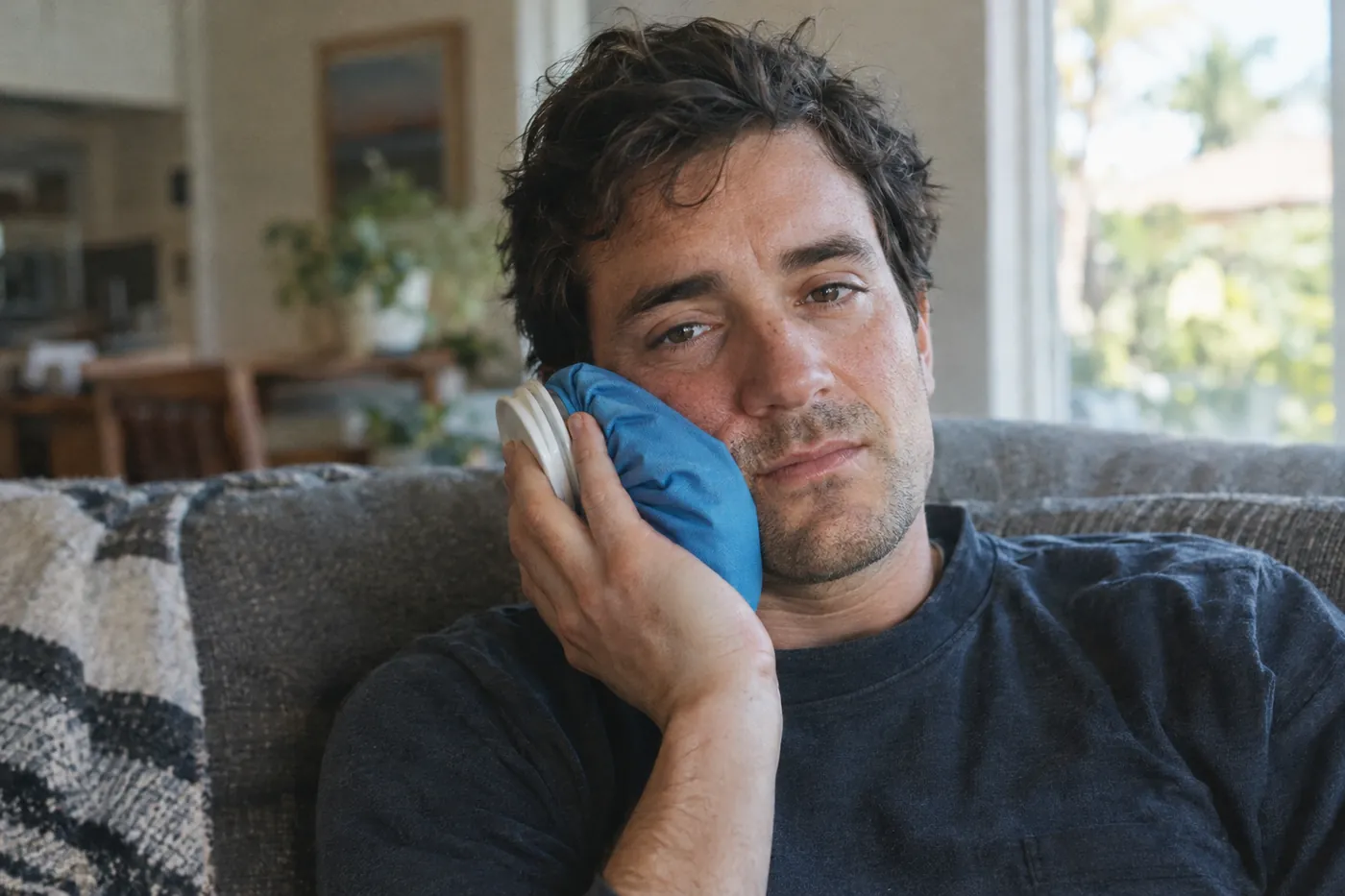
Rinse your mouth with warm water, save any broken pieces and see a dentist as soon as you can. If the area is bleeding, press gauze on it for about 10 minutes. A cold compress on the outside of your cheek can ease pain and swelling.
Don’t put aspirin or pain-relief gels directly on the tooth or gums.
Many chips can be repaired with a tooth-colored filling or a crown. If a crack reaches the pulp inside, the tooth may need root canal treatment. Read more about a broken or chipped tooth.
How can I ease a toothache until I see a dentist?
Rinse with warm water, floss gently to remove any trapped food, and hold a cold compress against your cheek if there’s swelling. An over-the-counter pain reliever, taken as the label directs, can help in the meantime.
Never put aspirin or other painkillers against your gums or tooth. Cleveland Clinic warns it can burn the gum tissue.
A throbbing toothache that doesn’t go away can be a sign of infection, so call your dentist. Our toothache page covers common causes.

What should I do about swelling or a possible abscess?
Swelling in your gums, face or jaw can mean an infection, and it needs prompt dental care. MedlinePlus lists signs of a tooth abscess such as a severe, throbbing toothache, a pimple-like bump on the gum, a bitter taste, fever and a swollen jaw.
Until you’re seen, rinsing a few times a day with mild salt water (half a teaspoon of salt in 8 ounces of water) may help. A cold compress on the outside of your cheek can ease swelling.
Left untreated, an abscess can spread to the jawbone and the soft tissues of the face and neck. Learn more about a tooth abscess and swollen gums.
What should I do if a filling or crown falls out?
Keep the crown if you have it, protect the tooth and call your dentist. Our dental crowns page has more about crowns. Until your visit, Cleveland Clinic suggests:
- Lost filling: press a piece of sugar-free gum into the space, or use over-the-counter dental cement. Avoid sugary gum, which can cause pain.
- Lost crown: if you can, coat the inside with over-the-counter dental cement, toothpaste or denture adhesive and gently slip it back on. Never use super glue.
- Bring the crown with you to your visit.
When should you go to the ER or call 911?
Call 911 or go to the nearest emergency room if facial swelling affects your breathing, swallowing or vision, if you have a fever with swelling, if bleeding won’t stop, or if you’ve had a serious injury to the face or jaw.
- Trouble breathing: call 911. Swelling under the tongue from a tooth infection can block the airway.
- Swelling with trouble swallowing, a fever of 100.4°F or higher, confusion or a racing heart: go to the ER.
- Swelling around the eye or changes in vision: go to the ER. A dental infection that spreads to the tissue around the eye is a medical emergency.
- Bleeding that keeps going despite steady pressure: go to the ER.
- A possible broken jaw or serious injury to the face: go to a hospital emergency department right away.
Can the ER help with a tooth?
ER teams can give medicine, such as antibiotics or pain relievers, for pain and swelling, but they don’t do fillings or crowns. You’ll still need to see a dentist afterward.
How do I reach Golden Triangle Dentistry in an emergency?
Call us at (951) 677-1054 and tell our team what happened. It’s the same office, the same phone number and the same caring team, caring for Murrieta families since 1991.
We’re at 25460 Medical Center Dr, Suite 202, with free parking in front of and behind the building and a wheelchair-accessible entrance, parking and restroom. For office hours or questions about becoming a patient, call and our team will answer. You can also visit our new patients page or get directions and contact details.
If you can’t reach a dentist and you have swelling, a fever, bleeding that keeps going or a serious injury, go to the emergency room.

How can you prevent dental emergencies?
Wear a mouthguard for sports, avoid chewing hard things, and keep up with regular cleanings and exams. The ADA says mouthguards should be part of standard sports gear from an early age, even for non-contact activities like gymnastics and skating. Mouthguards come in three main types:
- Custom-made: made by your dentist for a personal fit.
- Boil-and-bite: softened in water and shaped to your teeth. These often fit better than stock guards.
- Stock: ready to wear and inexpensive, but they often don’t fit well and can make breathing and talking harder.
Everyday habits that help
Skip chewing ice, popcorn kernels and hard candy, use scissors instead of your teeth, and keep floss and a tooth preservation kit in your first aid kit.

Questions & answers
Common questions
How long can I leave a tooth abscess untreated?
You shouldn’t wait. MedlinePlus warns that untreated abscesses can get worse and lead to life-threatening complications. Pain may come and go, and the AAE notes that an infection around a tooth root may or may not hurt, so feeling better doesn’t mean the infection is gone. Call your dentist promptly, and go to the ER if swelling spreads or you develop a fever.
Can I leave a broken tooth for a week?
It’s not a good idea. The AAE explains that a cracked tooth won’t heal on its own the way a broken bone does, and if the pulp inside becomes infected, the infection can spread to the bone and gum around it. Early treatment gives you the most options. A tiny chip is less urgent, but a large break, sharp pain or bleeding needs care right away.
Is a cracked wisdom tooth an emergency?
It can be. Treat it as urgent if it causes severe pain, swelling or bleeding. Even without pain, have it checked soon, because cracks don’t heal and wisdom teeth trap food and bacteria easily, which can invite infection. Your dentist will check whether the tooth can be repaired or should come out. Our wisdom teeth page explains what removal involves.
What do you do if you have a dental emergency but no dentist?
Call a dental office right away. You’re welcome to call us at (951) 677-1054 and ask our team about becoming a patient. Cleveland Clinic advises that if you can’t reach a dentist, an urgent care center or emergency room can help with pain and infection until you can see one. For trouble breathing, call 911.
I’m nervous about the dentist, but I need care. What can I do?
Tell our team when you call, so we know how you’re feeling. Nitrous oxide has been offered here for anxious patients, along with comfort touches like blankets, bottled water and TVs. Putting off care can let a small problem grow, so reaching out is a good first step. Our dental anxiety and comfort page explains more.
Is a broken braces wire an emergency?
Usually not, unless there’s bleeding or an injury. Cleveland Clinic suggests gently bending a poking wire end with a pencil eraser and covering it with orthodontic wax until you can see your dentist. If you can’t make it comfortable, or a wire or bracket has cut your cheek or gums, call us.
Keep reading
Related care and answers
Toothache
What a toothache can mean, safe ways to ease it at home, and when to call a dentist or go to the ER. A plain g
Tooth Abscess
Signs of a tooth abscess, which symptoms mean call 911 or go to the ER, what helps while you wait, and how a d
Broken or Chipped Tooth
Chipped or broke a tooth? First steps to protect it, when it’s an emergency, how dentists repair chips and cra

Root Canal Treatment
Root canal treatment saves an infected tooth. Learn the signs, what happens, comfort, crowns, myths and cost,

Wisdom Teeth Removal & Oral Surgery
When wisdom teeth need removal, what impaction means, what to expect, recovery and eating tips. Oral surgery w
Dental Anxiety & Comfort
Nervous about the dentist? Practical tips, stop signals, what nitrous oxide is and isn’t, help for anxious kid
Sources
- Dental Emergencies · American Dental Association (MouthHealthy)
- Mouthguards · American Dental Association (MouthHealthy)
- Knocked Out Teeth · American Association of Endodontists
- Traumatic Dental Injuries FAQ · American Association of Endodontists
- Cracked Teeth · American Association of Endodontists
- Abscessed Teeth · American Association of Endodontists
- What Is a Dental Emergency and Where To Go for Care · Cleveland Clinic
- Tooth Abscess: Symptoms, Causes & Treatment · Cleveland Clinic
- Tooth abscess · MedlinePlus (U.S. National Library of Medicine)
- Ludwig angina · MedlinePlus (U.S. National Library of Medicine)
- Orbital cellulitis · MedlinePlus (U.S. National Library of Medicine)
Golden Triangle Dentistry is not affiliated with these organizations. Links open in a new tab.
Important information: This page is general first-aid information, not medical advice; in a life-threatening emergency, call 911.
Golden Triangle Dentistry
Book a visit
25460 Medical Center Dr, Suite 202, Murrieta
Dental emergency? Call us first
Call (951) 677-1054 and tell our Murrieta team what happened. For trouble breathing, call 911.