Porcelain veneers
Porcelain Veneers in Murrieta, CA
Thin, custom-made porcelain shells can hide chips, small gaps and stubborn stains. Here’s how veneers work, who they suit, what the steps look like, and how to care for them so they last.
- Caring for families since 1991
- Rated 4.9 on Google
- CareCredit accepted
- Free parking

What are porcelain veneers?
Porcelain veneers are thin, tooth-colored shells that a dentist bonds to the front of your teeth to hide chips, small gaps, uneven shapes and stains that whitening can’t fix. A small amount of enamel is removed first, so the treatment isn’t reversible. With good care, veneers last about 10 to 15 years on average.
What are porcelain veneers?
Porcelain veneers are custom-made shells that cover the front surface of a tooth. Unlike a crown, which covers the whole tooth, a veneer covers only the side people see when you smile.
The ADA says veneers can improve teeth that are chipped, stained or slightly crooked, and they can mask small gaps. Porcelain is strong, long-lasting and natural-looking.
Veneers mainly change how a tooth looks. Cleveland Clinic notes they don’t necessarily strengthen or repair a tooth, so a tooth with a lot of damage may be better served by a crown.
Veneers are one part of the cosmetic dentistry care we provide in Murrieta.
Porcelain vs. composite veneers: what’s the difference?
Porcelain veneers are made in a dental lab and tend to last longer, while composite veneers are sculpted right on the tooth from tooth-colored resin. Porcelain usually costs more.
According to the ADA, composite veneers may need less enamel removed and fewer visits, and they’re easier to repair. The tradeoff is that composite isn’t as stain- or wear-resistant as porcelain.
Composite veneers use the same resin as dental bonding, which Cleveland Clinic says typically lasts 3 to 10 years before it needs a touch-up or replacement. Your dentist can help you decide which fits your teeth, goals and budget.
At a glance
Porcelain vs. composite veneers
A side-by-side look based on information from the ADA and Cleveland Clinic.
| Porcelain veneers | Composite veneers | |
|---|---|---|
| How they’re made | Custom-made in a dental lab from an impression or scan | Sculpted on the tooth from tooth-colored resin, then hardened with a light |
| Enamel removed | A small amount from the front and sides | May need less |
| Visits | Usually more than one, with temporaries possible in between | Often fewer |
| Stain and wear resistance | Strong and stain-resistant | Less resistant to stains and wear |
| Repairs | A damaged veneer may need re-bonding, repair or replacement | Easier to repair |
| Typical lifespan | About 10 to 15 years on average | Same resin as bonding, which typically lasts 3 to 10 years |
| Relative cost | Usually the more expensive option | Usually less expensive |
Who is a good candidate for veneers?
You may be a good candidate if your teeth and gums are healthy and you want to change the color, shape or spacing of the teeth that show when you smile.
Cavities and gum disease need treatment first. Cleveland Clinic says veneers are only an option once you’re free of extensive cavities and gum disease, so a visit for gum disease treatment may come before any cosmetic work.
The ADA notes that people who clench or grind their teeth, or who have a deep overbite, may not be good candidates. If crowding is the main concern, moving the teeth with braces or clear aligners may make more sense than covering them.
Only a licensed dentist should place veneers
The ADA warns against unlicensed “veneer technicians.” Placement by someone without a dental license risks infection and nerve damage, and veneers may end up over teeth that aren’t healthy.

What are the steps to getting porcelain veneers?
Getting porcelain veneers usually involves a planning visit, a visit to prepare the teeth, and a visit to bond the finished veneers in place.
- Exam and planning. Your dentist checks your teeth and gums, talks through your goals, and helps you choose a shade.
- Preparing the teeth. A small amount of enamel is removed from the front and sides of each tooth so the veneer sits naturally.
- Impression or scan. A mold or digital scan goes to a dental lab, which makes your veneers. Cleveland Clinic notes this can take a few weeks, and temporary veneers may be placed in the meantime.
- Bonding. Your dentist checks the fit, color and bite, makes any adjustments, and bonds each veneer to the tooth.
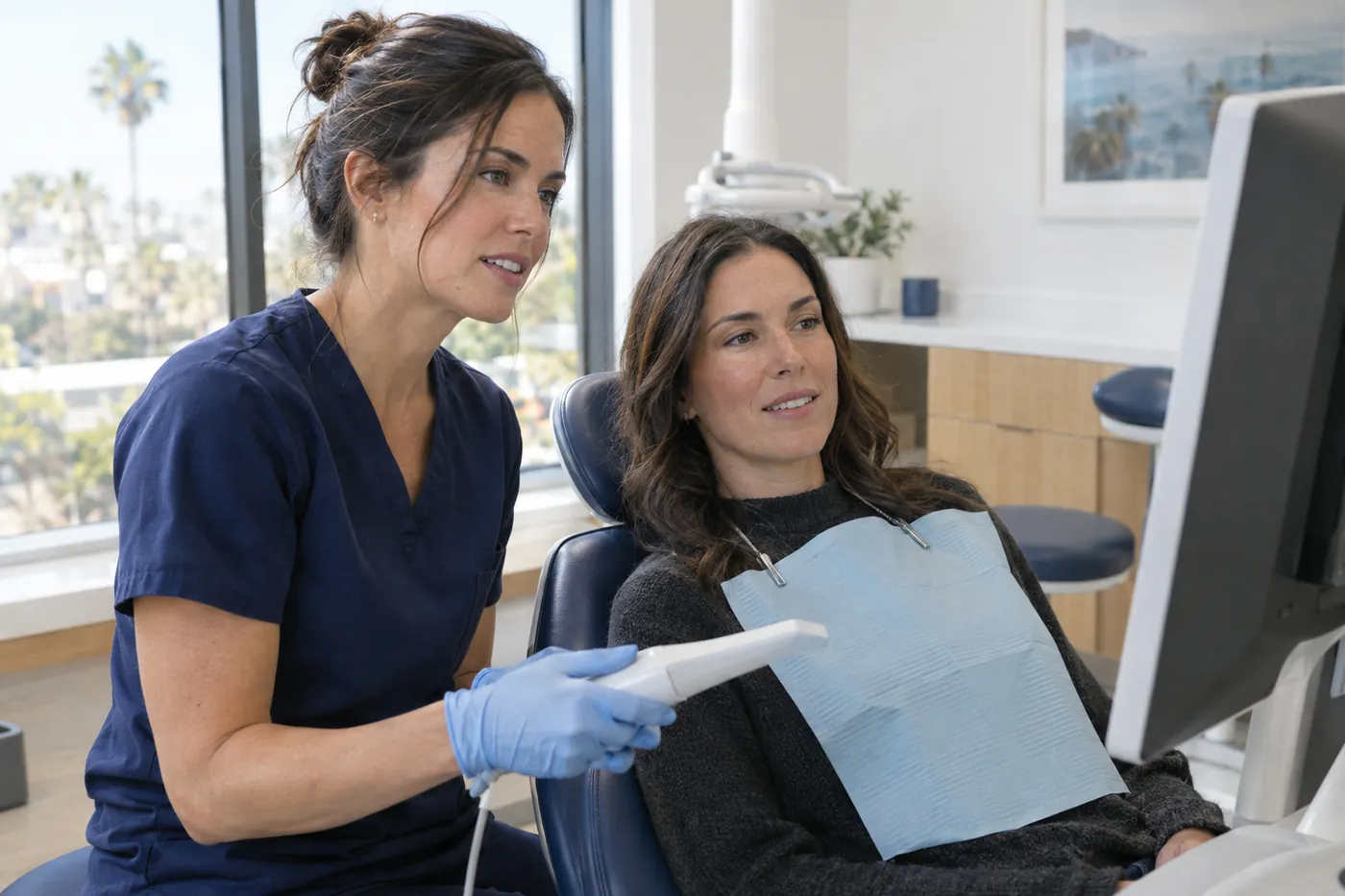
Digital impressions
Our letter to patients describes updated technology being added at the office, including 3D imaging, digital X-rays and digital impressions, for more comfortable visits and fewer appointments.
How long do porcelain veneers last?
With good care, porcelain veneers last about 10 to 15 years on average, according to Cleveland Clinic, and some last longer. The clinic’s guide to bonding gives a range of 10 to 20 years before replacement.
How long yours last depends on your bite, habits like nail biting or chewing on hard objects, and how well you care for your teeth and gums. Composite veneers generally need attention sooner than porcelain.
What happens after 20 years of veneers?
After about 20 years, veneers often need repair, re-bonding or replacement, since the average porcelain veneer lasts about 10 to 15 years. The ADA explains that a veneer may chip, crack, wear down or loosen over time.
Because enamel was removed to place them, your teeth can’t simply go back to how they were. The ADA notes that veneer treatment isn’t reversible, so a worn veneer is usually replaced with a new veneer or another restoration, such as a crown.
The natural tooth underneath can still decay. Both the ADA and Cleveland Clinic point out that cavities can form under or around a veneer, so regular checkups and cleanings help catch problems early.
If a veneer ever feels loose, rough or different, Cleveland Clinic advises calling your dentist right away rather than waiting.

How do you care for veneers?
Care for veneers the way you care for natural teeth: brush twice a day with fluoride toothpaste, clean between your teeth once a day, and keep up with regular dental visits.
- Use a soft-bristled brush and a nonabrasive fluoride toothpaste, as Cleveland Clinic suggests.
- Don’t chew ice, pens or other hard objects, and try not to bite your nails.
- Wear a mouthguard for sports.
- Limit coffee, tea and red wine, which the ADA and Cleveland Clinic both list as common stain sources.
- Skip whitening products on your veneers. They won’t lighten porcelain, and Cleveland Clinic notes they can scratch veneers.

What are the alternatives to veneers?
Depending on your goal, whitening, tooth-colored bonding or fillings, crowns, or straightening may work instead of veneers.
- Professional teeth whitening for yellowing and surface stains on otherwise healthy teeth.
- Tooth-colored bonding or tooth-colored fillings for small chips and repairs. Cleveland Clinic notes bonding usually doesn’t require removing enamel.
- Dental crowns for teeth that are cracked, weak or heavily filled and need strength as well as a better look.
- Braces or clear aligners, such as the Invisalign system, for crooked or crowded teeth.
Paying for veneers
We accept cash, check, Visa, MasterCard, Discover, American Express and CareCredit. Our financing page explains the newer, flexible financing options, and our team can help you compare choices.
Questions & answers
Common questions
Can veneers fix crooked teeth?
Veneers can make slightly crooked teeth look straighter by covering their front surfaces, and the ADA lists crooked teeth among the problems veneers can improve. They don’t move teeth, though. If teeth are crowded or your bite is off, braces or clear aligners may be the better fit, and your dentist can explain the tradeoffs of each approach.
Can I whiten my teeth after getting veneers?
Whitening won’t change the color of veneers, because only natural teeth respond to bleaching, according to the ADA. If you’d like whiter natural teeth as well, talk with your dentist about whitening before your veneer shade is chosen. That way your veneers can be matched to your brighter smile instead of your current shade.
Will my teeth be sensitive after veneers?
Some people notice more sensitivity to hot and cold afterward, since a little enamel is removed, Cleveland Clinic notes. There’s no downtime after placement, so you can get back to your usual routine. If sensitivity is strong or doesn’t settle, let your dentist know. Our sensitive teeth page explains other common causes.
What are no-prep or minimal-prep veneers?
These are veneers that need little or no enamel removed. Cleveland Clinic notes that while most veneers are permanent, some no-prep or minimal-prep types can be reversible, but they aren’t right for everyone. Whether they would work for you depends on the shape and position of your teeth and your goals, so ask your dentist.
Do porcelain veneers stain?
Porcelain resists stains well, which is one reason people choose it. Composite resin doesn’t resist stains as well as porcelain, according to Cleveland Clinic. Your natural teeth can still stain, so limiting coffee, tea and red wine helps your whole smile stay even, and regular cleanings remove surface buildup around your veneers.
Are veneers covered by insurance?
Usually not. The ADA notes that veneers are considered cosmetic, so they may not be covered unless they’re deemed medically necessary, and Cleveland Clinic says most insurance doesn’t cover them. Ask our team how your plan applies. You can also see our dental financing page for ways to spread out the cost.
Keep reading
Related care and answers

Cosmetic Dentistry
Whitening, porcelain veneers, tooth-colored fillings, crowns, braces and aligners in Murrieta. Compare options

Teeth Whitening
Professional vs. store-bought whitening, what it can and can’t change, sensitivity, safety and keeping results

Dental Crowns
When you need a crown, crown materials, the steps, digital vs. traditional impressions, crowns after a root ca
Tooth-Colored Fillings
How composite (tooth-colored) fillings work: signs of a cavity, what to expect, composite vs. amalgam, kids’ c

Braces & Clear Aligners
Orthodontics, including braces and clear aligners, is coming to Golden Triangle Dentistry in Murrieta. Options

Payment Options & Financing
Pay by cash, check, Visa, MasterCard, Discover, American Express or CareCredit, with more financing choices on
Sources
- Veneers · American Dental Association (MouthHealthy)
- Veneers: What Are Dental Veneers? Cost, Procedure & Advantages · Cleveland Clinic
- What Is Dental Bonding & What To Expect · Cleveland Clinic
- Whitening (Oral Health Topics) · American Dental Association
- Cosmetic Dentistry: Enhancing the Appearance of Your Smile · Cleveland Clinic
- Periapical Abscess: Symptoms, Diagnosis & Treatment · Cleveland Clinic
- Dental Emergencies · American Dental Association (MouthHealthy)
Golden Triangle Dentistry is not affiliated with these organizations. Links open in a new tab.
Important information: This page is general information, not a diagnosis or treatment plan; call 911 or go to the nearest emergency room for facial swelling that affects your breathing, swallowing or vision, a high fever with swelling, bleeding that won’t stop, or a serious mouth or jaw injury.
Golden Triangle Dentistry
Book a visit
25460 Medical Center Dr, Suite 202, Murrieta
Wondering if veneers are right for you?
Call our Murrieta office at (951) 677-1054 or request a visit to talk through your options.