Root canal treatment
Root Canal Treatment in Murrieta: Saving Your Natural Tooth
Root canal treatment removes infected or inflamed tissue from inside a tooth so you can keep it. Specialist care for root canal treatment will be available right here at our office, so you will not need to travel to another office.
- Specialist care coming to our office
- Works with most PPO plans
- CareCredit accepted
- Same office, same phone number

What is a root canal?
A root canal is a treatment that saves a badly decayed, cracked or infected tooth. The dentist numbs the tooth, removes the inflamed or infected pulp inside, cleans and disinfects the canals, then fills and seals them. Afterward, a crown or filling protects the tooth so it can keep working like your other teeth.
Why would a tooth need a root canal?
A tooth needs a root canal when the pulp, the soft tissue inside it, becomes inflamed or infected. The pulp holds the tooth’s nerves and blood vessels.
According to the American Association of Endodontists (AAE), the pulp can be damaged by deep decay, repeated dental work on the same tooth, a faulty crown, or a crack or chip. An injury can harm the pulp even when the tooth looks fine.
Left untreated, the infection can cause pain or an abscess and can spread to the bone around the tooth. The good news: a fully grown tooth can keep working without its pulp, because the tissues around it still nourish it.
What are the signs you may need a root canal?
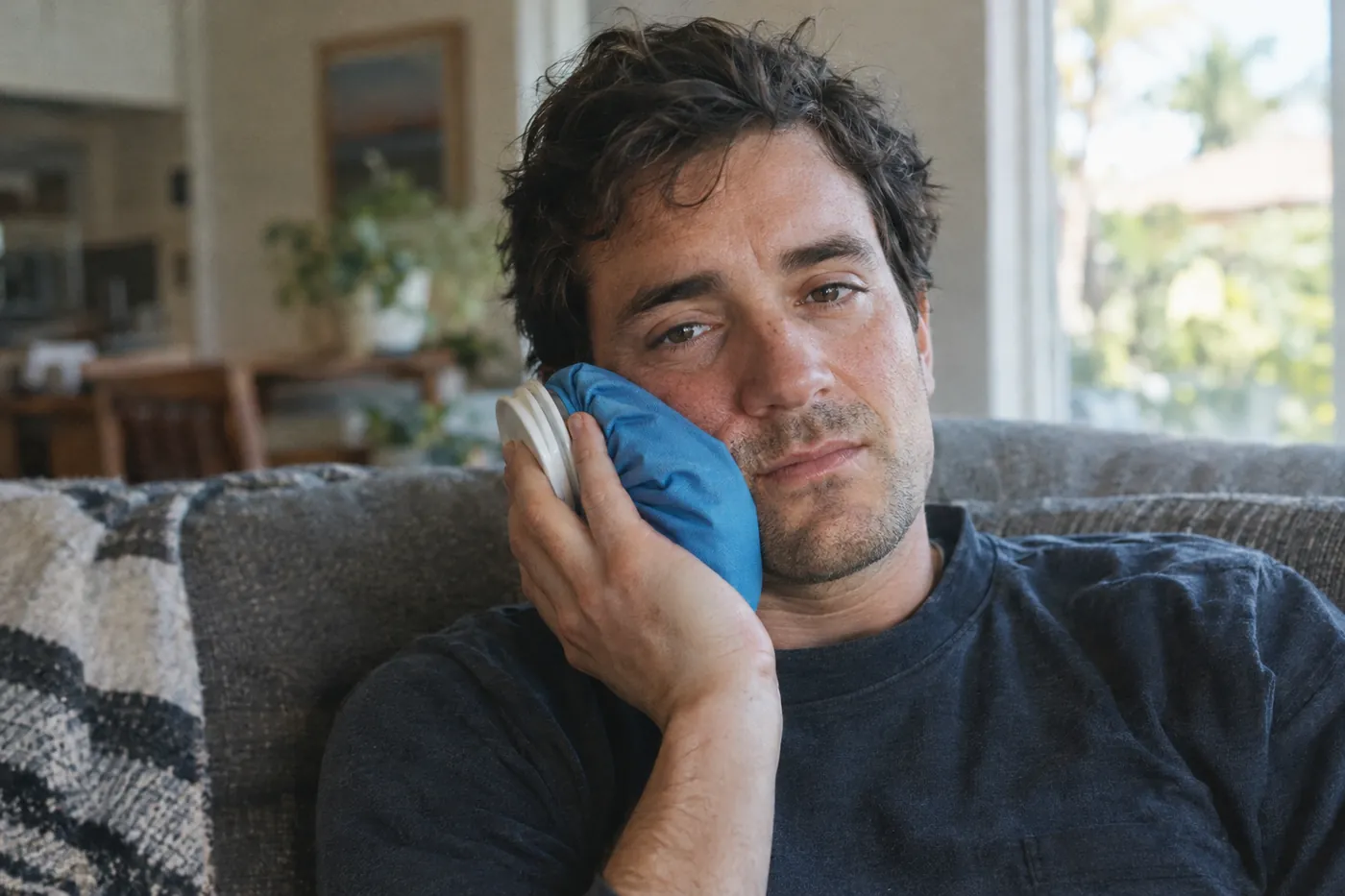
Common signs include pain when you chew or bite, sensitivity to hot or cold that lingers, and swollen or tender gums. Our pages on toothache and tooth abscess cover other causes of tooth pain.
Signs to watch for include:
- Severe pain when chewing or biting
- Sensitivity to hot or cold that lasts after the food or drink is gone
- A pimple or boil on the gum near the tooth
- Swollen or tender gums, or a tooth that has darkened
- A chipped or cracked tooth
- Pain that spreads to your jaw or face
Don’t wait on swelling
If you have swelling along with pain, get care soon. Some infected teeth don’t hurt at all, which is one reason regular exams matter.

How it works
What happens during root canal treatment
Here is how a typical root canal saves a tooth, from the first X-ray to the final crown.
- Exam and X-ray
The dentist examines the tooth and takes an X-ray to see the canals and any signs of infection.
- Numbing
Local anesthetic numbs the tooth and the area around it.
- Protecting the tooth
A thin sheet called a dental dam keeps the tooth clean and dry during treatment.
- Cleaning the canals
A small opening is made in the crown of the tooth. The pulp is removed, and the canals are cleaned, disinfected and shaped.
- Filling and sealing
The canals are filled with a rubber-like material called gutta-percha and sealed. A temporary filling closes the opening.
- Restoring the tooth
At a later visit, the tooth gets a crown or filling to protect it and bring back full chewing.
What happens during a root canal?
Most root canal treatments take one or two visits. The tooth is numbed, cleaned out from the inside, then filled and sealed, as shown in the steps below.
If there isn’t enough tooth left to hold the final restoration, a small post may be placed inside the tooth for support.
Specialist care for root canal treatment will be available right here at our Murrieta office, so you will not need to travel to another office. We’re also adding 3D imaging and digital X-rays, and the FDA lists root canal diagnosis as one use of dental cone-beam CT. See 3D imaging and digital impressions.
Does a root canal hurt?
Because the tooth is numbed, a root canal usually feels much like getting a filling. The AAE explains that the pain people link with root canals usually comes from the infection itself, and treatment is meant to relieve it.
Afterward, the tooth may be tender for a few days, and your jaw may feel sore from holding your mouth open. Over-the-counter medicine usually helps. Wait to eat until the numbness wears off, and avoid biting hard on the tooth until it’s fully restored.
Nervous about dental visits? Nitrous oxide has been offered here for anxious patients, along with comfort touches like blankets. Ask our team about comfort options.

Do I need a crown after a root canal?
Often, yes. After a root canal, the tooth is restored with a crown or filling, and the AAE notes that treated teeth often need a crown to protect them from breaking.
Plan your crown visit as soon as the root canal is finished. Until then, avoid heavy biting on that tooth. A properly treated and restored tooth can last as long as your other natural teeth.
Learn what to expect on our dental crowns page.

Root canal myths vs. facts
Most fears about root canals come from old stories, not current science. Here’s what the AAE says about common myths:
- Myth: Root canals are extremely painful. Fact: Modern treatment is designed to relieve pain, and most patients find it similar to a routine filling.
- Myth: Root canals cause cancer or other illness. Fact: There is no scientific evidence linking root canal treatment to cancer, heart disease or arthritis.
- Myth: Recovery is long and miserable. Fact: Mild soreness for a few days is typical, and significant or prolonged pain is uncommon.
- Myth: Treated teeth don’t last. Fact: With proper care, a tooth that has had a root canal can last a lifetime.
- Myth: Ozone or other new treatments can replace a root canal. Fact: Ozone hasn’t been shown to replace the cleaning, shaping and sealing a root canal provides.
Is it better to pull a tooth or get a root canal?
When a tooth can be saved, the AAE says root canal treatment is the preferred option, because nothing looks, feels or works quite like your natural tooth.
Pulling a tooth can seem simpler, but the gap usually needs to be filled. Spaces left by missing teeth can let other teeth shift, which can affect chewing and your smile. Replacing a tooth with a dental implant or bridge takes more visits and sometimes bone grafting.
Sometimes a tooth can’t be saved, such as when a crack runs below the gum line. Then removal is the right step, and your dentist will talk with you about replacement options.
How much does a root canal cost?
The cost depends on which tooth needs treatment, how complex its canals are and what restoration it needs afterward. Our root canal cost guide covers each of these factors:
- Tooth type: front teeth usually take less time than molars, which have more canals.
- Complexity: curved or narrow canals, severe infection or redoing an earlier root canal can add time.
- Restoration: the crown or filling the tooth needs afterward.
- Coverage: many dental plans pay part of root canal treatment, and some require pre-authorization.
Help with costs
We work with most dental insurance plans, including most PPOs and the UFCW member dental plan. We accept CareCredit and are adding flexible financing options.

Questions & answers
Common questions
Do I need an endodontist for a root canal?
Not always. General dentists also perform root canal treatment. Endodontists are dentists with two to three years of advanced training beyond dental school who focus on root canal treatment and tooth pain, according to the AAE. Specialist care for root canal treatment will be available right here at our office, so you will not need to travel to another office if your tooth needs it.
How long does pain last after a root canal?
Mild tenderness for a few days is common as the area settles. Cleveland Clinic notes that most people recover in less than a week. Call your dentist if severe pain or pressure lasts more than a few days, if you see swelling inside or outside your mouth, if your bite feels uneven, or if your old symptoms come back.
Which is better for a cracked tooth, a crown or a root canal?
It depends on how deep the crack goes. The AAE explains that if a crack has reached the pulp, root canal treatment and a crown may save the tooth. If a piece of the chewing surface breaks off, a filling or crown may be enough. A crack that extends below the gum line usually means the tooth can’t be saved. An exam and X-rays help tell the difference.
When is it too late to save a tooth with a root canal?
There’s no set deadline, but waiting gives infection time to spread and damage time to grow. The AAE says most teeth can be treated with a root canal, but not all. When damage is too severe, the tooth may need to come out. If a tooth hurts when you bite, stays sensitive or your gums swell, have it checked soon.
What if I need a root canal but can’t afford it?
Talk with us before you decide. Pulling the tooth may look cheaper at first, but the AAE notes that replacing a missing tooth with an implant or bridge usually costs more and takes more appointments. Many dental plans cover part of root canal treatment. We accept CareCredit and are adding flexible financing options, and our team is happy to help you use your benefits.
Can a root canal be redone if the tooth doesn’t heal?
Yes, often. The AAE notes that a treated tooth occasionally doesn’t heal as expected or becomes infected again. When that happens, the tooth can often be saved through retreatment or a surgical procedure at the root, called endodontic surgery. Let your dentist know if pain, swelling or other old symptoms return after treatment.
Keep reading
Related care and answers
Dental Crowns
When you need a crown, crown materials, the steps, digital vs. traditional impressions, crowns after a root ca
Root Canal Cost Guide
What affects the cost of a root canal, why a crown often follows, and how saving a tooth compares with pulling
Tooth Abscess
Signs of a tooth abscess, which symptoms mean call 911 or go to the ER, what helps while you wait, and how a d
Toothache
What a toothache can mean, safe ways to ease it at home, and when to call a dentist or go to the ER. A plain g

Emergency Dental Care
What counts as a dental emergency, what to do now for a knocked-out or broken tooth, toothache or swelling, an

Dental Implants
Dental implants placed in our Murrieta office, from start to finish. Learn who is a candidate, the steps, reco
Sources
- What is a Root Canal? · American Association of Endodontists
- Root Canal Explained: Step-by-Step Treatment Guide · American Association of Endodontists
- Root Canal Myths vs. Facts · American Association of Endodontists
- Root Canal vs Extraction · American Association of Endodontists
- How Much Does a Root Canal Cost? · American Association of Endodontists
- Root Canal Post Treatment Care · American Association of Endodontists
- Cracked Teeth · American Association of Endodontists
- Why See an Endodontist · American Association of Endodontists
- Root Canals · American Dental Association (MouthHealthy)
- Root Canal: Procedure & Recovery · Cleveland Clinic
- Dental Cone-beam Computed Tomography · U.S. Food and Drug Administration
Golden Triangle Dentistry is not affiliated with these organizations. Links open in a new tab.
Important information: This page is general information, not a diagnosis; your dentist will recommend treatment after examining your tooth.
Golden Triangle Dentistry
Book a visit
25460 Medical Center Dr, Suite 202, Murrieta
Worried about a painful tooth?
Call (951) 677-1054 and our team will answer your questions about root canal treatment.