Dental crowns
Dental Crowns in Murrieta, CA
A crown is a custom cap that covers a damaged tooth so you can chew, smile and speak comfortably again. Here’s when you need one, the materials and steps, and how to make it last.
- Caring for families since 1991
- Works with most PPOs
- UFCW member plan accepted
- CareCredit accepted

When do you need a dental crown?
You may need a crown when a tooth is cracked, broken, worn down, weakened by a large filling, or has had a root canal, especially a back tooth. A crown is a tooth-shaped cap that covers the whole tooth above the gum line to protect it and restore its shape. With good care, crowns often last 5 to 15 years.
What is a dental crown?
A dental crown is a tooth-shaped cap that fits over the entire visible part of a tooth, down to the gum line, and is cemented in place.
MedlinePlus explains that a crown replaces the part of the tooth above the gum line. It protects what’s left of the tooth, restores its shape and size, and can improve how it looks.
Crowns also hold dental bridges in place and cap dental implants. At Golden Triangle Dentistry in Murrieta, implants are now placed in our office, from start to finish.
When do you need a crown?
Your dentist may recommend a crown when a tooth is too damaged or weak for a filling alone. Common reasons include:
- A large cavity or large old filling, when there isn’t enough tooth left to hold a filling
- A cracked, chipped or broken tooth
- A tooth worn down by grinding or clenching
- A tooth that has had root canal treatment, especially a back tooth
- A tooth that is badly stained or misshapen
- Holding a bridge in place or covering an implant
Why did my dentist recommend a crown?
The ADA notes that if a dentist recommends a crown, it’s probably to correct one of the problems above. It’s always fair to ask which one applies to your tooth and what other options exist.

How it works
Getting a crown, step by step
A crown usually takes two visits. Here’s what typically happens.
- Check the tooth
Your dentist examines the tooth, may take X-rays, and explains why a crown is recommended and what the alternatives are.
- Numb and shape
The area is numbed. Decay or old filling material is removed, and the tooth is reshaped so the crown can fit over it.
- Record the shape
A putty impression or a digital scan captures the tooth and your bite so a dental lab can make the crown.
- Wear a temporary
A temporary crown protects the tooth while the permanent one is made, which usually takes two to three weeks.
- Fit and cement
Your dentist removes the temporary, checks shape, color, fit and bite, may take an X-ray, and cements the crown.
- Settle in
Some sensitivity to heat and cold is common for a couple of weeks. Call if your bite feels off or pain doesn’t ease.
What are dental crowns made of?
Crowns can be made of ceramic or porcelain (including zirconia), porcelain fused to metal, pressed ceramic, metal, or resin, and each has tradeoffs, according to Cleveland Clinic.
Your dentist will suggest a material based on where the tooth is, how it needs to look, and any allergies you have.
- All-ceramic or porcelain, including zirconia: looks the most like natural enamel and suits people with metal allergies. Zirconia is very durable and gentler on opposing teeth.
- Porcelain fused to metal: combines metal strength with a tooth-colored surface that can be shade-matched. The porcelain can chip and show the metal underneath.
- Pressed ceramic: a ceramic core with layered porcelain that mimics the translucency of enamel. The layers can chip over time.
- Metal, such as gold alloys: rarely chips and holds up well to wear, but the color shows, so it’s often used on molars that are out of sight.
- Resin: less expensive but more fragile, and often used for temporary crowns.
What’s the difference between digital and traditional impressions?
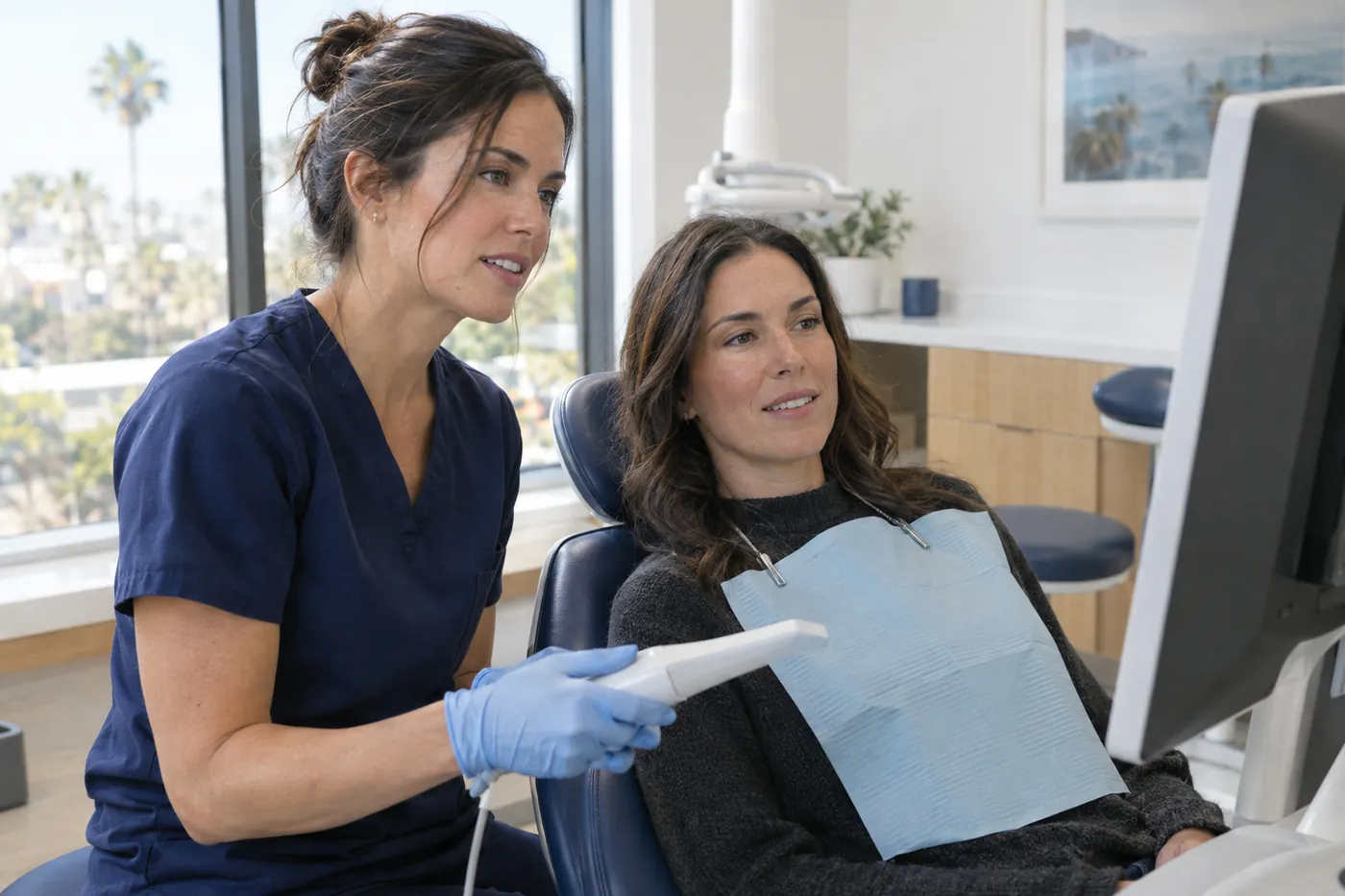
A traditional impression uses a tray of soft putty pressed onto your teeth, while a digital impression uses a small wand to take pictures that a computer combines into a 3D model.
Cleveland Clinic notes that putty impressions are very accurate but can feel bulky and trigger a gag reflex. Digital scans are often faster, leave no residue, are equally or more accurate, and are sent to the lab electronically.
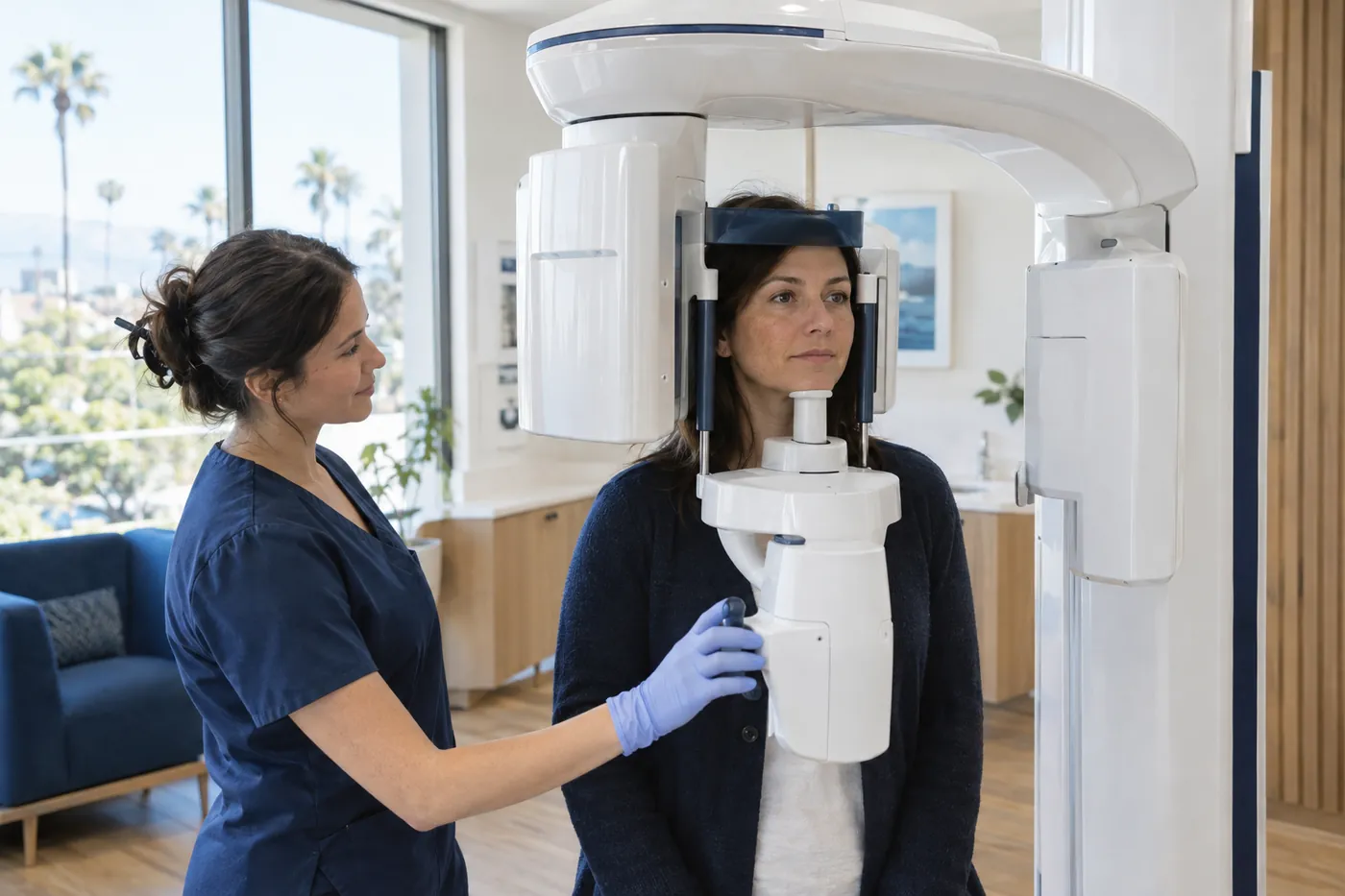
Digital impressions are among the updates being added at our office. Our letter to patients describes updated technology, including 3D imaging, digital X-rays and digital impressions, for more comfortable visits and fewer appointments. Learn more about 3D imaging and digital impressions.
Do you need a crown after a root canal?
Often, yes, especially for back teeth. The AAE explains that molars and premolars, which handle heavy chewing forces, often benefit from a full-coverage crown after root canal treatment.
A tooth that hasn’t been restored yet is more likely to fracture, so the AAE advises booking the final crown as soon as root canal treatment is complete. After restoration, the tooth works like any other tooth.
Front teeth, which aren’t used as much for chewing, don’t always need a crown afterward. Until your crown is placed, avoid biting down hard on the treated tooth.
Specialist care for root canal treatment will be available right here, so you won’t need to travel to another office.

Can a tooth still rot under a crown?
Yes. MedlinePlus notes that the natural tooth under a crown can still get a cavity.
A crown covers the tooth, but it doesn’t make the tooth underneath immune to decay. Cleveland Clinic adds that a crown that doesn’t fit properly can trap bacteria and lead to decay.
Brush twice a day with fluoride toothpaste, floss once a day, and keep up with checkups and cleanings so your dentist can check the crown’s edges and fit.
Call your dentist if you notice a bad taste or bad breath around the crown, a crack or chip, sharp edges, or a crown that feels loose.
How long do dental crowns last?
Most crowns last 5 to 15 years on average, according to Cleveland Clinic, and many last longer with good care. MedlinePlus says most crowns should last at least five years and can last as long as 15 to 20 years.
How long yours lasts depends on wear, your habits and how well you care for it. These steps help:
- Brush twice a day with a soft-bristled brush and fluoride toothpaste, and floss once a day.
- Avoid chewing ice, hard nuts, popcorn kernels, and sticky candies like taffy and caramels.
- If you grind or clench your teeth, ask your dentist about a custom mouth guard.
- With a temporary crown, slide floss out instead of lifting it, and chew on the other side when you can.
Is it cheaper to remove a tooth or get a crown?
Removing a tooth can look simpler at first, but a fair comparison includes what it takes to replace that tooth afterward.
Cleveland Clinic notes that missing teeth can make eating and speaking harder, and nearby teeth can shift into the gap. That’s why a missing tooth is often replaced with a bridge or an implant, each with its own cost and time.
The AAE says saving your natural tooth should be your first choice when it can be saved, because even implants and bridges can’t truly replace it. Ask our team for an estimate for each path so you can compare them side by side.
We work with most dental insurance plans, including most PPOs, and still accept the UFCW member dental plan. See dental insurance and dental financing for more.
Using your benefits
Many dental benefits renew at the end of the year, and our team is happy to help you use yours before then.

What should you do if a crown comes off or a crowned tooth hurts?
Call your dentist if a crown comes loose or falls off, or if a crowned tooth starts to hurt, because the tooth underneath may need attention.
Cleveland Clinic says a crown shouldn’t be painful, and you shouldn’t have pain that keeps you up at night, so pain like that is a reason to be seen. Our emergency dental care page explains what to do next.
When to call 911 or go to the ER
Get emergency care right away for facial swelling that affects your breathing, swallowing or vision (such as swelling spreading toward your eye or neck), a high fever with swelling, bleeding that won’t stop with pressure, or a serious mouth or jaw injury.
Questions & answers
Common questions
When is it too late to put a crown on a tooth?
It can be too late when the damage goes too deep. The AAE says a crack that extends below the gum line can’t be treated and the tooth can’t be saved, and a tooth that has split can’t be saved intact. A crack that isn’t treated tends to get worse, so don’t wait if a tooth hurts when you bite.
What’s more serious, a root canal or a crown?
They treat different problems and often go together. Root canal treatment saves a tooth whose inner pulp is infected or inflamed, while a crown protects the outside of the tooth. Back teeth often need both: the root canal saves the tooth, and the crown helps keep it from breaking afterward. Your dentist will explain what your tooth needs.
How painful is getting or replacing a crown?
The area is numbed before the tooth is shaped, and Cleveland Clinic notes your dentist can give more anesthetic if you feel pain during the procedure. Afterward, some sensitivity to heat and cold for a couple of weeks is common. If dental visits make you anxious, our dental anxiety and comfort page explains how we help.
Can a crown be whitened?
No. The ADA says only natural teeth respond to whitening, and restorations like crowns keep the color they were made in. If you’re planning to whiten, do it before a new front crown is made so the crown can be matched to your brighter shade. You can read more on our teeth whitening page.
Is a crown better than a large filling?
It depends on how much healthy tooth is left. A filling repairs a smaller area, while the ADA explains that a crown can strengthen a tooth with a large filling when there isn’t enough tooth remaining to hold it. Cleveland Clinic notes that inlays and onlays are a middle option when damage is too large for a filling but not enough for a crown.
Can a crown fix a discolored front tooth?
Yes. Cleveland Clinic and the ADA both list covering a badly stained or misshapen tooth as a reason for a crown. If the tooth is healthy and only needs a change in color or shape, a veneer, which covers only the front surface, is also worth comparing. See our porcelain veneers page for details.
Keep reading
Related care and answers
Root Canal Treatment
Root canal treatment saves an infected tooth. Learn the signs, what happens, comfort, crowns, myths and cost,

Dental Bridges
Missing a tooth? Learn what a fixed dental bridge is, the main types, the steps, how to clean under it, and ho

Dental Implants
Dental implants placed in our Murrieta office, from start to finish. Learn who is a candidate, the steps, reco
3D Imaging, Digital X-Rays & Digital Impressions
We’re adding 3D imaging, digital X-rays and digital impressions. Learn what each one does, how radiation is ke
Broken or Chipped Tooth
Chipped or broke a tooth? First steps to protect it, when it’s an emergency, how dentists repair chips and cra

Cosmetic Dentistry
Whitening, porcelain veneers, tooth-colored fillings, crowns, braces and aligners in Murrieta. Compare options
Sources
- Dental Crowns: Types, Procedure & Care · Cleveland Clinic
- Dental crowns · MedlinePlus (U.S. National Library of Medicine)
- Crowns · American Dental Association (MouthHealthy)
- Dental Impressions: Types & What To Know · Cleveland Clinic
- Root Canal Explained · American Association of Endodontists
- Root Canal Post Treatment Care · American Association of Endodontists
- Cracked Teeth · American Association of Endodontists
- Dental Implants · American Association of Endodontists
- Dental Bridges: Types & Who Needs Them · Cleveland Clinic
- Root Canals · American Dental Association (MouthHealthy)
- Whitening (Oral Health Topics) · American Dental Association
- Dental Fillings: Types, Materials & What They’re For · Cleveland Clinic
- Periapical Abscess: Symptoms, Diagnosis & Treatment · Cleveland Clinic
- Toothache: Symptoms, Causes & Remedies · Cleveland Clinic
- Dental Emergencies · American Dental Association (MouthHealthy)
Golden Triangle Dentistry is not affiliated with these organizations. Links open in a new tab.
Important information: This page is general information, not a diagnosis or treatment plan. Your dentist will recommend what fits your tooth after an exam.
Golden Triangle Dentistry
Book a visit
25460 Medical Center Dr, Suite 202, Murrieta
Have a tooth that needs attention?
Call our Murrieta office at (951) 677-1054 or request a visit, and our team will help you understand your options.